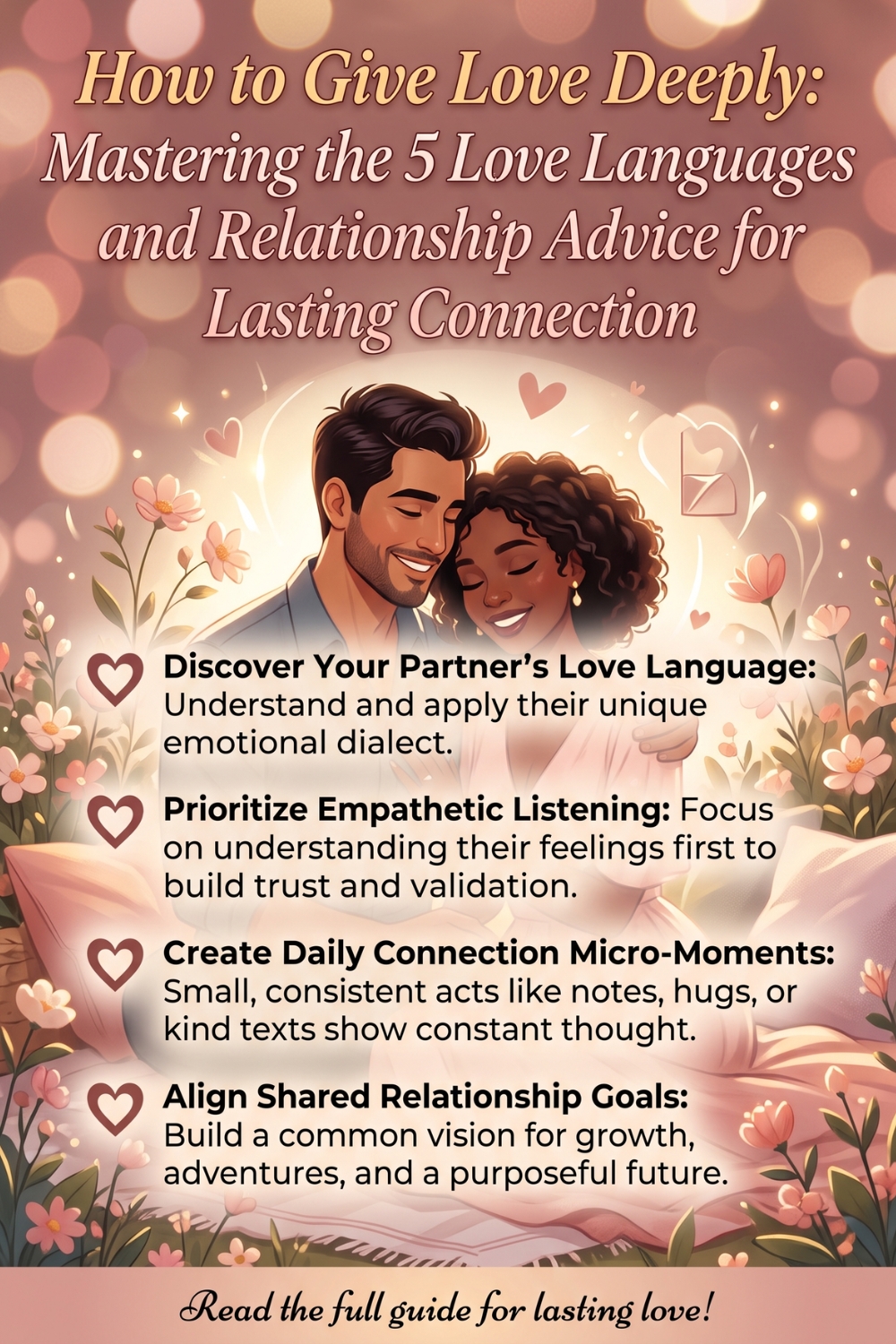

Finding love is often painted as a magical, effortless stroke of luck—a cinematic moment where two people lock eyes across a crowded room and instantly understand each other. But sustaining that love, nurturing it through the inevitable storms of life, and learning how to give love effectively is an art form. It requires intention, emotional intelligence, and a willingness to understand what your partner truly needs.
Whether you are navigating the early, breathless stages of a new romance or trying to reignite a spark in a long-term partnership, navigating the complexities of human connection can feel overwhelming. People often stumble not because they lack affection, but because they are speaking a completely different emotional language than their significant other.
In this comprehensive guide, we will explore practical love advice, break down the foundational principles of the 5 love languages, provide actionable relationship tips, and help you set meaningful relationship goals that transform everyday interactions into profound moments of intimacy.
Understanding the Foundation: What Does It Truly Mean to Give Love?
At its core, love is not merely a passive feeling of warmth or attachment; it is an active, daily choice. Many of us grow up believing that if we love someone intensely, they will automatically feel loved. Unfortunately, human psychology doesn’t work quite that way.
The Gap Between Intention and Reception
Imagine trying to water a plant with gasoline. Your intention might be to nourish it, but your method is destructive because you haven’t considered what the plant actually requires to thrive. In human relationships, we often give love the way we want to receive it, rather than the way our partner needs to experience it.
-
The Self-Centric Trap: If your primary way of feeling cherished is receiving gifts, you might shower your partner with thoughtful presents, while they might feel completely ignored because what they desperately crave is quality time and undivided attention.
-
Shifting the Perspective: True relationship advice always points back to empathy. To give love successfully, you must step outside of your own emotional framework and learn to view the world through your partner’s eyes.
Cultivating Emotional Safety
Before any deep connection can flourish, a partnership requires emotional safety. This means creating an environment where both individuals feel secure enough to express vulnerability, share fears, and make mistakes without the fear of harsh judgment or emotional withdrawal. Building this foundation involves active listening, validating each other’s emotional experiences, and treating vulnerabilities as sacred.
Decoding the 5 Love Languages: How Do You and Your Partner Connect?
Popularized by Dr. Gary Chapman, the framework of the 5 love languages revolutionised modern relationship advice. Chapman posited that people express and receive emotional love in five distinct ways. When partners understand these emotional dialects, miscommunications decrease, and appreciation skyrockets.
Featured Snippet: What are the 5 love languages? The 5 love languages are Words of Affirmation, Acts of Service, Receiving Gifts, Quality Time, and Physical Touch. Each language represents a primary way individuals feel emotionally loved and valued in a relationship.
Let’s examine each language in detail to help you identify yours and your partner’s primary mode of connection.
1. Words of Affirmation
For individuals whose primary love language is words of affirmation, verbal compliments, encouragement, and kind expressions hold immense power.
-
What it looks like: Hearing a spontaneous “I appreciate everything you do,” receiving a sweet morning text message, or being publicly praised for an accomplishment.
-
How to apply it: Avoid harsh words, as insults linger much longer for these individuals. Instead, lean into specific praise. Instead of saying “You look nice,” try, “Your creativity and dedication at work inspire me every single day.”
2. Acts of Service
Actions truly speak louder than words for this group. For them, nothing says “I love you” quite like lightening their daily load or taking care of tasks that ease their stress.
-
What it looks like: Filling up their car with gas before a long week, cooking dinner after a grueling workday, or taking care of the laundry without being asked.
-
How to apply it: Pay attention to the small frustrations your partner complains about. Stepping in to solve or alleviate those pain points is one of the most powerful love tips you can implement.
3. Receiving Gifts
This love language is frequently misunderstood as materialism, but it is actually about the thoughtfulness, effort, and visual representation of love behind the gift.
-
What it looks like: Bringing home their favorite coffee while running errands, picking up a book you thought they would enjoy while traveling, or celebrating milestones with a meaningful token.
-
How to apply it: It is not about how much money you spend, but the message: “I was thinking about you when you weren’t right in front of me.” The symbolic value far outweighs the price tag.
4. Quality Time
In a hyper-connected, distraction-filled world, uninterrupted, focused attention is one of the rarest commodities we can offer. For quality time advocates, love is spelled T-I-M-E.
-
What it looks like: Going for an evening walk with phones left at home, cooking a meal together while talking about your day, or engaging in a shared hobby.
-
How to apply it: Be fully present. Sitting on the couch scrolling through social media while watching TV together does not count as quality time. Make eye contact, listen actively, and engage in shared experiences.
5. Physical Touch
Physical presence and accessibility are crucial for individuals who rely on physical touch to feel grounded and secure in a partnership.
-
What it looks like: Holding hands while walking, a reassuring touch on the back when passing in the kitchen, a long embrace after a hard day, or cuddling on the couch.
-
How to apply it: Understand that physical touch builds emotional security. A warm hug can instantly de-escalate tension and communicate solidarity during stressful moments.
Practical Relationship Tips for Everyday Intimacy
Understanding psychological frameworks is a great starting point, but healthy bonds are maintained through daily habits. Here are actionable relationship tips you can integrate into your routine starting today.
Practice Active, Empathetic Listening
Most people listen with the intent to reply rather than the intent to understand. When your partner is sharing a problem, resist the immediate urge to offer solutions. Often, they just want to feel heard and validated.
-
Actionable Step: Repeat back what you heard in your own words. “It sounds like you felt really overwhelmed when that project was dropped on your desk unexpectedly. Is that right?” This simple validation transforms arguments into collaborative problem-solving.
Prioritize Micro-Moments of Connection
You don’t need a lavish weekend getaway to keep romance alive (though those are wonderful!). Small, consistent gestures carry immense weight over time.
-
Send a midday voice note letting them know you are thinking of them.
-
Leave a sticky note on the bathroom mirror with an encouraging word.
-
Greet each other warmly when you reunite at the end of the day, turning away from screens to give a proper hello.
Master the Art of Constructive Conflict
Conflict is not a sign that a relationship is failing; it is a sign that two distinct individuals are attempting to navigate differences. How you fight matters much more than how often you fight.
-
Avoid the Four Horsemen: Criticism, contempt, defensiveness, and stonewalling (as identified by relationship researcher Dr. John Gottman) poison connections.
-
Use “I” Statements: Instead of saying, “You never help around the house,” reframe it as, “I feel overwhelmed when household chores fall primarily on me, and I would love your support.”
Setting Meaningful Relationship Goals for Long-Term Growth
Without clear vision and intentional milestones, relationships can drift into autopilot. Setting shared relationship goals gives a couple a joint purpose and keeps excitement alive as you grow together.
1. Emotional Growth Goals
-
Learn Each Other’s Stress Triggers: Sit down and discuss how each of you reacts when stressed. What does your partner look like when they are burnt out, and how can you best support them during those times?
-
Commit to Continuous Learning: Read books together, listen to podcasts on emotional intelligence, or attend workshops designed to strengthen communication.
2. Experiential and Adventure Goals
-
Create Novel Experiences Together: Novelty releases dopamine and oxytocin, mimicking the excitement of the early honeymoon phase. Plan a monthly “adventure date” where you try something completely new—whether it’s a pottery class, a hiking trail you’ve never explored, or cooking a cuisine from a country neither of you has visited.
-
Establish Tech-Free Rituals: Set a goal to have at least one device-free date night every single week.
3. Financial and Future Alignment
Money is one of the leading causes of stress and friction in partnerships. Aligning on financial values and future milestones reduces anxiety and builds a powerful sense of teamwork.
-
Schedule a monthly “money date” where you review goals, savings, and shared dreams over a nice cup of coffee or a favorite meal. Keep the tone collaborative rather than critical.
Frequently Asked Questions (FAQ)
How can I figure out what my partner’s love language is?
The best way is through observation and conversation. Notice how your partner naturally expresses affection toward you or others—people often give love the way they wish to receive it. Alternatively, you can take official online quizzes together or simply discuss the five categories and ask which one resonates with them the most.
What should I do if my partner and I have completely different love languages?
Having different love languages is completely normal and can actually be an asset. It encourages you to step outside your comfort zone and practice intentional acts of care. View it as becoming bilingual in emotional expression. When you make an effort to speak your partner’s love language, they feel deeply cherished, and they will likely learn to do the same for you.
Can love languages change over time?
Yes, they can. Life stages, stress levels, parenthood, career shifts, and personal growth can all cause a person’s primary love language to evolve. For instance, a new parent whose love language was once physical touch or quality time might suddenly crave acts of service due to sheer exhaustion. Regular communication is key to staying attuned to these shifts.
How do I practice giving love when I am feeling emotionally drained myself?
You cannot pour from an empty cup. Self-care is not selfish; it is a prerequisite for healthy relationships. When you feel depleted, communicate your boundaries gently to your partner (“I’ve had an intensely draining day and need a quiet half-hour to recharge, and then I’d love to connect with you”). Taking care of your own mental health ensures that when you do give love, it comes from a place of genuine abundance rather than resentment.
Conclusion: Start Your Journey Toward Deeper Connection Today
Mastering the art of how to give love is a lifelong journey of curiosity, patience, and unwavering empathy. By understanding the unique power of the 5 love languages, integrating daily relationship tips, and actively working toward meaningful relationship goals, you can build a resilient, deeply fulfilling partnership that withstands the tests of time.
Remember that perfection is never the goal; consistent, heartfelt effort is.
Call-to-Action: Choose one actionable relationship tip or love language from this guide today—whether it’s sending a heartfelt text, planning an uninterrupted evening, or tackling an act of service for your partner—and put it into practice right now. Take the first step toward a deeper, more connected bond!