
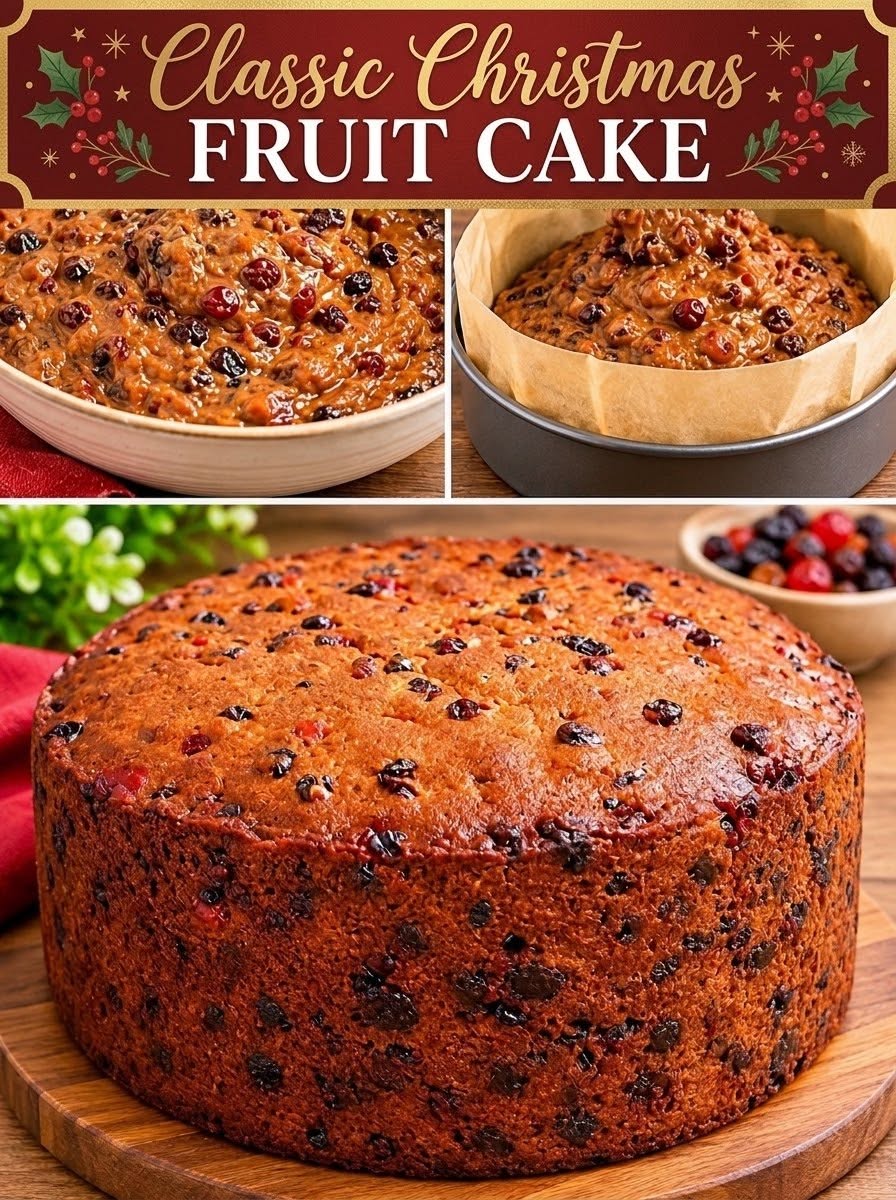
Classic Christmas Fruit Cake – Rich, Moist & Loaded with Dried Fruits!
Description
Classic Christmas Fruit Cake is a traditional holiday dessert filled with colorful dried fruits, crunchy nuts, warm spices, and a rich buttery cake batter. Every slice is wonderfully moist, flavorful, and packed with sweet raisins, cranberries, cherries, dates, and candied citrus peel.
This timeless Christmas cake is known for its deep flavor and beautiful texture. A combination of cinnamon, nutmeg, cloves, and vanilla gives it a comforting holiday aroma, while orange zest adds a refreshing citrus note.
The cake can be prepared several days ahead, allowing the flavors to develop and become even richer. Serve it with tea, coffee, or as the centerpiece of your Christmas dessert table.
Recipe Information For Classic Christmas Fruit Cake
-
Preparation Time: 30 minutes
-
Fruit Soaking Time: 4 hours or overnight
-
Baking Time: 1 hour 45 minutes to 2 hours 15 minutes
-
Total Time: Approximately 6 hours, including soaking
-
Servings: 12–16 slices
-
Difficulty: Moderate
-
Course: Dessert
-
Cuisine: Traditional Christmas Baking
Ingredients
For the Dried Fruit Mixture
-
1 cup raisins
-
½ cup golden raisins
-
½ cup dried cranberries
-
½ cup chopped dried dates
-
½ cup chopped dried apricots
-
½ cup chopped candied cherries
-
¼ cup candied orange peel
-
½ cup orange juice or apple juice
-
1 teaspoon orange zest
For the Cake Batter
-
1½ cups all-purpose flour
-
¾ cup unsalted butter, softened
-
¾ cup brown sugar
-
3 large eggs, room temperature
-
½ cup chopped walnuts or pecans
-
1 teaspoon baking powder
-
1 teaspoon vanilla extract
-
1 teaspoon ground cinnamon
-
½ teaspoon ground nutmeg
-
¼ teaspoon ground cloves
-
¼ teaspoon salt
-
2 tablespoons milk, if needed
Optional Topping
-
¼ cup chopped almonds
-
A few candied cherries
-
1 tablespoon apricot jam for glazing
-
1 teaspoon warm water
Instructions For Classic Christmas Fruit Cake
Step 1: Soak the Dried Fruits
Place the raisins, golden raisins, dried cranberries, dates, apricots, candied cherries, and candied orange peel in a large bowl.
Pour the orange juice or apple juice over the fruit. Add the orange zest and stir well.
Cover the bowl and allow the fruits to soak for at least 4 hours, preferably overnight in the refrigerator. This helps soften the dried fruits and gives the cake a naturally rich flavor.
Before using, bring the mixture to room temperature and drain any excess liquid if necessary. Reserve a little liquid to add to the batter if it seems too thick.
Step 2: Prepare the Baking Pan
Preheat your oven to 300°F (150°C).
Grease a 9-inch round cake pan or an 8-inch square pan with butter. Line the bottom and sides with parchment paper.
Because fruit cakes take longer to bake than ordinary cakes, lining the pan helps prevent the edges from becoming too dark.
Step 3: Mix the Dry Ingredients
In a medium bowl, combine the all-purpose flour, baking powder, cinnamon, nutmeg, cloves, and salt.
Whisk everything together until evenly distributed.
Set aside.
Step 4: Cream the Butter and Sugar
In a large mixing bowl, beat the softened butter and brown sugar for approximately 3–4 minutes until creamy and fluffy.
This step helps create a tender cake texture.
Add the eggs one at a time, beating after each addition. Mix in the vanilla extract.
If the mixture looks slightly separated, do not worry. Adding the dry ingredients gradually will help bring it together.
Step 5: Combine the Batter
Add the flour mixture to the butter mixture in two or three additions.
Mix gently until just combined. Avoid overmixing because this can make the cake dense.
If the batter is extremely thick, add 1–2 tablespoons of milk or a little reserved fruit-soaking liquid.
Step 6: Add the Fruits and Nuts
Add the soaked dried fruits and chopped walnuts or pecans.
Fold gently using a spatula until the fruits and nuts are evenly distributed throughout the batter.
Make sure the fruit mixture is not excessively wet. Too much liquid can affect the cake’s texture and baking time.
Step 7: Fill the Cake Pan
Transfer the batter into the prepared baking pan.
Spread it evenly and smooth the top with a spatula.
Sprinkle chopped almonds over the surface if desired. Decorate with a few candied cherries for a festive appearance.
Step 8: Bake the Cake
Place the pan on the middle rack of the preheated oven.
Bake at 300°F (150°C) for approximately 1 hour 45 minutes to 2 hours 15 minutes.
Baking time depends on the pan size, oven, and moisture content of the fruit.
Check the center with a wooden skewer. It should come out without wet batter, although a few moist crumbs are fine.
If the top becomes too dark before the center is cooked, loosely cover it with aluminum foil.
Step 9: Cool Completely
Remove the cake from the oven and allow it to cool in the pan for approximately 20–30 minutes.
Carefully transfer it to a wire rack and let it cool completely before slicing.
Fruit cake is delicate while warm, so allowing it to cool helps the slices hold their shape.
Step 10: Add the Optional Glaze
Warm the apricot jam with a teaspoon of water until smooth.
Brush a thin layer over the cooled cake for a beautiful glossy finish.
Allow the glaze to set before serving.
Recipe Notes
-
Use a mixture of dried fruits for a more interesting flavor and texture.
-
Chop larger fruits into small, evenly sized pieces.
-
Soaking the fruit helps keep it tender during baking.
-
Room-temperature butter and eggs make the batter easier to mix.
-
Avoid overmixing after adding the flour.
-
Bake at a lower temperature to help the dense fruit-filled cake cook evenly.
-
Always allow the cake to cool completely before cutting.
-
For a stronger holiday flavor, prepare the cake a day ahead before serving.
Helpful Tips for the Perfect Christmas Fruit Cake
-
Choose good-quality dried fruits: Soft, fresh dried fruits provide better flavor and texture.
-
Soak overnight: Longer soaking allows the fruit to absorb more liquid and become tender.
-
Prevent fruit from sinking: Toss the drained fruit with 1 tablespoon of the measured flour before folding it into the batter.
-
Use parchment paper: It protects the sides and bottom from excessive browning.
-
Maintain a low oven temperature: Fruit cakes are dense and need gentle, even baking.
-
Check the cake early: Oven temperatures vary, so begin checking before the expected finishing time.
-
Let the flavors develop: The cake often tastes even better the following day.
Delicious Variations
Traditional Spiced Fruit Cake: Add extra cinnamon, nutmeg, and a little ground ginger for a stronger festive flavor.
Chocolate Christmas Fruit Cake: Fold in ¼ cup dark chocolate chips for a delicious chocolate-fruit combination.
Tropical Fruit Cake: Replace some raisins with chopped dried pineapple, mango, or coconut.
Nut-Free Fruit Cake: Leave out the walnuts and almonds. Add extra dried fruit instead.
Citrus Fruit Cake: Add additional orange zest and a little lemon zest for a brighter flavor.
Alcohol-Free Christmas Cake: This recipe uses orange or apple juice instead of alcohol, making it suitable for those who prefer an alcohol-free dessert.
Serving Suggestions For Classic Christmas Fruit Cake
Serve this Christmas fruit cake in thin slices because it is rich and filling.
It pairs beautifully with:
-
Hot tea or coffee
-
Warm milk
-
Whipped cream
-
Vanilla ice cream
-
Fresh orange slices
-
A light dusting of powdered sugar
-
A spoonful of vanilla yogurt
For holiday gatherings, arrange the slices on a festive serving plate and decorate with a few dried cranberries, orange slices, and nuts.
Storage Instructions
At Room Temperature: Once completely cooled, store the cake in an airtight container in a cool place for up to 3–4 days.
In the Refrigerator: Wrap the cake tightly or place it in an airtight container. Refrigerate for up to 1 week. Bring individual slices to room temperature before serving for a softer texture.
In the Freezer: Wrap the completely cooled cake tightly in plastic wrap and then aluminum foil. Freeze for up to 2–3 months for best quality.
Thaw overnight in the refrigerator or until fully defrosted before serving.
For longer storage, avoid adding fresh cream or perishable toppings to the cake.
Approximate Nutritional Information
Per serving, based on 16 slices:
-
Calories: 280–330
-
Protein: 4–5 g
-
Carbohydrates: 43–49 g
-
Fat: 11–14 g
-
Fiber: 2–3 g
-
Sugar: 28–34 g
-
Sodium: 100–150 mg
Values are estimates and depend on the types of dried fruit, candied fruit, nuts, and portion sizes used.
Diabetes-conscious note: This traditional fruit cake contains carbohydrates and natural sugars from dried fruit, along with added brown sugar. Dried fruit is concentrated in carbohydrates, so even a small slice can affect blood glucose. Consider a smaller portion, reducing the added sugar, and using unsweetened dried fruit. Sugar substitutes may change the cake’s moisture and texture, so results can vary.
https://eawod.online/oven-baked-4-ingredient-mini-potato…/
Potential Benefits of the Ingredients
1. Dried Fruits Provide Fiber
Raisins, dates, apricots, and cranberries contain dietary fiber, although their sugar and carbohydrate content is concentrated.
2. Nuts Provide Unsaturated Fats
Walnuts and almonds contain unsaturated fats, plant protein, and minerals such as magnesium.
3. Orange Adds Vitamin C
Orange zest contributes aromatic citrus compounds. If fresh orange juice is used, it also provides some vitamin C.
4. Warm Spices Add Flavor
Cinnamon, nutmeg, and cloves give the cake its traditional holiday taste without requiring additional sweetness.
5. A Festive Homemade Treat
Preparing fruit cake at home allows you to control the ingredients, choose your preferred fruits, and adjust the amount of added sugar.
Frequently Asked Questions
Q1: Can I prepare Christmas fruit cake ahead of time?
Yes. You can bake it several days before serving. Store it properly in an airtight container and allow the flavors to develop.
Q2: Can I use apple juice instead of orange juice?
Absolutely. Apple juice works well for soaking the dried fruits and gives the cake a mild fruity sweetness.
Q3: Why is my fruit cake dry?
It may have been baked too long, the oven temperature may have been too high, or the fruit mixture may not have contained enough moisture. Check the cake regularly toward the end of baking.
Q4: Why did my dried fruits sink to the bottom?
Large or overly wet fruit pieces can sink. Drain them well, chop them evenly, and lightly coat them with flour before folding them into the batter.
Q5: Can I make this cake without nuts?
Yes. Simply omit the nuts or replace them with additional dried fruit.
Q6: Can I use fresh fruit instead of dried fruit?
Dried fruit is recommended because it provides the traditional dense texture and concentrated flavor. Fresh fruit contains more water and may make the cake too wet.
Q7: How do I know when the cake is fully baked?
Insert a wooden skewer into the center. It should come out without wet batter. The center should feel set rather than soft or liquid.
Q8: Can I reduce the sugar?
Yes. You can reduce the brown sugar, but the cake may become less moist and slightly less tender. Remember that dried fruits and candied cherries also contribute significant sweetness.
Final Thoughts
Classic Christmas Fruit Cake is a beautiful holiday tradition that brings together rich buttery flavor, sweet dried fruits, crunchy nuts, and warming spices. Its moist texture and festive aroma make it a wonderful addition to Christmas celebrations, family gatherings, and holiday dessert tables.
The best part is how easily you can customize it with your favorite fruits, nuts, and spices. Prepare it ahead, let the flavors settle, and enjoy a delicious homemade slice with your favorite warm drink.
For More Recipe https://aboutskills.com/chickpea-spinach-orzo-salad-with…/