
Falling in love is one of the most incredible experiences in the world. When you find someone who truly gets you, it is natural to want to spend every waking moment with them. However, one of the most common challenges people face is learning how to blend two lives together without losing their individual identity in the process.
Have you ever looked in the mirror and realized you haven’t seen your best friends in months? Or perhaps you have stopped doing the hobbies that used to bring you joy, simply because your partner doesn’t share those interests?
If you are nodding along, you are not alone. Seeking solid relationship advice on maintaining your independence is the first step toward building a healthier, more sustainable partnership. This comprehensive guide will walk you through the essential love tips, boundaries, and relationship goals required to enjoy a deeply connected partnership while remaining wholly, authentically yourself.
What Does It Mean to “Lose Yourself” in a Relationship?
Before we dive into actionable relationship tips, it is crucial to understand what it actually means to lose your identity in a partnership. When we talk about losing yourself, we are describing a process called “enmeshment.” This happens when the emotional and physical boundaries between you and your partner become so blurred that it is hard to tell where you end and they begin.
Signs You Might Be Losing Your Identity
It usually happens slowly. It starts with small compromises—skipping a gym class to watch a movie with them, or adopting their favorite restaurants as your own. Eventually, these micro-compromises snowball.
Here are a few red flags that indicate you might be losing yourself:
-
You no longer have hobbies or interests outside of the relationship.
-
Your mood is entirely dependent on your partner’s mood.
-
You struggle to make decisions without consulting them first.
-
You have distanced yourself from your core group of friends or family.
-
Your personal relationship goals have entirely replaced your individual career or life goals.
Why It Happens: The Psychology of Enmeshment
Why do we do this? Usually, it comes from a place of deep affection. We want to bond, to show our commitment, and to build a life together. Sometimes, it stems from an anxious attachment style, where the fear of abandonment drives us to merge completely with our partner to secure their affection. Good love advice always emphasizes that true security comes from within, not from mirroring another person.
The Foundation of Healthy Relationships: Maintaining Independence
The strongest relationships are not made of two halves making a whole. They are made of two complete, whole individuals choosing to walk side by side.
The Difference Between Interdependence and Codependence
Understanding the difference between interdependence and codependence is vital relationship advice.
-
Codependence is when you rely on your partner for your entire sense of self-worth and emotional stability.
-
Interdependence is when two independent people recognize the value of emotional connection and support, but still maintain a solid sense of self.
In an interdependent dynamic, you can say, “I love you, and I am better with you, but I am also fine on my own.”
Why Relationship Goals Must Include Personal Growth
When we think of relationship goals, we often picture matching outfits, buying a house together, or romantic vacations. However, the most vital goal you can set as a couple is a commitment to mutual personal growth. Supporting each other’s individual dreams—whether that means cheering them on as they go back to school, or giving them space to launch a side business—is the ultimate expression of love.
Core Relationship Tips for Protecting Your Sense of Self
If you are ready to reclaim your identity or want to prevent losing it in a new romance, here are practical, expert-backed love tips to implement today.
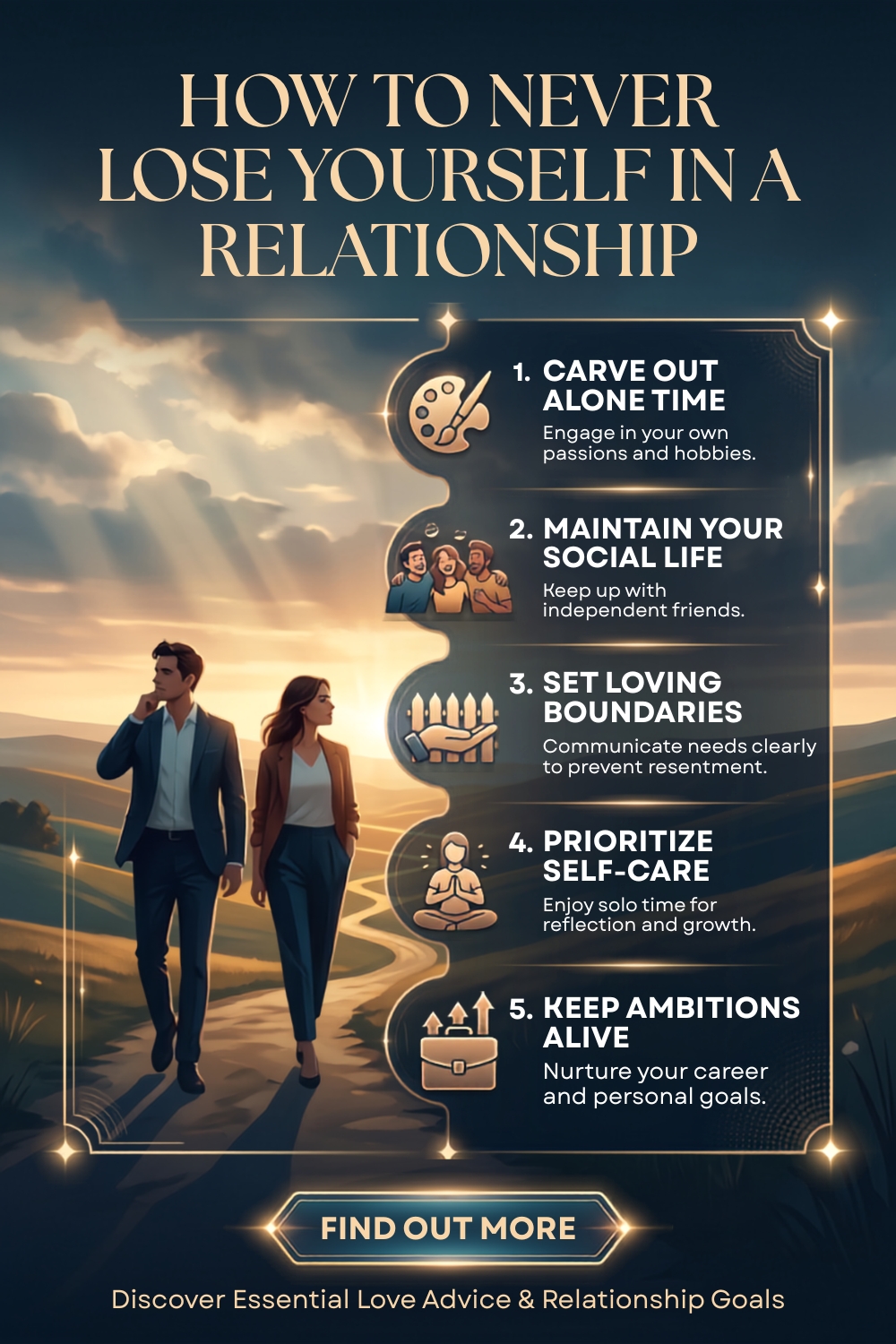
1. Carve Out Time for Your Own Passions and Hobbies
Remember what you loved before you met your partner. Did you paint? Run marathons? Read obscure science fiction novels? Reclaim those activities. You do not need to share every single interest. In fact, having separate hobbies gives you something interesting to talk about at the end of the day.
2. Maintain Your Independent Social Circle
It is wonderful to have mutual friends, but maintaining your own separate friendships is just as important. Your friends offer different perspectives, emotional support, and a sense of grounding that your partner alone cannot provide. Make it a regular habit to have a coffee date or a night out with your friends, sans partner.
3. Set Firm, Loving Boundaries
Boundaries are not walls to keep your partner out; they are guidelines to help them love you better. A boundary can be as simple as, “I need an hour of quiet time after work to decompress before we cook dinner together.” Clear communication prevents resentment from building up over time.
4. Prioritize Self-Care and Solo Reflection
Solitude is a powerful tool for self-discovery. Take yourself out on dates. Go for a walk alone. Keep a journal. Spending time alone with your thoughts helps you check in with your own needs, desires, and emotions without the external influence of your relationship.
5. Keep Your Financial and Career Ambitions Alive
While pooling resources is a normal part of long-term commitment, it is incredibly important to keep your own career ambitions alive. Having your own goals, income, or professional drive ensures that you maintain a sense of purpose and achievement outside of the domestic sphere.
Love Advice for Balancing “We” and “Me”
Finding the sweet spot between building a shared life and maintaining your individuality requires ongoing effort and communication.
How to Communicate Your Need for Space
Asking for space can sometimes trigger insecurity in a partner. The key is how you frame it. Instead of saying, “You are smothering me,” try phrasing it positively: “I really want to spend Sunday morning reading and recharging by myself so I can be fully present and energized for our date night later.” This reassures them that taking space is actually good for the relationship.
Overcoming the Guilt of Doing Things Alone
Many people feel guilty for wanting time away from their partner. Remember this fundamental piece of relationship advice: you cannot pour from an empty cup. Taking time for yourself isn’t selfish; it is relationship maintenance. When you are fulfilled and happy as an individual, you bring much better energy back into the partnership.
Relationship Advice for Couples Already Feeling Enmeshed
If you are reading this and realizing you have already lost yourself, do not panic. It is entirely possible to shift the dynamic back to a healthy balance.
Steps to Reclaim Your Identity
-
Acknowledge the situation together: Bring it up gently with your partner. “I feel like we’ve been spending so much time together that I’ve let some of my own goals slip. I want to start focusing on my personal growth again.”
-
Start small: You don’t need to book a solo trip to Europe tomorrow. Start by dedicating just one evening a week to a personal hobby or a friend.
-
Rediscover your voice: Start expressing your preferences again. When asked what you want for dinner, don’t just say, “Whatever you want.” Voice your actual craving.
Navigating Pushback from Your Partner
Change can be uncomfortable. Your partner might initially feel threatened by your sudden push for independence. Validate their feelings, reassure them of your love, but hold firm to your boundaries. Healthy relationships can withstand individual growth.
Love Quotes and Wisdom to Keep You Grounded
Sometimes, a shift in perspective is best captured in a few powerful words. Here are some profound love quotes to remind you of the importance of individuality:
“Let there be spaces in your togetherness, And let the winds of the heavens dance between you.” — Khalil Gibran
“The best thing you can do for your relationship is to be a whole person on your own.”
Use these as daily affirmations when you feel yourself slipping back into codependent habits.
Frequently Asked Questions (FAQ)
Is wanting space a sign of a bad relationship? No, wanting space is a sign of a healthy, secure relationship. Taking time for yourself allows you to process your emotions, engage in personal hobbies, and recharge. It prevents burnout and resentment, ultimately making your time together more meaningful.
How do you set boundaries without hurting your partner? Set boundaries using “I” statements rather than “You” statements. Focus on your needs rather than their behaviors. For example, say “I need some quiet time in the mornings to focus” instead of “You are too loud in the mornings.” Always reassure them that the boundary is meant to strengthen the relationship.
What are realistic relationship goals for independent people? Realistic relationship goals for independent individuals include scheduling regular “me time,” supporting each other’s separate career ambitions, maintaining separate friend groups alongside mutual friends, and engaging in open, non-judgmental communication about personal needs.
How can love tips help me if I already lost myself? Even if you feel completely enmeshed, actionable love tips can help you slowly rebuild your identity. By taking small steps—like choosing the movie for the night, re-engaging with an old hobby for 30 minutes a day, or reaching out to an old friend—you can gradually reconstruct your sense of self without abruptly shocking the relationship dynamic.
Conclusion and Final Thoughts
Ultimately, the best relationship advice you can ever receive is this: you are worthy of love exactly as you are, and a true partner will celebrate your individuality, not suppress it. Relationships should enhance your life, not consume it. By maintaining your hobbies, nurturing your friendships, setting clear boundaries, and prioritizing self-care, you can build a beautiful, lasting connection without ever sacrificing who you are at your core.
Remember, the goal is not to love less, but to love better—starting with yourself.