
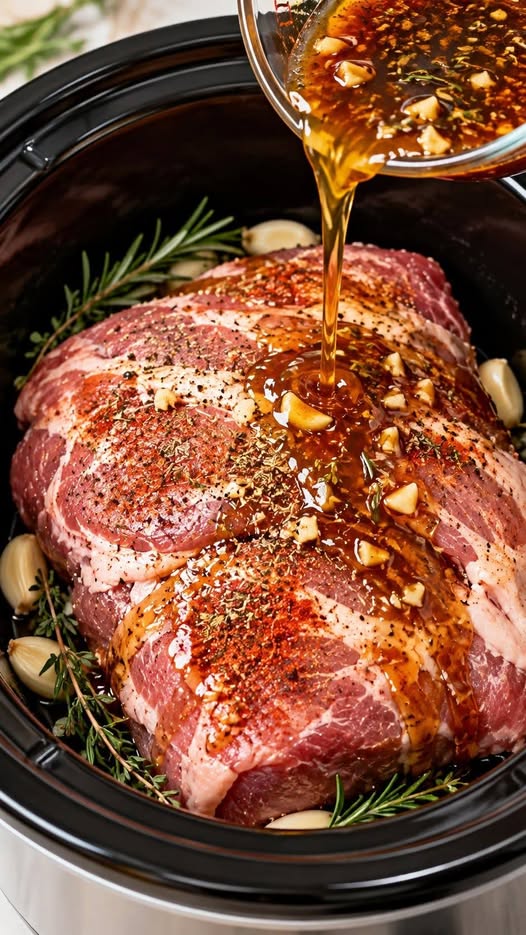
3-Ingredient Slow Cooker Garlic Herb Pork Butt
Description
This 3-Ingredient Slow Cooker Garlic Herb Pork Butt is tender, juicy, flavorful, and incredibly easy to prepare. The pork slowly cooks in a rich combination of olive oil, honey, and balsamic vinegar, with garlic and Italian herbs adding savory depth and aroma.
After several hours in the slow cooker, the pork becomes fork-tender and easy to shred. The naturally sweet and tangy cooking juices make a delicious finishing sauce, while a quick broil gives the shredded pork beautifully caramelized, crispy edges.
Despite its simple preparation, this pork butt makes an impressive family dinner and works wonderfully for sandwiches, tacos, rice bowls, wraps, or meal prep.
Ingredients
Main Ingredients
- 3–4 lb boneless pork butt/pork shoulder
- ½ cup olive oil
- ¼ cup honey
- ¼ cup balsamic vinegar
- 6 cloves garlic, roughly chopped
Seasonings
- 1½ teaspoons Italian seasoning
- 1 teaspoon paprika
- 1 teaspoon salt
- 1 teaspoon black pepper
Optional Ingredients
- 2–3 sprigs fresh rosemary
- ½ cup chicken broth or water
Instructions
1. Prepare the Pork
Pat the pork butt dry with paper towels.
Season all sides generously with the salt, black pepper, paprika, and Italian seasoning. Rub the seasonings into the meat so the pork is evenly coated.
2. Make the Garlic-Balsamic Sauce
In a small bowl, whisk together the olive oil, honey, and balsamic vinegar.
Stir in the roughly chopped garlic until evenly distributed.
3. Load the Slow Cooker
Place the seasoned pork butt directly into the slow cooker.
Pour the garlic-balsamic mixture over the pork, turning the roast slightly so the sauce coats as much of the surface as possible.
If using rosemary, place the sprigs around the pork.
Add the chicken broth or water if you prefer additional cooking liquid.
4. Slow Cook
Cover and cook on LOW for 7–9 hours, or until the pork is extremely tender and easily pulls apart with a fork.
For a smaller roast, begin checking around 7 hours. Larger or tougher cuts may require additional cooking time.
5. Rest and Shred
Carefully transfer the cooked pork to a cutting board.
Let it rest for 10–15 minutes.
Shred the pork using two forks. Alternatively, you can slice it into larger pieces if preferred.
6. Finish With the Cooking Juices
If desired, skim excess fat from the liquid remaining in the slow cooker.
Spoon some of the flavorful garlic-balsamic juices over the shredded pork.
7. Optional Crispy Finish
For delicious caramelized edges, spread the shredded pork on a foil-lined baking sheet.
Place it under the broiler for a few minutes until the edges become browned and crispy.
Watch closely because the honey in the sauce can caramelize quickly.
Recipe Notes
- Pork butt and pork shoulder: Both work well for this recipe. Pork butt usually contains plenty of marbling, making it especially tender and flavorful after slow cooking.
- Boneless or bone-in: The recipe is written for boneless pork, but a bone-in shoulder can also be used. You may need to adjust the cooking time.
- Cooking liquid: The pork releases plenty of juices while cooking, so the optional broth or water isn’t strictly necessary.
- Honey: Honey provides sweetness and helps create beautifully caramelized edges when the pork is broiled.
- Balsamic vinegar: It adds acidity and balances the richness of the pork and olive oil.
- Rosemary: Fresh rosemary gives the dish an extra herbal aroma but can be omitted.
- Doneness: Don’t rely solely on cooking time. The pork is ready when it is exceptionally tender and pulls apart easily with a fork.
Helpful Tips
- Pat the pork dry before seasoning to help the seasonings adhere better.
- For even more flavor, let the seasoned pork sit for 15–30 minutes before placing it in the slow cooker.
- Don’t overcrowd the slow cooker around the pork.
- Avoid repeatedly opening the lid while cooking, as this allows heat to escape and can extend the cooking time.
- Allow the pork to rest before shredding so the juices can redistribute.
- Reserve some of the cooking liquid to moisten leftovers.
- For the best texture, broil the shredded pork briefly after adding a little of the cooking juices.
- If the pork doesn’t shred easily, it likely needs more cooking time.
Serving Suggestions
Serve this garlic herb pork with:
- Mashed potatoes
- Roasted potatoes
- Steamed or roasted vegetables
- Rice or quinoa
- Coleslaw
- Green beans
- Corn on the cob
- Crusty bread
- Dinner rolls
The shredded pork is also excellent in sandwiches, tacos, wraps, burrito bowls, salads, and meal-prep containers.
Servings
Serves: 6–8 people
Prep Time: 15 minutes Cook Time: 7–9 hours Resting Time: 10–15 minutes Total Time: Approximately 7 hours 25 minutes–9 hours 30 minutes
Estimated Nutritional Information
Approximate values per serving, based on 8 servings and will vary depending on the exact pork cut, amount of fat retained, and how much cooking liquid is consumed.
- Calories: ~600–650 kcal
- Protein: ~45–50 g
- Fat: ~38–42 g
- Carbohydrates: ~14–18 g
- Sugar: ~11–14 g
- Fiber: ~0–1 g
- Sodium: ~500–650 mg
Benefits
High in Protein
Pork provides a substantial amount of high-quality protein, which supports muscle maintenance and helps promote satiety.
Convenient Slow-Cooker Meal
Most of the cooking happens unattended, making this recipe convenient for busy days and family meals.
Flavorful Without Complicated Preparation
Garlic, herbs, balsamic vinegar, honey, and paprika create layers of sweet, tangy, savory, and aromatic flavor without requiring a complicated marinade.
Great for Meal Prep
The shredded pork reheats well and can be incorporated into several different meals throughout the week.
Versatile
One batch can be used for sandwiches, tacos, bowls, salads, wraps, or served as a traditional main course with vegetables and potatoes.
Frequently Asked Questions
Can I use pork shoulder instead of pork butt?
Yes. Pork shoulder and pork butt are both excellent choices for slow cooking. They contain enough connective tissue and fat to become tender over a long cooking period.
Can I cook this pork on HIGH?
Yes, although LOW cooking is recommended for the most tender texture. If cooking on HIGH, begin checking the pork after approximately 4–5 hours, depending on the size of the roast and your slow cooker.
Do I have to add chicken broth?
No. It is optional. The pork releases its own juices during cooking, while the olive oil, honey, balsamic vinegar, and garlic provide additional moisture and flavor.
Can I make this recipe without honey?
Yes. You can omit the honey, although the finished pork will be less sweet and won’t caramelize as readily under the broiler.
Can I use dried rosemary?
Yes. If fresh rosemary isn’t available, a small amount of dried rosemary can be substituted. Use it sparingly because dried herbs are more concentrated.
Why isn’t my pork shredding easily?
The most common reason is that it needs more cooking time. Pork shoulder becomes tender as its connective tissue breaks down. Continue cooking until the meat pulls apart easily with a fork.
Can I make the pork crispy?
Absolutely. Shred the cooked pork, spread it on a baking sheet, spoon over a little cooking liquid, and broil for a few minutes until the edges become browned and crispy.
Can I freeze the leftovers?
Yes. Allow the pork to cool, place it in an airtight freezer-safe container, and freeze with some of the cooking juices to help prevent it from drying out.
How should I reheat leftover pork?
Reheat gently in a covered skillet or saucepan with a small amount of the reserved cooking juices, broth, or water. You can also microwave it in short intervals while covered.
What is the best way to store leftovers?
Refrigerate leftover pork in an airtight container for up to 3–4 days. Keep it refrigerated promptly after serving.