
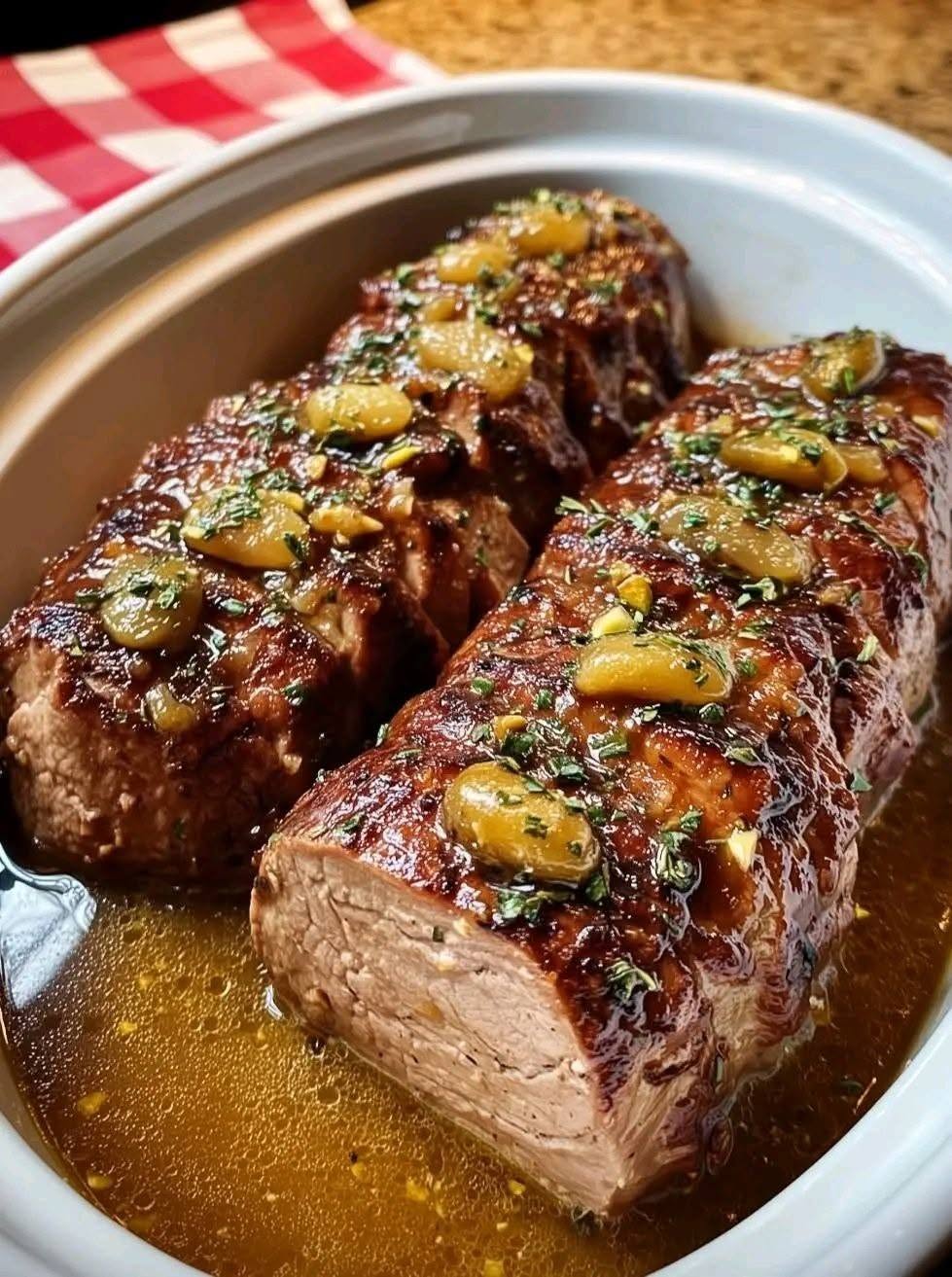
Garlic Butter Glazed Pork Tenderloin
Description
Garlic Butter Glazed Pork Tenderloin is a tender, juicy, and flavorful dinner featuring golden-seared pork coated in a rich garlic butter glaze. Honey adds a touch of sweetness, soy sauce brings savory depth, and Dijon mustard gives the sauce a subtle tang. Dried thyme, parsley, and paprika complete the flavor with aromatic herbs and gentle warmth.
This easy oven-roasted pork recipe is perfect for family dinners, Sunday suppers, holidays, or special occasions. The pork is seared on the stovetop to develop a golden crust, then roasted in a delicious garlic butter sauce until cooked through. Finished with fresh parsley and extra pan sauce, every slice is full of flavor.
Recipe Details
-
Prep Time: 15 minutes
-
Cook Time: 25–35 minutes
-
Resting Time: 5–10 minutes
-
Total Time: Approximately 45–60 minutes
-
Servings: 6–8
-
Course: Main Course
-
Cuisine: American-inspired
-
Cooking Method: Stovetop and oven
-
Difficulty: Easy
Ingredients
-
2 pork tenderloins (about 1–1.5 lb each)
-
2 tablespoons olive oil
-
3 tablespoons butter
-
6 cloves garlic, minced
-
2 tablespoons honey
-
2 tablespoons soy sauce
-
1 tablespoon Dijon mustard
-
1 teaspoon paprika
-
1 teaspoon dried thyme
-
1 teaspoon dried parsley
-
½ teaspoon black pepper
-
1 teaspoon salt, or to taste
-
½ cup chicken broth
-
1 tablespoon fresh parsley, chopped
Instructions
1. Preheat the Oven
Preheat the oven to 400°F (200°C). Prepare a large oven-safe skillet that can accommodate both tenderloins without overcrowding.
2. Prepare the Pork
Pat the pork tenderloins dry with paper towels. Remove any visible silver skin if needed. Season all sides evenly with salt, black pepper, and paprika.
Drying the pork helps it develop a golden-brown crust when seared.
3. Sear the Pork
Heat the olive oil in the skillet over medium-high heat. Add the tenderloins and sear for approximately 2–3 minutes on each side until golden brown.
Turn the pork with tongs to brown all sides evenly. The meat does not need to be fully cooked at this stage because it will finish roasting in the oven.
4. Make the Garlic Butter Sauce
Reduce the heat to medium and add the butter to the skillet. Once melted, add the minced garlic and cook for 30–60 seconds, stirring frequently until fragrant.
Add the honey, soy sauce, Dijon mustard, dried thyme, dried parsley, and chicken broth. Stir everything together, scraping up the flavorful browned bits from the bottom of the pan.
Avoid browning the garlic too much, as it can make the sauce bitter.
5. Glaze the Pork
Spoon the garlic butter sauce over both tenderloins. Turn the pork gently to coat all sides with the mixture.
The honey, butter, garlic, and herbs create a glossy glaze that adds flavor as the pork roasts.
6. Roast in the Oven
Transfer the skillet to the preheated oven. Roast for approximately 15–20 minutes, depending on the thickness of the tenderloins and how much they cooked during searing.
Baste the pork with the pan sauce halfway through cooking. Begin checking the internal temperature early, as smaller tenderloins may cook more quickly.
Cook until the thickest part of each tenderloin reaches 145°F (63°C). Check both pieces individually with a meat thermometer.
7. Rest the Pork
Remove the skillet from the oven and transfer the pork to a cutting board. Let it rest for 5–10 minutes before slicing.
Resting helps the meat retain its juices. The recommended resting period also exceeds the minimum three-minute rest for pork cooked to 145°F (63°C).
8. Slice and Serve
Slice the pork into medallions about ½–¾ inch thick. Arrange the slices on a serving platter and spoon the warm garlic butter sauce over the top.
Garnish with freshly chopped parsley and serve immediately with your favorite side dishes.
Recipe Notes
-
Choose the correct cut: Pork tenderloin is smaller and cooks faster than pork loin. If substituting pork loin, adjust the cooking time.
-
Use a thermometer: Cooking time varies with thickness, so internal temperature is the best indicator of doneness.
-
Adjust the sweetness: Reduce the honey slightly if you prefer a more savory sauce.
-
Control the salt: Soy sauce already contains sodium, so taste the sauce before adding extra salt.
-
Prevent burning: Add the garlic after reducing the heat, and stir frequently.
-
Make extra sauce: If you enjoy serving plenty of glaze, prepare a little additional sauce separately rather than increasing the cooking liquid too much.
Tips for the Best Results
-
Pat the tenderloins thoroughly dry before seasoning.
-
Use a hot skillet to develop a flavorful golden crust.
-
Sear all sides instead of browning only the top and bottom.
-
Use fresh minced garlic for the best aroma.
-
Baste the pork during roasting to keep the surface coated in sauce.
-
Avoid overcooking, since pork tenderloin is naturally lean.
-
Slice against the grain for a more tender bite.
-
Garnish with fresh parsley immediately before serving.
Serving Suggestions
This pork tenderloin pairs beautifully with:
-
Creamy mashed potatoes
-
Roasted baby potatoes
-
Steamed rice or rice pilaf
-
Roasted carrots and green beans
-
Steamed broccoli or asparagus
-
Buttered egg noodles
-
A fresh garden salad
-
Crusty bread for soaking up the sauce
For a complete dinner, serve the pork with roasted vegetables and mashed potatoes. Spoon the garlic butter glaze over the pork and potatoes for extra flavor.
Approximate Nutritional Information
Estimated per serving, assuming 8 servings and that some of the sauce is consumed.
| Nutrient | Approximate Amount |
|---|---|
| Calories | 300–370 kcal |
| Protein | 35–42 g |
| Total Fat | 14–19 g |
| Saturated Fat | 5–7 g |
| Carbohydrates | 4–7 g |
| Sugars | 3–5 g |
| Sodium | 450–750 mg |
Actual nutrition will vary depending on the size of the pork tenderloins, the ingredients used, and how much sauce is served. Using low-sodium soy sauce and unsalted chicken broth can reduce the sodium content.
Potential Benefits
Protein for muscle maintenance: Pork tenderloin provides protein, which supports muscle maintenance and tissue repair.
Important vitamins and minerals: Pork supplies nutrients such as vitamin B12, thiamin, zinc, and selenium, which support normal body functions.
Flavor from herbs and garlic: Garlic, thyme, parsley, and paprika provide flavor without requiring large amounts of extra seasoning.
A balanced meal when served with vegetables: Pairing pork with vegetables and a whole-grain or potato side can help create a varied, satisfying meal.
These benefits depend on overall diet and portion sizes. The recipe also contains butter, honey, and soy sauce, so the quantities can be adjusted to suit individual nutritional preferences.
Frequently Asked Questions
1. Can I prepare this recipe ahead of time?
Yes. You can season the pork and mix the sauce ingredients a few hours ahead. Keep the uncooked pork refrigerated and cook it shortly before serving for the best texture.
2. Can I use pork loin instead of tenderloin?
Yes, but pork loin is thicker and generally takes longer to cook. Use a thermometer rather than relying on the timing given for tenderloin.
3. How do I keep pork tenderloin juicy?
Avoid overcooking, use a thermometer, and let the meat rest before slicing. Spoon the pan sauce over the pork just before serving.
4. Can I make the sauce without honey?
Yes. You can omit the honey for a less-sweet sauce. The glaze will be less sweet and may be less glossy, but the garlic, butter, herbs, and mustard will still provide plenty of flavor.
5. Can I make this recipe without soy sauce?
Yes. Substitute a suitable low-sodium alternative or use additional chicken broth and adjust the seasoning. The flavor will be slightly different.
6. How should leftovers be stored?
Refrigerate leftovers in an airtight container within two hours of cooking. They can generally be stored for 3–4 days.
7. Can I freeze cooked pork tenderloin?
Yes. Freeze the cooled pork with some sauce in a freezer-safe container for about 2–3 months for best quality. Thaw it in the refrigerator before reheating.
8. What is the best way to reheat leftovers?
Place the slices in a covered skillet over low heat with a splash of broth or sauce. Alternatively, reheat in a covered oven-safe dish at 300°F (150°C) until heated through. Avoid prolonged heating to prevent dryness.
9. How can I tell when the pork is fully cooked?
Insert a meat thermometer into the thickest part of each tenderloin. The internal temperature should reach 145°F (63°C), followed by a rest of at least three minutes.
10. Can I make this recipe less rich?
You can reduce the butter, use less honey, and serve the pork with steamed vegetables or a fresh salad. Keep sufficient broth in the pan to create a flavorful sauce.
Conclusion
Garlic Butter Glazed Pork Tenderloin is an easy, delicious main course that combines juicy pork with a rich, sweet-and-savory garlic butter glaze. Searing the meat creates a golden crust, while roasting it in the flavorful sauce brings the ingredients together beautifully.
With simple ingredients, straightforward instructions, and plenty of serving options, this recipe is suitable for both busy weeknights and special family meals. Slice the tenderloin, drizzle it generously with the pan sauce, add fresh parsley, and enjoy a comforting homemade dinner.