
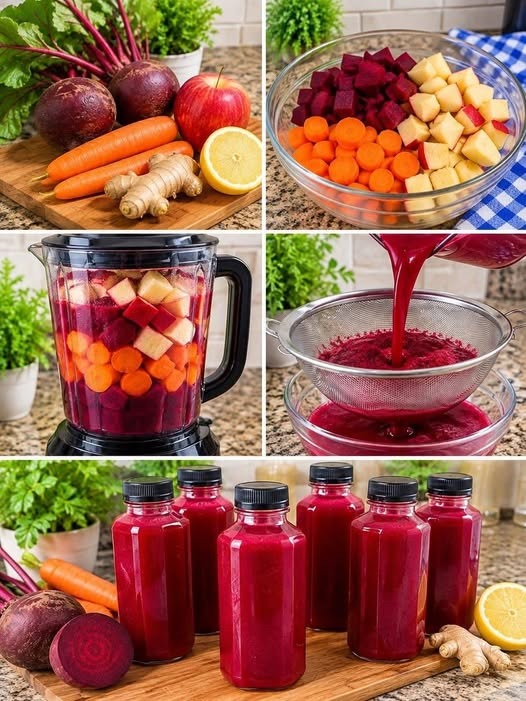
Beetroot, Carrot, Apple & Ginger Juice – Nutrient-Rich Homemade Juice Recipe
Description
Beetroot, Carrot, Apple and Ginger Juice is a refreshing homemade drink packed with vibrant colors and naturally sweet, slightly spicy flavors. Beetroot adds an earthy taste, carrots provide natural sweetness, apples bring a fruity flavor, and fresh ginger gives the juice a gentle kick.
This easy recipe is a delicious way to enjoy a variety of fruits and vegetables. It provides nutrients such as vitamin C, beta-carotene, folate, and potassium. Enjoy it fresh as part of a balanced diet, whether at breakfast or as a refreshing afternoon drink.
Recipe Information
-
Prep Time: 10 minutes
-
Juicing Time: 5 minutes
-
Total Time: 15 minutes
-
Servings: 2
-
Course: Beverage
-
Cuisine: International
-
Difficulty: Easy
-
Diet: Vegetarian, vegan, dairy-free, gluten-free
Ingredients
-
1 medium beetroot, peeled and chopped
-
2 medium carrots, washed, peeled if desired, and chopped
-
1 medium apple, cored and chopped
-
1 small piece of fresh ginger, about ½–1 inch
-
½ cup cold water, optional for blending
-
1–2 teaspoons fresh lemon juice, optional
-
Ice cubes, optional
Instructions
Step 1: Prepare the Ingredients
Wash the beetroot, carrots, and apple thoroughly under running water. Peel the beetroot and carrots if desired. Remove the apple core and seeds, then cut all the produce into pieces suitable for your juicer or blender.
Peel the ginger and slice it into small pieces.
Step 2: Extract the Juice
Using a juicer: Feed the beetroot, carrots, apple, and ginger through the juicer according to the manufacturer’s instructions. Collect the juice in a clean jug and stir well to combine the flavors.
Using a blender: Add the chopped ingredients to the blender with ½ cup of water. Blend until smooth. Strain through a fine-mesh sieve or clean cheesecloth if you prefer a thinner juice. For more fiber, leave the mixture unstrained.
Step 3: Add Lemon Juice
Stir in fresh lemon juice if desired. It adds a refreshing tang that balances the sweetness of the apple and carrot.
Step 4: Serve Fresh
Pour the juice into glasses. Add ice cubes if you like your drink chilled. Stir before serving, as natural pulp may settle at the bottom.
For the freshest flavor, enjoy the juice soon after preparation.
Notes
-
Choose fresh produce: Firm carrots, fresh beetroot, crisp apples, and aromatic ginger provide the best flavor.
-
Adjust the ginger: Start with a small piece if you prefer a mild taste. Add more for a stronger spicy flavor.
-
Choose your apple variety: Sweet apples create a milder juice, while tart apples provide a sharper flavor.
-
Straining is optional: Straining produces a smoother drink but removes much of the fiber found in the blended ingredients.
-
No added sugar is needed: The apple and carrots provide natural sweetness.
-
Be careful with stains: Beetroot juice can stain clothing, cutting boards, and countertops.
-
Store safely: If necessary, refrigerate the juice promptly in a clean, airtight container and consume within 24 hours for best quality.
Tips for the Best Juice
1. Balance the flavors. If the earthy beetroot flavor is too strong, use a smaller beetroot or add extra carrot or apple.
2. Use chilled ingredients. Refrigerated produce can make the juice refreshing without needing much ice.
3. Add lemon gradually. A little lemon juice can brighten the flavor, but too much may overpower the other ingredients.
4. Keep the pulp if you want more fiber. Blending without straining retains more of the produce’s fiber and creates a thicker drink.
5. Drink a moderate serving. Because juicing concentrates the natural sugars from fruit and vegetables into a drink that is easy to consume quickly, a small glass is a sensible starting point.
Nutritional Information
Estimated nutrition per serving, assuming the recipe makes two servings and the juice is prepared without added sugar:
-
Calories: 100–140
-
Carbohydrates: 23–32 g
-
Sugars: 15–23 g
-
Fiber: 2–5 g, depending on preparation and straining
-
Protein: 1–2 g
-
Fat: Less than 1 g
-
Vitamin C: Varies with the apple, lemon, and preparation method
-
Potassium: Varies with the size of the vegetables and fruit
These are estimates, not laboratory measurements. Juicing and straining can significantly reduce the amount of fiber retained.
Potential Benefits of Beetroot, Carrot, Apple and Ginger Juice
1. Provides Vitamins and Minerals
Carrots provide beta-carotene, which the body can convert into vitamin A. Beetroot supplies folate and other nutrients, while apples contribute vitamin C and potassium in varying amounts.
These nutrients help support normal vision, immune function, cell function, and overall health.
2. Supports a Balanced Diet
Combining different fruits and vegetables helps add variety to your diet. This juice can complement meals that include whole grains, protein sources, and other vegetables.
3. Contains Naturally Occurring Plant Compounds
Beetroot contains dietary nitrates and betalain pigments, while apples and carrots contain various plant compounds. Research suggests that dietary nitrate from beetroot may help support blood vessel function in some circumstances, but the effect depends on the individual and the amount consumed.
This drink should not be considered a treatment for high blood pressure or any other medical condition.
4. Contributes to Hydration
The water naturally present in the fruits and vegetables contributes to daily fluid intake. You can also add water when blending to make the juice lighter.
5. Provides a Refreshing Alternative to Sugary Drinks
This homemade juice contains no added sugar when prepared as directed. It can replace some sweetened beverages, although it still contains natural sugars and generally provides less fiber than eating the whole fruits and vegetables.
6. Offers Ginger’s Distinctive Flavor
Fresh ginger gives the drink a warm, spicy taste. Ginger has been studied for several potential health effects, particularly in relation to nausea, but the amount in this juice should not be assumed to provide a medical benefit.
Frequently Asked Questions
1. Can I drink beetroot, carrot, apple and ginger juice every day?
Many people can enjoy a moderate serving as part of a balanced diet. However, variety is important, and whole fruits and vegetables should remain a regular part of your eating pattern.
2. Is this juice good for weight loss?
It may fit into a weight-management plan, particularly when it replaces a higher-calorie drink. However, it does not directly burn fat or cause weight loss on its own. Portion size and overall eating habits matter.
3. Can people with diabetes drink this juice?
People with diabetes should account for the drink’s carbohydrate content. Juicing can make it easier to consume the natural sugars from several fruits and vegetables quickly. A smaller serving, less apple, or an unstrained blended version may be more suitable depending on individual needs and glucose responses.
4. Does beetroot juice lower blood pressure?
Beetroot contains nitrates that may modestly affect blood pressure in some people. However, the response varies, and this homemade juice is not a substitute for prescribed treatment or medical advice.
5. Should I drink this juice on an empty stomach?
There is no strong evidence that drinking it on an empty stomach provides special benefits. You can enjoy it with breakfast or another meal, depending on your preference and digestive comfort.
6. Can I make the juice without a juicer?
Yes. Use a blender and add enough water to help the ingredients blend. Strain the mixture if you prefer a thinner texture.
7. Can I prepare the juice in advance?
Fresh is best for flavor. If preparing ahead, refrigerate it immediately in a clean, sealed container and consume it within 24 hours. Discard it if it develops an unusual smell, appearance, or taste.
8. Why does my urine or stool look reddish after drinking beetroot juice?
Beetroot pigments can temporarily give urine or stool a pink or reddish appearance in some people. If the color persists, occurs without eating beetroot, or could be blood, seek medical advice rather than assuming beetroot is the cause.
9. Can ginger cause side effects?
Large amounts of ginger may cause heartburn or stomach discomfort in some people. Those taking medicines that affect blood clotting or who have relevant medical conditions should ask a healthcare professional whether regular ginger consumption is appropriate.
10. Is it better to strain the juice or leave the pulp?
Leaving the pulp retains more fiber and makes the drink thicker. Straining produces a smoother juice but removes much of the insoluble fiber.
Conclusion
Beetroot, Carrot, Apple and Ginger Juice is a colorful, flavorful homemade drink that combines earthy beetroot, sweet carrots, fruity apple, and warming ginger. It offers a convenient way to enjoy a range of plant foods and their nutrients.
Prepare it fresh, adjust the ingredients to suit your taste, and enjoy a moderate serving as part of a balanced diet. For the greatest fiber benefit, consider blending the ingredients and keeping the pulp rather than straining it.