
Sleeping on Your Left Side vs. Right Side: What Your Sleeping Position Means for Your Health
Have you ever wondered whether the side you sleep on can affect your digestion, stomach acid, and overall health? Surprisingly, your sleeping position may influence several important processes in your body, particularly digestion and acid reflux.
Many people naturally prefer sleeping on their right side, while others find sleeping on their left side more comfortable. Although both positions can be perfectly healthy, research suggests that sleeping on your left side may offer particular benefits for people who experience acid reflux, heartburn, or digestive discomfort.
Let’s explore what happens inside your body when you sleep on each side and why your sleeping position may matter.
1. What Happens When You Sleep on Your Right Side?
Your stomach is located primarily in the upper-left portion of your abdomen. Its shape and position are important when understanding how sleeping positions affect digestion.
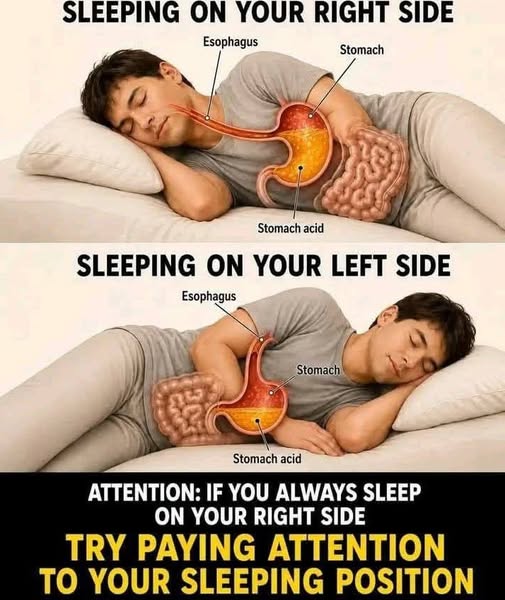
When you sleep on your right side, the stomach’s position relative to the esophagus may make it easier for stomach contents to move toward the opening connecting the stomach and esophagus.
The esophagus is the tube that carries food from your mouth to your stomach.
Normally, a muscular valve called the lower esophageal sphincter (LES) helps prevent stomach acid and food from flowing backward into the esophagus.
However, when this valve relaxes or does not close properly, stomach acid can move upward.
This is known as acid reflux.
For some people, right-side sleeping can increase nighttime acid exposure in the esophagus. This may contribute to:
- Heartburn or burning sensations in the chest.
- An unpleasant sour taste in the mouth.
- Acid coming back into the throat.
- Nighttime coughing or throat irritation.
- Disrupted sleep due to digestive discomfort.
This does not mean that sleeping on your right side is dangerous. Most healthy people can sleep comfortably on either side without experiencing problems.
However, people who regularly experience acid reflux may benefit from changing their sleeping position.
2. Why Sleeping on Your Left Side May Be Better for Acid Reflux
Sleeping on your left side is often recommended for people who experience gastroesophageal reflux disease (GERD).
The reason is related to the natural position of the stomach and the connection between the stomach and esophagus.
When you lie on your left side, the stomach generally sits below the esophagus. This positioning helps keep stomach contents and acid away from the opening of the esophagus.
As a result, stomach acid may be less likely to flow backward.
Research has found that left-side sleeping can reduce nighttime acid exposure and help clear acid from the esophagus more quickly.
Potential benefits include:
1. Less nighttime heartburn
People with acid reflux may experience fewer episodes of burning discomfort when sleeping on their left side.
2. Reduced acid exposure
Left-side positioning can help reduce the amount of time stomach acid remains in contact with the esophagus.
3. Better sleep quality
When reflux symptoms decrease, people may experience fewer nighttime awakenings and more comfortable sleep.
4. Less nighttime regurgitation
Some people experience less movement of stomach contents toward the throat when sleeping on their left side.
5. Improved comfort for people with GERD
For individuals who regularly experience reflux, changing sleeping positions can be a simple addition to their treatment routine.
3. Does Sleeping on Your Left Side Improve Digestion?
Sleeping on your left side may influence the movement of stomach contents and reduce reflux symptoms.
However, it is important to understand that sleeping on your left side does not magically improve digestion or remove toxins from your body.
Your digestive system continues working while you sleep, breaking down food, absorbing nutrients, and moving waste through the intestines.
The main established advantage of left-side sleeping is its potential to reduce nighttime acid reflux.
It should not be considered a treatment for every digestive problem, including constipation, bloating, or indigestion.
4. Other Potential Benefits of Sleeping on Your Left Side
Apart from acid reflux, left-side sleeping may have other benefits in certain situations.
Pregnancy
Side sleeping is generally recommended during later pregnancy.
After approximately 28 weeks of pregnancy, going to sleep on either side is recommended rather than going to sleep on your back.
The left side is often suggested because it may reduce pressure on major blood vessels and support comfortable circulation. However, sleeping on the right side is also considered acceptable.
Pregnant women should follow their healthcare provider’s advice.
Comfort and breathing
Some people find side sleeping more comfortable than sleeping on their backs.
For people who snore, side sleeping may help reduce snoring compared with sleeping flat on the back. However, it does not replace medical assessment or treatment for sleep apnea.
Reduced nighttime reflux
This remains one of the best-supported reasons to try left-side sleeping.
5. Are There Any Disadvantages to Sleeping on Your Right Side?
Sleeping on your right side is not inherently unhealthy.
In fact, many people sleep on their right side throughout their lives without experiencing digestive problems.
However, if you suffer from GERD or frequent heartburn, this position may make nighttime reflux symptoms worse.
Other possible disadvantages of side sleeping, regardless of which side you choose, include:
- Shoulder pressure or discomfort.
- Hip pain.
- Neck stiffness from an unsuitable pillow.
- Pressure on the arm underneath your body.
The solution is not necessarily to force yourself to sleep on your left side. Instead, choose a comfortable position that supports your spine and allows you to sleep well.
6. Five Healthy Sleeping Habits That Can Protect Your Digestive Health
Your sleeping position is only one part of maintaining good digestive health.
Consider these five habits:
1. Avoid eating immediately before bedtime.
Try to finish your evening meal at least two to three hours before lying down. This gives your stomach time to process food and may reduce nighttime reflux.
2. Try sleeping on your left side.
If you regularly experience heartburn, experiment with left-side sleeping to see whether it improves your symptoms.
3. Elevate the head of your bed.
If you experience nighttime acid reflux, raising the head of your bed by approximately 6–8 inches using a suitable bed wedge or bed risers may help.
Simply adding several soft pillows is generally less effective.
4. Avoid foods that trigger your symptoms.
Common triggers include:
- Fatty or fried foods.
- Spicy meals.
- Chocolate.
- Coffee and other caffeinated drinks.
- Mint.
- Alcohol.
- Acidic foods, in people who find them problematic.
Not everyone reacts to the same foods, so identify your individual triggers.
5. Maintain a healthy weight.
Excess abdominal weight can increase pressure on the stomach and contribute to acid reflux. Maintaining a healthy weight may help reduce symptoms.
7. Who Should Pay Particular Attention to Sleeping Position?
Certain individuals may benefit more from adjusting their sleeping position.
These include:
- People who frequently experience heartburn.
- Individuals diagnosed with GERD.
- People who experience acid reflux during the night.
- Pregnant women who need guidance about safe sleeping positions.
- Individuals whose sleep is repeatedly disturbed by digestive discomfort.
If you experience persistent reflux, consult a healthcare professional. You may need medication or further evaluation rather than relying on sleeping position alone.
Seek urgent medical attention if you experience chest pain accompanied by shortness of breath, sweating, dizziness, or pain spreading to your arm or jaw. Do not assume that chest pain is simply heartburn.
Difficulty swallowing, unexplained weight loss, persistent vomiting, or gastrointestinal bleeding also require medical assessment.
8. So, Which Side Should You Sleep On?
The answer depends on your health, comfort, and individual needs.
Left-side sleeping: Often preferable for people with nighttime acid reflux and heartburn.
Right-side sleeping: Generally safe and comfortable for most healthy people, although it may worsen reflux in some individuals.
Back sleeping: Comfortable for some people, but it may worsen snoring, obstructive sleep apnea, and nighttime reflux.
Stomach sleeping: May reduce snoring for some individuals but can place additional strain on the neck and back.
There is no single sleeping position that is perfect for everyone.
Final Thoughts: Listen to Your Body
Your sleeping position may have a greater influence on your digestive comfort than you realize.
If you regularly experience heartburn, sour-tasting fluid in your throat, or nighttime acid reflux, consider trying to sleep on your left side.
Small lifestyle changes, such as avoiding late-night meals, maintaining a healthy weight, and elevating the head of your bed, can also make a meaningful difference.
Remember, sleeping on your right side does not automatically damage your stomach, liver, heart, or other organs. You do not need to become worried if you naturally prefer that position.
The most important thing is to find a comfortable sleeping position, maintain healthy habits, and seek medical advice if digestive symptoms persist.
Your body deserves good sleep every night. Sometimes, a small adjustment to your sleeping habits can make a noticeable difference in your comfort and well-being.