
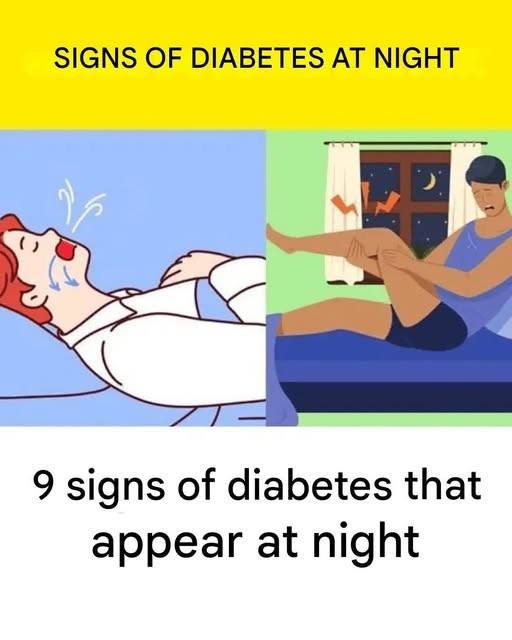
9 Signs of Diabetes That May Appear at Night
Diabetes can affect the body throughout the day, but some symptoms may become more noticeable at night. Frequent bathroom visits, unusual thirst, night sweats, and tingling feet can sometimes be associated with blood sugar problems.
Recognizing these symptoms is important because early diagnosis and proper treatment can help prevent complications. However, experiencing these symptoms does not automatically mean you have diabetes.
1. Frequent Urination During the Night
Waking up several times during the night to urinate can be a possible sign of high blood sugar. When glucose levels become too high, the kidneys work to remove excess glucose through urine, increasing urine production.
Common signs include:
-
Waking up repeatedly to use the bathroom.
-
Producing more urine than usual.
-
Feeling thirsty after urinating.
-
Having interrupted sleep.
2. Unusual Thirst and Dry Mouth
Excessive thirst can occur when high blood sugar causes the body to lose fluids through frequent urination.
You may notice:
-
Waking up with a dry mouth.
-
Feeling thirsty even after drinking water.
-
Needing water beside your bed.
-
Experiencing persistent thirst during the day.
3. Night Sweats
Night sweats can sometimes be associated with blood sugar fluctuations, especially low blood sugar during sleep in people taking insulin or certain diabetes medications.
Possible symptoms include:
-
Sweating heavily during sleep.
-
Waking up with damp clothing.
-
Shaking or a racing heartbeat.
-
Feeling weak or confused after waking.
Night sweats can also have many other causes.
4. Tingling or Burning Feet
Tingling, numbness, or burning sensations in the feet may be associated with diabetic nerve damage, particularly after prolonged high blood sugar.
You might experience:
-
Pins-and-needles sensations.
-
Burning or sharp discomfort.
-
Numbness in the toes.
-
Increased sensitivity to bedsheets touching your feet.
5. Increased Hunger Before Bed
Unusual hunger can sometimes occur when the body cannot use glucose effectively.
Possible signs include:
-
Feeling hungry shortly after dinner.
-
Waking up hungry during the night.
-
Experiencing hunger with shakiness or sweating.
-
Having an increased appetite despite eating normally.
Sudden hunger with trembling or sweating may also indicate low blood sugar, particularly in people using glucose-lowering medication.
6. Blurred Vision in the Evening
Changes in blood glucose can affect fluid levels in the eye’s lens and temporarily cause blurred vision.
You may notice:
-
Difficulty focusing while reading.
-
Blurry vision that changes throughout the day.
-
Difficulty seeing nearby objects clearly.
-
Changes in your usual vision.
Persistent or sudden vision changes should be medically evaluated.
7. Restless Sleep and Unusual Fatigue
Frequent urination, thirst, foot discomfort, and blood sugar fluctuations may interfere with restful sleep.
Possible signs include:
-
Difficulty staying asleep.
-
Waking up several times.
-
Feeling tired despite sleeping enough.
-
Experiencing unusual morning fatigue.
8. Slow-Healing Cuts or Skin Irritation
Prolonged high blood sugar can affect circulation, immune function, and the body’s ability to repair damaged tissue.
You may notice:
-
Small cuts taking longer to heal.
-
Repeated skin infections.
-
Dry or itchy skin.
-
Skin irritation that keeps returning.
9. Headaches or Waking Up Feeling Unwell
Blood sugar fluctuations can sometimes contribute to headaches, weakness, or discomfort during the night or after waking.
Possible symptoms include:
-
Waking up with a headache.
-
Feeling shaky or weak.
-
Experiencing dizziness.
-
Having difficulty concentrating.
-
Feeling unusually tired after sleeping.
These symptoms can also have many other causes.
How to Check for Diabetes
Symptoms alone cannot confirm diabetes. A healthcare professional can recommend blood tests, including:
-
Fasting blood glucose.
-
HbA1c test.
-
Oral glucose tolerance test.
-
Random blood glucose test.
Common diabetes diagnostic thresholds for non-pregnant adults include:
-
HbA1c: 6.5% or higher.
-
Fasting blood glucose: 126 mg/dL or higher.
-
Two-hour glucose tolerance test: 200 mg/dL or higher.
-
Random blood glucose: 200 mg/dL or higher with classic symptoms.
Abnormal results generally require confirmation unless there is clear symptomatic hyperglycemia.
Frequently Asked Questions
1. Can diabetes symptoms appear only at night?
Diabetes symptoms can occur throughout the day, but thirst, frequent urination, and nerve discomfort may become more noticeable at night.
2. Is waking up to urinate every night a sign of diabetes?
It can be, especially when accompanied by excessive thirst. However, other medical conditions can cause frequent nighttime urination.
3. Do night sweats mean I have diabetes?
No. Night sweats alone do not confirm diabetes. They can sometimes indicate low blood sugar in people taking certain diabetes medications.
4. Can someone have diabetes without symptoms?
Yes. Many people with type 2 diabetes have few noticeable symptoms or none at all.
5. What is the earliest warning sign of diabetes?
There is no single earliest warning sign. Increased thirst, frequent urination, unusual hunger, and fatigue are common symptoms.
Final Thoughts
Nighttime changes in your body can provide useful clues about your health. Frequent urination, unusual thirst, burning feet, and disrupted sleep deserve attention, especially when several symptoms occur together.
If you notice these symptoms regularly, consider getting your blood glucose and HbA1c checked. Early diagnosis and appropriate treatment can help protect your eyes, kidneys, nerves, and heart.
Important: Seek urgent medical care if severe thirst and dehydration occur with vomiting, abdominal pain, fruity-smelling breath, difficulty breathing, or confusion. These can be warning signs of diabetic ketoacidosis.