
Diabetic Foot Swelling and Sores: Causes, Treatment and Ways to Avoid Surgery
Description
Foot swelling, skin discoloration, and sores can occur in people with diabetes, particularly when blood sugar remains high for a long time. Diabetes can damage nerves and blood vessels, making it harder to feel injuries and slowing the healing process.
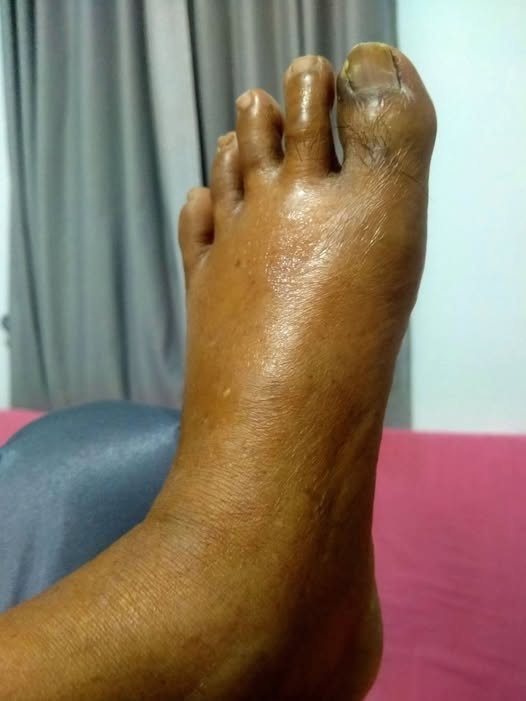
The photograph appears to show significant swelling over the foot, shiny skin, and dark discoloration around the toes and big toenail. These changes should not be ignored.
A photograph cannot confirm the cause. Possible explanations include infection, poor blood circulation, diabetic nerve damage, an injury, or a combination of these problems.
Important: A person with diabetes and this degree of swelling or discoloration needs an urgent medical examination today. Early treatment may help prevent serious complications and sometimes avoid major surgery.
1. Common Causes of Diabetic Foot Swelling
A. Poor Blood Circulation
Diabetes can damage blood vessels and reduce blood flow to the feet.
Possible symptoms include:
-
Swollen feet or toes.
-
Dark, pale, or bluish skin.
-
Cold toes.
-
Pain while walking or resting.
-
Cuts and sores that heal slowly.
-
Changes in toenail appearance.
Severely reduced blood flow can damage tissue and lead to gangrene.
B. Diabetic Neuropathy
High blood sugar over time can damage the nerves in the feet.
This may cause:
-
Numbness.
-
Tingling or burning sensations.
-
Loss of feeling.
-
Difficulty noticing cuts and blisters.
-
Injuries that become infected without being noticed.
A person may have a serious foot wound without experiencing much pain.
C. Diabetic Foot Infection
A small cut, blister, or ulcer can allow bacteria to enter the skin.
Warning signs include:
-
Redness and swelling.
-
Warm skin.
-
Pus or fluid.
-
Unpleasant smell.
-
Increasing pain.
-
Fever or chills.
An infection can spread into deeper tissues and sometimes reach the bone.
D. Charcot Foot
Diabetes-related nerve damage can weaken the bones and joints of the foot.
Symptoms may include:
-
Significant swelling.
-
Warm or reddish skin.
-
Changes in foot shape.
-
Difficulty walking.
-
Sometimes very little pain.
Early treatment and protection from pressure are important.
E. Other Possible Causes
Swelling can also be associated with an injury, gout, a blood clot, or kidney and heart problems. A medical examination is necessary to identify the cause.
2. Can It Be Treated Without Surgery?
Yes. Many diabetic foot problems can be treated without major surgery, depending on how severe the condition is.
Possible treatments include:
1. Professional wound care
A healthcare professional can clean and assess the wound, remove unhealthy tissue when appropriate, and select suitable dressings.
2. Antibiotics
If a bacterial infection is diagnosed, a doctor may prescribe antibiotics. Deeper infections may require hospital treatment and antibiotics through a vein.
3. Improving blood circulation
If blood flow is reduced, a vascular specialist may recommend treatment to restore circulation. Some procedures can improve blood flow without requiring amputation.
4. Pressure relief
Special footwear, protective boots, casts, or other offloading devices may reduce pressure on an ulcer and help it heal.
5. Blood sugar management
Keeping blood glucose within the person’s prescribed target can support wound healing and reduce further complications.
6. Treatment of underlying conditions
If swelling is related to kidney disease, heart problems, or another condition, that condition also needs treatment.
Not every patient requires surgery. However, an abscess, extensive dead tissue, severe infection, or critically poor circulation may require an operation. Delaying necessary treatment can increase the risk of losing tissue or a limb.
3. Safe Home Care While Waiting for Medical Assessment
These steps are supportive only. They cannot replace professional treatment.
-
Avoid unnecessary walking and standing.
-
Protect the foot from pressure and injury.
-
If there is an open wound, gently rinse it with clean running water or sterile saline.
-
Cover the wound with a clean, non-stick sterile dressing.
-
Do not cut blisters, corns, calluses, or darkened tissue.
-
Do not soak the foot in hot or cold water.
-
Avoid applying garlic, lemon, vinegar, turmeric, toothpaste, or homemade pastes to sores.
-
Do not massage the swollen foot.
-
Avoid tight bandages and compression socks until circulation has been assessed.
-
Check blood glucose and continue prescribed diabetes medication as directed.
Do not use a heating pad or hot-water bottle on the foot because reduced sensation can cause burns.
4. Foods That Support General Health
A balanced diet can support overall health and diabetes management, although no particular food can heal an infected ulcer or restore blocked circulation.
Consider including:
-
Eggs, fish, and chicken for protein.
-
Leafy green vegetables for vitamins and minerals.
-
Broccoli and cauliflower for fiber.
-
Beans and lentils in measured portions.
-
Nuts and seeds in moderate portions.
-
Plain yogurt without added sugar.
-
Whole foods with appropriate carbohydrate portions.
-
Water throughout the day.
Limit sugary drinks, sweets, and highly processed foods. Follow an individualized diabetes meal plan.
5. Medical Tests That May Be Needed
A doctor may recommend:
-
Blood glucose and HbA1c testing.
-
Examination of the wound and surrounding skin.
-
Blood tests for infection and kidney function.
-
Examination of foot pulses and circulation.
-
Doppler ultrasound or other blood-flow testing.
-
X-ray to check for bone damage.
-
MRI if a deeper infection or bone infection is suspected.
-
Wound sampling when infection requires identification of the bacteria.
These examinations help determine whether the problem can be managed with wound care and medication or whether a procedure is necessary.
6. Warning Signs That Require Emergency Treatment
Go to an emergency department immediately if any of these occur:
-
Toes become black, blue, or increasingly dark.
-
The foot becomes cold or suddenly changes color.
-
Pus or a strong unpleasant smell comes from a wound.
-
Redness or swelling spreads rapidly.
-
Fever, chills, or severe weakness develops.
-
Severe pain develops, or the foot suddenly becomes numb.
-
The person becomes confused or seriously unwell.
Do not wait for pain to develop. Diabetic nerve damage can reduce the sensation of serious injuries.
7. Frequently Asked Questions
Q1: Can diabetic foot swelling disappear without surgery?
Sometimes. If swelling is caused by a treatable infection, inflammation, or another medical condition, it may improve with appropriate treatment. The cause must first be identified.
Q2: Does every diabetic foot sore require amputation?
No. Many wounds heal with professional wound care, pressure relief, infection treatment, and improved circulation. Amputation is considered when tissue is severely damaged or cannot be saved.
Q3: Can antibiotics heal diabetic foot sores?
Antibiotics can treat bacterial infections, but they do not correct poor circulation or remove dead tissue. Some wounds require additional treatment.
Q4: Can soaking the feet in warm salt water help?
No. Soaking is not recommended for diabetic foot ulcers because it can damage the skin and increase complications.
Q5: Can blood sugar control help wounds heal?
Yes. Good glucose management supports the body’s healing processes, but it cannot replace treatment of infection or poor circulation.
Q6: Can a person walk normally with this swelling?
That depends on the cause. If an ulcer, infection, or Charcot foot is suspected, walking can worsen the damage. A clinician should advise how much weight the foot can safely bear.
Q7: Can dark toenails be a sign of poor circulation?
They can be associated with several conditions, including injury, fungal infection, and circulation problems. Dark discoloration involving the toes or surrounding tissue needs prompt assessment, particularly in someone with diabetes.
Q8: Is surgery always necessary?
No. The treatment depends on the severity and cause. Early assessment gives the best opportunity to treat the problem before it becomes more serious.
8. Important Information Needed for This Particular Case
To understand the situation better, these details are important:
-
Does the person have diabetes, and for how many years?
-
How long has the foot been swollen?
-
Is the foot warm or cold compared with the other foot?
-
Are there open sores, pus, bleeding, or a bad smell?
-
Is the person experiencing pain, burning, or numbness?
-
What are the recent blood glucose readings?
-
Has a doctor recommended surgery or amputation?
Final Advice
A swollen diabetic foot with dark discoloration should never be treated as an ordinary swelling problem. Infection and poor circulation must be ruled out urgently.
Many people can avoid major surgery when diabetic foot complications are identified and treated early. However, there is no safe home remedy that can replace examination and treatment in this situation.