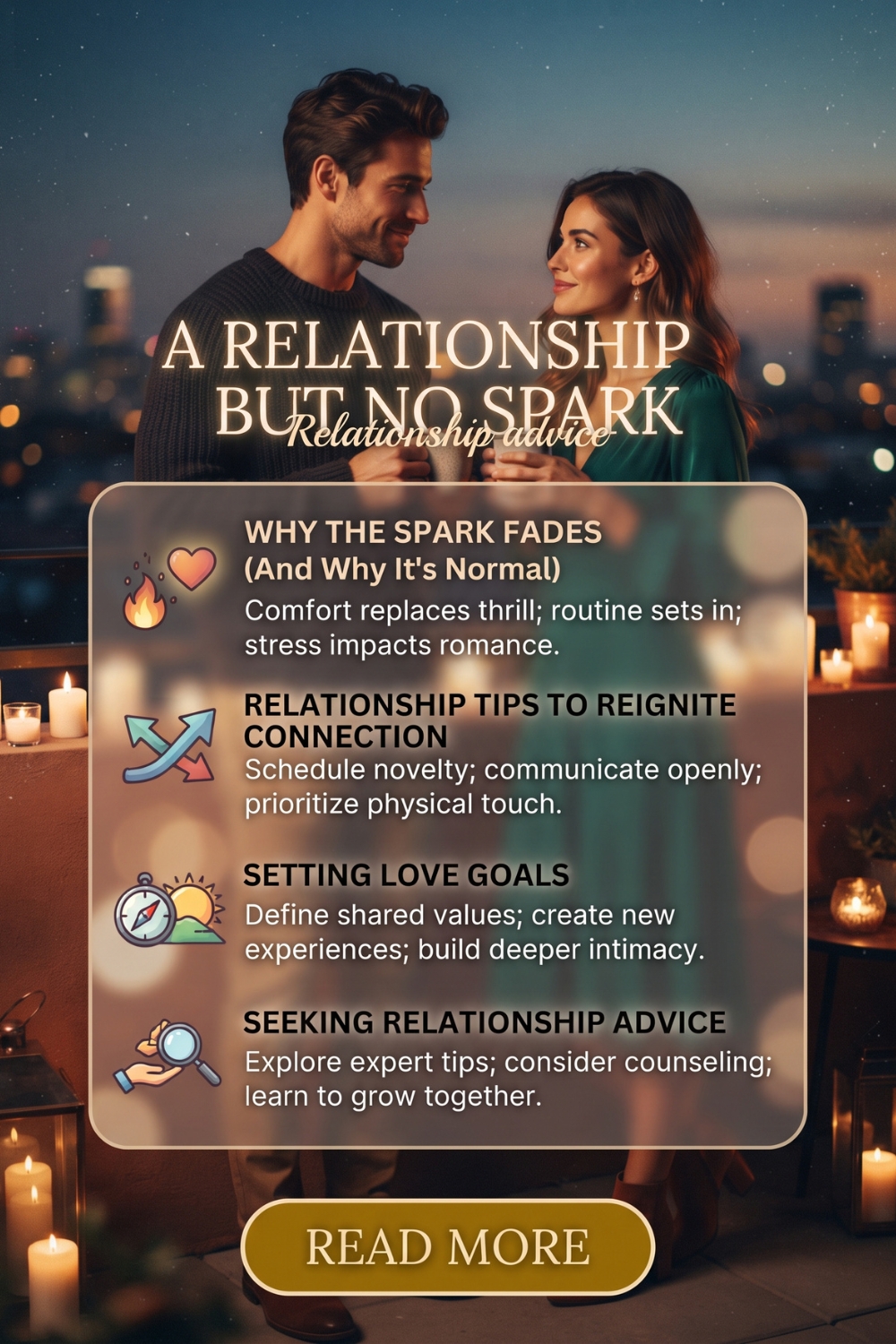

You are sitting on the couch next to your partner. The TV is on, the house is quiet, and everything is completely fine. But as you look over at them, a quiet, nagging thought creeps into your mind: I love you, but where did the magic go?
Being in a relationship with no spark is one of the most common—and isolating—experiences a couple can go through. Society and romantic comedies have conditioned us to believe that true love is a never-ending rollercoaster of butterflies, racing hearts, and dramatic airport chases. So, when the butterflies settle down and Monday night grocery runs become your primary shared activity, it is easy to panic.
Does losing the spark mean you are in the wrong relationship? Absolutely not.
In this comprehensive guide, we are going to dive deep into the best relationship advice for couples who feel like they have lost their romantic edge. You will learn the psychological reasons why the honeymoon phase ends, practical love tips to rebuild emotional intimacy, and how to set healthy relationship goals that will protect your bond for the long haul.
Featured Snippet Answer: What does it mean when a relationship has no spark? When a relationship has no spark, it usually means the initial phase of infatuation—driven by dopamine and novelty—has faded into a more comfortable, routine companionship. It does not necessarily mean the relationship is failing; rather, it indicates that the couple needs to intentionally create new shared experiences, prioritize emotional intimacy, and actively choose to nurture their connection.
1. What Exactly Is “The Spark,” Anyway?
Before we can fix what is broken, we need to understand what we are actually looking for. When people talk about “the spark,” they are usually referring to a cocktail of brain chemicals.
During the first 6 to 18 months of a relationship, your brain is flooded with dopamine, serotonin, and norepinephrine. This creates that euphoric, slightly obsessive feeling we call “infatuation.” You stay up until 3 AM talking, you ignore their annoying habits, and every touch feels electric.
The Shift from Dopamine to Oxytocin
Eventually, your brain simply cannot sustain that level of chemical intensity. As the relationship matures, the brain replaces the fiery dopamine rush with oxytocin and vasopressin—the chemicals responsible for long-term attachment, trust, and deep, quiet love.
When couples transition into this phase, the sudden drop in excitement can feel like falling out of love. In reality, it is the natural progression of a healthy, long-term bond. A relationship with no spark might just be a relationship that has graduated to the next level of comfort—but that doesn’t mean you have to settle for boredom.
2. Recognizing the Signs: Comfort vs. Apathy
It is crucial to understand the difference between healthy relationship comfort and dangerous relationship apathy.
Healthy Comfort (The Good Kind of Quiet)
-
You can sit in silence without feeling awkward.
-
You trust them completely and don’t feel the need to impress them 24/7.
-
Your relationship goals focus on building a life together, not just planning the next exciting date.
-
You feel safe, secure, and accepted for who you are.
Relationship Apathy (When the Spark is Truly Gone)
-
You no longer care to ask about their day, and you don’t really listen when they tell you.
-
Physical touch (even non-sexual, like holding hands or a hand on the shoulder) has completely disappeared.
-
You prefer spending time alone or with friends over spending time with your partner.
-
You feel more like roommates navigating a shared lease than romantic partners navigating life.
If you relate more to the second list, it is time to take action. The good news? The spark isn’t something that just magically happens to you; it is something you can build.
3. Why Did the Spark Fade? Common Culprits
Before implementing new relationship tips, you need to identify what drained your relationship’s energy in the first place.
The Comfort Zone Trap
Human beings are creatures of habit. Once we secure a mate, our evolutionary drive tells us to relax and focus on other things (like careers, raising children, or paying off a mortgage). While routine provides stability, it is the enemy of excitement. Novelty is what triggers dopamine, and without novelty, the spark dies.
Unresolved Resentments
Sometimes, a lack of spark is actually a protective wall built out of unresolved arguments. If you are constantly bickering about household chores, financial stress, or boundary issues, your emotional intimacy will shut down. It is impossible to feel romantically drawn to someone you are secretly harboring resentment toward.
The Myth of “Organic” Romance
One of the most dangerous pieces of love advice is the idea that romance should be spontaneous and effortless. If you wait for the mood to strike naturally after working a 10-hour day, commuting, and making dinner, you will be waiting forever. Long-term romance requires scheduling, effort, and intention.
4. Expert Relationship Advice: How to Reignite the Flame
If you are ready to bring the magic back, it is going to take consistent effort from both partners. Here are the most effective, research-backed ways to wake up a sleepy relationship.
Break the Routine Together
Since novelty creates dopamine, you need to inject newness into your shared life. This doesn’t mean you need to sell your house and travel the world. It means breaking the predictable script of your daily lives.
-
Take a different route: Go for a walk in a neighborhood you’ve never explored.
-
Learn a new skill together: Take a pottery class, learn to cook Thai food, or try rock climbing. Being bad at something together requires vulnerability, which breeds closeness.
-
The “Surprise Date” Rule: Alternate planning dates where the other person has no idea what is happening until they get there.
Master the “Daily Check-In”
Communication is the lifeblood of connection. When you first met, you asked each other deep, probing questions. Now, your conversations might be limited to, “Did you feed the dog?” and “What do you want for dinner?”
Actionable Love Tip: Spend 15 minutes every night implementing the 3-Question Check-In:
-
What was the hardest part of your day?
-
What made you smile today?
-
How can I support you tomorrow?
Prioritize Non-Sexual Physical Touch
When the spark fades, the bedroom is usually the first place to suffer. But you cannot fix a dead sex life by just trying to have more sex. You have to rebuild physical safety and affection first. Focus on holding hands in the car, hugging for a full 20 seconds when you greet each other (this releases a massive rush of oxytocin), and cuddling on the couch without the expectation that it must lead to intimacy.
5. Setting Meaningful Relationship Goals
Couples who thrive long-term are a team working toward a shared vision. If you don’t have mutual relationship goals, you run the risk of drifting apart on parallel paths.
Short-Term Goals for Immediate Connection
-
The No-Phone Zone: Commit to putting your phones in another room for the first hour after you get home from work.
-
The 2/2/2 Rule: Plan a date night every 2 weeks, a weekend getaway every 2 months, and a longer vacation every 2 years.
-
Daily Gratitude: Agree to verbally acknowledge one thing you appreciate about your partner every single day.
Long-Term Goals for Lasting Security
-
Financial alignment: Sit down and map out where you want to be in five years. Do you want to buy a house? Start a business? Getting on the same page financially reduces stress, which makes room for romance.
-
Emotional check-ups: Treat your relationship like a car that needs regular maintenance. Schedule a “state of the union” conversation on the first of every month to discuss what is working and what needs tweaking.
6. Inspiring Love Quotes to Remember Why You Started
Sometimes, when you are in the thick of a dry spell, you need a reminder of what love is really about. Real love isn’t just a feeling; it is a choice you make every single day. Keep these love quotes saved on your phone or written on a sticky note on your mirror.
“Love is a temporary madness, it erupts like volcanoes and then subsides. And when it subsides, you have to make a decision. You have to work out whether your roots have so entwined together that it is inconceivable that you should ever part.” — Louis de Bernières
“A successful marriage requires falling in love many times, always with the same person.” — Mignon McLaughlin
“True love is not a strong, fiery, impetuous passion. It is, on the contrary, an element calm and deep. It looks beyond mere externals, and is attracted by qualities alone. It is wise and discriminating, and its devotion is real and abiding.” — Ellen G. White
7. When the Spark Won’t Come Back: Hard Truths
While most relationships can be revived with effort and intention, it is important to be realistic. Sometimes, a relationship with no spark is a sign that the relationship has run its course.
How do you know when it is time to walk away?
-
One-sided effort: You are trying everything—date nights, communication, therapy—and your partner refuses to engage or acknowledge the problem.
-
Toxic behavior: If the lack of spark is accompanied by emotional abuse, constant manipulation, or profound disrespect, the spark is not the issue; safety is.
-
Fundamental incompatibility: You have realized your core values, life goals, or desires for the future are entirely opposed, and neither of you is willing (or should have) to compromise them.
If you are unsure, seeking the help of a licensed couples therapist is one of the best pieces of relationship advice you can follow. A neutral third party can help you decipher if the fire is out, or just smoldering beneath the ash.
8. Frequently Asked Questions (FAQs)
Can a relationship survive without a spark? Yes, a relationship can survive without the fiery “spark” of early infatuation, provided there is deep respect, trust, and companionship. However, surviving isn’t the same as thriving. To truly thrive, couples need to actively recreate moments of romance and excitement rather than settling for flatline companionship.
How long does the spark usually last? Biologically speaking, the chemical honeymoon phase usually lasts anywhere from 6 months to 2 years. After that, the brain transitions into an attachment phase. The “spark” you feel after year two is no longer a biological given; it is the result of intentional effort.
What is the best love advice for long-term couples? Never stop dating your partner. The biggest mistake long-term couples make is assuming they already know everything about each other. People change and evolve. Stay curious about your partner, ask them questions about their current thoughts and dreams, and never take their presence for granted.
Is it normal to be attracted to other people when the spark fades? Yes, it is entirely normal to notice other attractive people. Monogamy is a commitment, not blindness. However, the danger arises when you begin comparing your comfortable, quiet relationship to the imaginary, exciting fantasy of a new person. Remember that any new relationship will eventually reach the comfortable phase you are in right now.
Conclusion: The Spark is a Fire You Have to Build
Finding yourself in a relationship with no spark does not mean your love story is over. In fact, it usually means your real love story is just beginning. The easy part—the biological rush of the honeymoon phase—is done. Now comes the beautiful, rewarding work of choosing each other on purpose.
By breaking out of your routine, prioritizing emotional check-ins, increasing non-sexual touch, and setting shared relationship goals, you can fan those remaining embers back into a roaring flame. It takes time, patience, and vulnerability, but the depth of love you will find on the other side is far richer than the infatuation you started with.
What is one thing you can do today to show your partner you are still in this?
If you found this relationship advice helpful, don’t forget to pin this article to your Pinterest boards so you can come back to it whenever you need a reminder! Drop a comment below and let us know: what is your favorite way to reconnect with your partner when life gets busy?