
Click Here The #1 Reason Men Lose Interest In Women They Love.
I used to replay the beginning over and over, trying to find where I went wrong.
Was it the way I loved you too loudly? The way I stayed when I should have left? The way I kept making excuses for your silences, your half-efforts, your disappearing acts followed by perfect reappearances that made me forget why I was angry in the first place?
I spent so long blaming myself. And I know I’m not alone in that — because the cruelest thing about being with someone like you is that you made the confusion feel like my fault. You were a master at that.
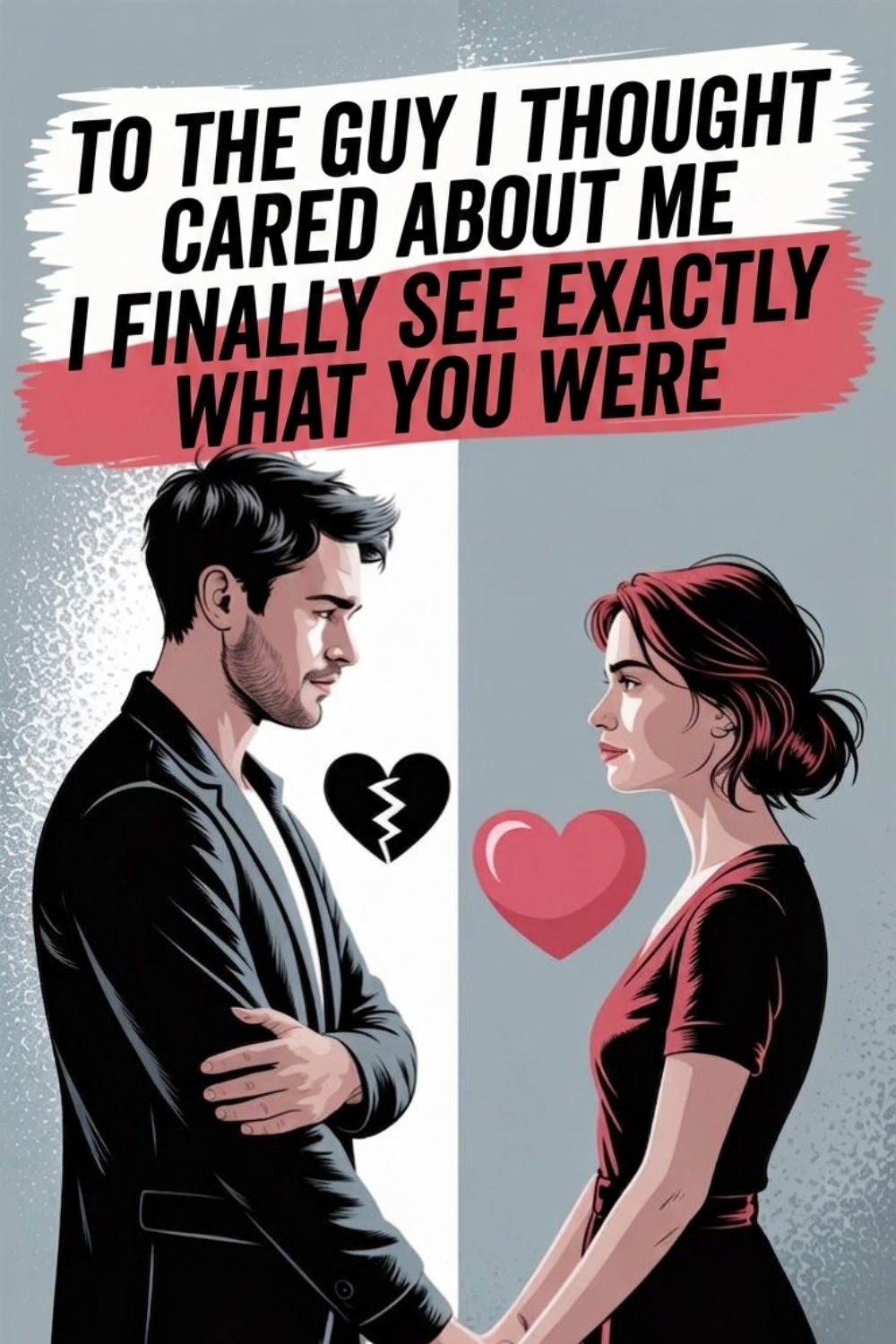
But I’m done rewriting history to make you the victim of my love. I’m writing this letter for every woman who has ever loved a man who treated her feelings like a convenience. For everyone who stayed too long, believed too hard, and still isn’t sure she had the right to be hurt at all.
She did. I did. We all did.
And this is what I finally want to say.
You Were Never Lost — You Were Just Never There
I told myself for a long time that you were emotionally unavailable. That you had walls. Wounds. That if I was just patient enough, gentle enough, understanding enough, the real you would eventually emerge — the version of you that matched how you made me feel in those rare, shining moments when you showed up fully.
What I didn’t understand then is that those moments were not the real you trying to break through. They were a strategy. Conscious or not.
Psychology has a name for this pattern. It’s called intermittent reinforcement — a behavioral mechanism first identified in B.F. Skinner’s research on reward conditioning. When someone receives a reward (connection, warmth, attention) on an unpredictable schedule, they become more attached to the source of that reward, not less. The inconsistency doesn’t drive people away. It keeps them hooked, always waiting for the next moment of warmth, which feels even more precious because of how rarely it comes.
You gave me just enough. Just enough attention to keep me hopeful. Just enough affection to keep me guessing. Just enough of yourself to make me believe I hadn’t imagined the connection.
I hadn’t imagined the connection. What I imagined was your willingness to honor it.
You Let Me Love You Without Ever Intending to Love Me Back
This is the part I stayed in denial about the longest — because admitting it meant admitting that I had been used. And being used feels humiliating in a way that being rejected simply doesn’t.
Rejection, as painful as it is, has clarity. Someone looks at what you’ve offered and says no, thank you. There is an ending you can grieve. There is a door you can close.
What you did was something different. You never said yes and you never said no. You said maybe. You said not yet. You said it with a look, a late-night text, a hand on the small of my back — all the physical vocabulary of wanting someone without a single word of actual commitment.
You kept the door open just wide enough for my hope to keep walking back through it.
And I did. Every time. Because I genuinely loved you, and love makes us want to believe the best. Love makes us patient in ways that, in hindsight, look like losing ourselves — because that is exactly what they were.
I lost myself in the project of being worthy of you. I made myself smaller so you wouldn’t feel crowded. I made myself more available so you wouldn’t feel pressured. I tied my mood to your texts, my self-worth to your approval, my entire emotional ecosystem to a man who was, at best, ambivalent about my presence in his life.
That is not love on your part. That is taking advantage of love on mine.
The Signs Were There — I Just Didn’t Want to Read Them
Here is the truth that I owe to every woman reading this, because it’s the truth I wish someone had said to me clearly and without softening:
The signs were always there. They were never hidden. I just chose — because I needed to — not to see them.
He cancels plans at the last minute but expects you to be available the moment he resurfaces. He talks about the future in vague, non-committal terms. He introduces you to no one who matters. He is fully present when he wants something and mysteriously distant when you need reassurance. He turns your need for clarity into a character flaw — you’re “too needy,” “too intense,” “too much.”
What he is actually saying, in every one of those moments, is: “I want the benefits of your love without the cost of giving you mine.”
That’s not a man who is emotionally unavailable. That’s a man who made a choice — and that choice was not you.
Calling it emotional unavailability lets him off the hook too easily. Emotionally unavailable people can become aware, do the work, and learn to show up. What you did required no growth because it was not a limitation — it was a preference. You preferred a version of this where you held all the power and I carried all the risk.
You made me question my own perception.
This is the part that took me the longest to name, because it felt too dramatic. Too accusatory. Like I was making something sinister out of what was maybe just two people who were mismatched.
But there’s a word for what happens when someone consistently makes you doubt your own accurate reading of a situation. When they say “you’re imagining things” as you accurately identify the distance growing between you. When they say “I never said that” about something they absolutely said. When they respond to your pain with “I don’t know why you always do this” instead of “I’m sorry I hurt you.”
The word is gaslighting, and it doesn’t have to be calculated to be damaging.
Whether you intended it or not, the effect was the same: I stopped trusting my own instincts. I spent energy I should have been using to leave instead using it to figure out if my feelings were even valid. I interrogated my own perception so thoroughly that by the time I knew something was wrong, I had already talked myself out of believing it a dozen times.
Getting that trust back — the trust in my own mind — has been the hardest and most important part of healing.
What You Took from Me (And What You Didn’t)
You took time. More than I want to count.
You took the version of me that gave freely, that loved without armor, that believed — with real, earnest faith — that love was always worth the risk. You handled that version of me carelessly, and she is different now. More careful. More watchful. Not broken, but changed.
You took the easy confidence I used to feel in relationships — that bone-deep sense that I was enough, that my love was a gift rather than an inconvenience. You replaced it, for a while, with something much smaller and meaner: the constant low-grade hum of not being enough, not being chosen, not being worth showing up for.
But here is what you didn’t take, and couldn’t:
You didn’t take my capacity to love. You tested it, stretched it, and tried your best to make me regret it — but it survived you. It’s still here. Quieter now, and wiser, but intact.
You didn’t take my ability to heal. Every day I am further from who I was when I was yours (though I was never really yours, was I?) and closer to someone who knows her own worth without needing someone else to confirm it.
You didn’t take my future. That’s the most important one. Every morning I wake up without you in it is a morning that belongs to something real.
To Every Woman Reading This: Your Love Was Not the Problem
If you found this letter because you are living through your own version of it — because you are in the middle of loving someone who gives you just enough to stay and never enough to feel certain — I want to say something directly to you:
Your love was not too much. It was given to someone with too little capacity to receive it.
The problem was never your feelings. It was never your devotion, your hope, your willingness to stay through the confusing parts. Those things are not weaknesses. Those are the qualities that will make you an extraordinary partner to someone who actually deserves them.
The problem was his willingness to accept your love as a resource while returning it as nothing more than a possibility. A hint. A maybe.
You deserved someone who answered your love with love, not with just enough ambiguity to keep you guessing.
The Healing Is Not Linear — But It Is Real
Here is what recovery from one-sided love actually looks like, because the pretty version — where you wake up one morning simply over it — is a lie:
It looks like grief that arrives in waves, sometimes months after you thought you were fine. It looks like deleting the thread and then finding an old voice memo and losing an entire afternoon to it. It looks like being genuinely happy on a Tuesday and then hearing a song and going completely to pieces.
It also looks like slowly, incrementally, trusting yourself again. Making a small decision based on what you want, not on what might please him. Setting a boundary and watching it hold. Noticing one day that you went a whole morning without thinking about him and feeling, for the first time, not guilty about that — but free.
Healing is not the absence of pain. It is the gradual return of yourself.
Be patient with the process. Be furious when you need to be furious. Grieve what you thought you had, because even if it was never real, the love you felt was. That is worth grieving. And then — in your own time, at your own pace — let it make room for something better.
What I Know Now That I Wish I’d Known Then
I know that real love does not feel like walking on eggshells. It does not feel like a test you keep failing. It does not live in the interpretation of silence or the reading of mixed signals.
Real love is quieter than that — and far more certain. It does not require you to earn it on a daily basis. It does not disappear when you need reassurance. It does not make you feel grateful for the bare minimum of being treated like you matter.
I know now that I was not asking for too much. I was asking the wrong person.
And I know this: the moment you stopped being an option in my life was the moment I started becoming a priority in my own.
That was the gift buried inside the loss. I didn’t want it. I didn’t ask for it. But it is mine now, and I am not giving it back.
You Deserved Better — And You Still Do
This letter is not ending with hatred. It’s ending with something harder and truer: clarity.
He was not a monster. He was just someone who chose his own comfort over your heart, repeatedly, and called it something else. That is its own kind of damage, and you don’t need to pretend it wasn’t real to move past it.
But you also don’t need to keep carrying it.
Put it down. The weight of proving you deserved better. The weight of wishing he had been different. The weight of a love that never became what it could have been.
Put it down, and walk forward — into the life, and the love, that was always waiting for someone wise enough to want it.
Click Here The #1 Reason Men Lose Interest In Women They Love.