
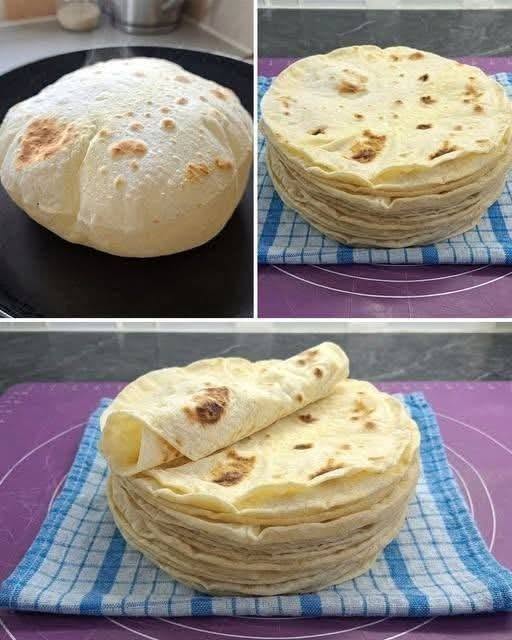
Easy Homemade No-Knead Flatbread (No Eggs, No Butter)
Description
This easy homemade flatbread is soft, flexible, and lightly golden, just like the thin breads shown in the picture. Made with simple pantry ingredients, this beginner-friendly recipe requires no eggs, no butter, and no kneading. The dough comes together quickly, rests briefly, and cooks in a hot skillet until the bread puffs up with beautiful golden-brown spots. These homemade flatbreads are perfect for wraps, curries, kebabs, sandwiches, or serving alongside soups and stews. They are inexpensive, easy to prepare, and a great alternative to store-bought flatbread. With a few basic ingredients and a little practice, you can make a fresh stack of soft breads right in your own kitchen.
Recipe Information
-
Preparation Time: 15 minutes
-
Resting Time: 20–30 minutes
-
Cooking Time: 15–20 minutes
-
Total Time: Approximately 50–65 minutes
-
Servings: 8–10 flatbreads
-
Course: Bread or side dish
-
Cuisine: Homemade flatbread
-
Cooking Method: Stovetop
-
Difficulty: Easy
Ingredients
-
3 cups (375 g) all-purpose flour
-
1 teaspoon salt
-
1 teaspoon sugar, optional
-
1 teaspoon baking powder, optional for a softer texture
-
1 cup (240 ml) warm water, plus 1–3 tablespoons if needed
-
1 tablespoon vegetable oil, optional
Instructions
Step 1: Mix the Dry Ingredients
In a large mixing bowl, combine the flour, salt, optional sugar, and optional baking powder. Stir with a spoon until the ingredients are evenly distributed.
Step 2: Add the Water
Gradually pour the warm water into the flour mixture while stirring with a spoon. Continue mixing until a soft, slightly sticky dough begins to form. Add a little extra water if the dough seems too dry. The exact amount depends on the flour you use.
Step 3: Bring the Dough Together Without Kneading
Use the spoon or your hands to bring the mixture together into a rough ball. You do not need to knead it like traditional bread dough. If desired, mix in the vegetable oil to help make the dough easier to handle.
Cover the bowl with a clean kitchen towel and let the dough rest for 20–30 minutes. Resting allows the flour to absorb the water and makes the dough easier to roll.
Step 4: Divide the Dough
Lightly dust your work surface with flour. Transfer the rested dough to the surface and divide it into 8–10 equal portions. Roll each portion gently into a ball.
Keep the dough balls covered while working so they do not dry out.
Step 5: Roll Out the Flatbreads
Take one dough ball and flatten it with your fingers. Use a rolling pin to roll it into a thin, round circle, approximately 7–8 inches wide.
Dust with a small amount of flour if the dough sticks. Try to keep the thickness even so the bread cooks uniformly.
Step 6: Heat the Skillet
Place a heavy skillet or flat griddle over medium-high heat. Allow it to become properly hot before cooking the first flatbread. You generally do not need oil in the pan.
Step 7: Cook the First Side
Place one rolled flatbread in the hot skillet. Cook for approximately 30–60 seconds, or until small bubbles begin to appear on the surface and light brown spots develop underneath.
Cooking time will vary with the thickness of the bread and the heat of the pan.
Step 8: Flip and Cook the Other Side
Flip the flatbread using a spatula or tongs. Cook the other side for another 30–60 seconds, pressing gently with a spatula if necessary to encourage even cooking.
Some breads may puff up into a balloon shape, while others may develop smaller bubbles. Both results are normal.
Step 9: Finish the Remaining Breads
Transfer the cooked flatbread to a clean plate and cover it with a kitchen towel to help retain moisture. Repeat with the remaining dough balls, adjusting the heat as needed to prevent burning.
Step 10: Serve Warm
Stack the flatbreads and serve them while warm. Their soft, flexible texture makes them ideal for wrapping around fillings or scooping up sauces and curries.
Recipe Notes
-
No kneading required: Stirring the ingredients until a dough forms and allowing it to rest makes this recipe beginner-friendly.
-
Water temperature: Use warm, not hot, water.
-
Soft dough: A slightly soft dough produces more flexible flatbreads.
-
Resting matters: Resting makes the dough easier to roll and helps prevent it from shrinking.
-
Pan temperature: A properly heated skillet helps create the characteristic golden spots.
-
Flour: All-purpose flour works well. Bread flour can produce a slightly chewier result.
-
Oil: Oil is optional, so you can leave it out if you prefer a recipe without added fat.
-
Puffing: Not every flatbread will puff completely, and that does not mean the recipe has failed.
Tips for Perfect Homemade Flatbread
-
Measure the flour accurately to avoid a dry, stiff dough.
-
Add water gradually because different flours absorb different amounts.
-
Allow the dough to rest before rolling.
-
Roll each bread evenly for consistent cooking.
-
Keep unused dough covered to prevent a dry surface.
-
Preheat the skillet before cooking.
-
Avoid cooking over excessively low heat, which can dry out the bread.
-
Adjust the heat if the bread develops dark spots too quickly.
-
Stack cooked breads under a clean towel to keep them soft.
-
If the flatbreads become stiff, warm them briefly in a covered skillet before serving.
Serving Suggestions
These homemade flatbreads can be enjoyed in many ways:
-
Serve with chicken curry, lentils, or chickpea stew.
-
Use as wraps for grilled chicken, vegetables, or kebabs.
-
Fill with scrambled eggs and vegetables for breakfast.
-
Serve alongside creamy vegetable soup.
-
Spread with hummus and add fresh salad ingredients.
-
Use as a quick base for homemade flatbread pizza.
-
Serve with yogurt dip, chutney, or your favorite sauce.
Storage and Reheating
Room temperature: Once cooled, store the flatbreads in a sealed bag or airtight container for up to 1–2 days in a cool environment.
Refrigeration: Store in an airtight container for up to 4 days.
Freezing: Place parchment paper between the cooled flatbreads and freeze in a sealed freezer-safe bag for up to 2 months for best quality.
Reheating: Warm each flatbread in a dry skillet for approximately 15–30 seconds per side. You can also wrap a stack in a slightly damp paper towel and microwave briefly.
Nutritional Information
Approximate nutrition per flatbread, assuming the recipe makes 10 flatbreads and uses no oil:
-
Calories: 125–140
-
Protein: 3–4 g
-
Carbohydrates: 26–29 g
-
Fat: 0.5–1.5 g
-
Fiber: 1 g
-
Sugar: Less than 1 g
-
Sodium: 200–250 mg
Values vary depending on the flour brand, the number of flatbreads, and optional ingredients. Adding oil will increase the fat and calorie content.
Benefits of Homemade Flatbread
Budget-friendly: The recipe uses inexpensive ingredients commonly found in most kitchens.
Simple preparation: No special equipment or bread-making experience is necessary.
Egg-free: The recipe contains no eggs, making it useful for people avoiding eggs.
Butter-free: Butter is not needed to make these soft flatbreads.
Versatile: The breads can accompany many meals or be filled with sweet or savory ingredients.
Portion control: Making your own bread allows you to choose the size and thickness of each flatbread.
This recipe is made with wheat flour, so it is not gluten-free. It is also primarily a carbohydrate source; pairing it with protein-rich foods and vegetables can make a meal more balanced.
Frequently Asked Questions
1. Can I make this flatbread without oil?
Yes. Oil is optional. The flatbreads may be slightly less tender, but they can still turn out soft if the dough is hydrated properly and the breads are not overcooked.
2. Why is my dough too sticky?
Add a small amount of flour to your hands and work surface. Avoid adding too much flour at once because a stiff dough can make the flatbreads dry.
3. Why are my flatbreads hard?
They may have been rolled too thin, cooked for too long, or left uncovered after cooking. Cover them with a clean towel as they come off the skillet.
4. Do I need yeast?
No. This quick flatbread recipe does not require yeast or a long rising period.
5. Why did my flatbread not puff up?
The skillet may not have been hot enough, or the dough may have been rolled unevenly. Puffing is not guaranteed, and the bread can still be soft and delicious without it.
6. Can I use whole-wheat flour?
Yes, but whole-wheat flour absorbs more water and produces a denser bread. Add water gradually until the dough is soft enough to roll.
7. Can I prepare the dough ahead of time?
Yes. Cover the dough and refrigerate it for up to 24 hours. Let it sit briefly at room temperature before dividing and rolling it.
8. Can I make these flatbreads gluten-free?
You can experiment with a gluten-free flour blend designed for flatbreads, but the texture and water requirements will differ. Ordinary wheat flour cannot be made gluten-free by changing the preparation method.
9. How do I keep the flatbreads soft?
Stack them under a clean kitchen towel immediately after cooking and store them in an airtight container once cooled.
10. Are these flatbreads suitable for beginners?
Yes. The ingredients are simple, the dough does not require kneading, and the breads cook quickly in a skillet. They are an excellent starting point for homemade bread.
Conclusion
This Easy Homemade No-Knead Flatbread is a practical, affordable recipe for making soft, golden breads without eggs, butter, or yeast. With flour, water, salt, and a little resting time, you can prepare a fresh stack of flatbreads for wraps, curries, soups, and everyday family meals. Keep the dough soft, roll the breads evenly, and cook them on a properly heated skillet for the best results.