
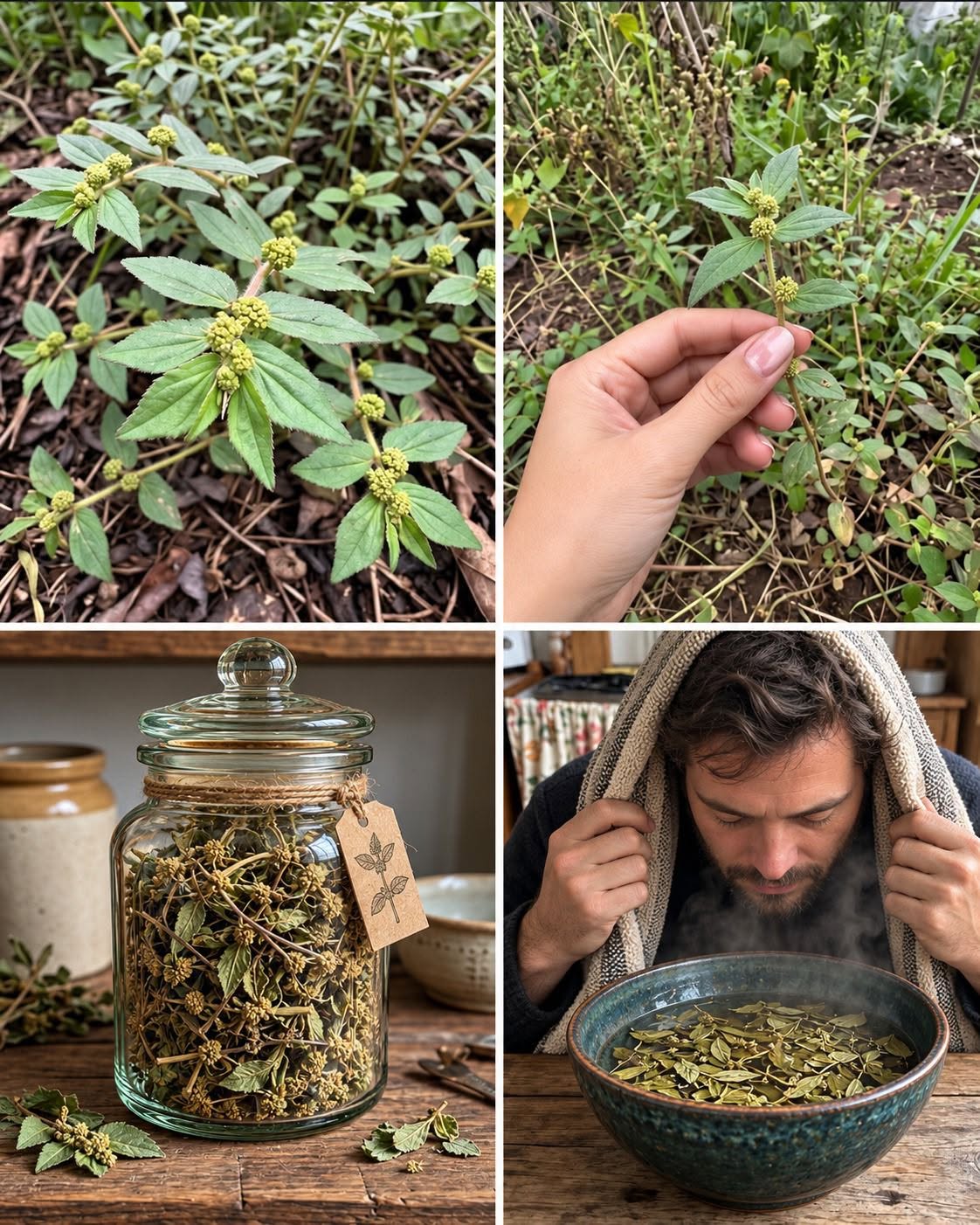
Traditional Herbal Leaf Steam Preparation
Description
Traditional herbal steam is a wellness practice found in many cultures around the world. It involves using warm moisture to create a comfortable environment, particularly during dry weather or when indoor air feels uncomfortable. Different communities have historically used aromatic leaves and flowers in their traditional steam preparations.
The plant shown in the photographs resembles Euphorbia hirta, commonly known as asthma weed, snake weed, or pill-bearing spurge. It is a small wild-growing herb with green leaves, hairy stems, and clusters of tiny yellowish-green flowers. However, identification from photographs alone is not reliable, and several other plants can have a similar appearance.
Euphorbia hirta has a history of traditional use in different herbal medicine systems. Nevertheless, its safety and effectiveness for inhalation have not been established through adequate human clinical research. Some Euphorbia plants also produce milky latex that can irritate the skin and eyes.
For this reason, this recipe uses a safer humidity-based alternative rather than unidentified wild leaves. It is intended as a simple wellness practice, not as a treatment for asthma, cough, colds, or respiratory infections.
Ingredients
-
2–3 cups of clean water, or the amount recommended for your humidifier.
-
1 clean humidifier suitable for household use.
-
A clean container for measuring water.
-
No unidentified wild herbs.
-
No concentrated herbal extracts.
-
No essential oils.
Important: Do not add Euphorbia hirta or other unidentified plants to hot water or humidifiers. Their inhalation safety is unknown.
Preparation Instructions
Step 1: Prepare the equipment
Choose a clean humidifier that is suitable for indoor use. Wash and dry the removable water container according to the manufacturer’s instructions. Make sure there is no visible dirt, residue, or old standing water.
Step 2: Add clean water
Fill the humidifier with the recommended type and quantity of water. Follow the manufacturer’s instructions because different humidifiers have different requirements.
Step 3: Position the humidifier
Place the equipment on a stable, flat surface away from electrical hazards, curtains, and children’s reach. Avoid placing it directly beside your face or bed.
Step 4: Start humidification
Switch on the humidifier according to its instructions. Allow comfortable moisture to circulate naturally throughout the room.
Step 5: Maintain comfortable humidity
Keep the room comfortably humid rather than excessively damp. Excess humidity can encourage mold and dust mites. Stop using the equipment if you experience irritation, coughing, or breathing discomfort.
Step 6: Clean after use
Empty any remaining water, clean the equipment as recommended, and allow the removable parts to dry properly. Regular cleaning helps prevent the growth of microorganisms.
Preparation Notes
-
Always use clean water.
-
Never inhale steam directly from boiling water.
-
Avoid covering your head with a towel over a bowl of hot water.
-
Do not burn or smoke medicinal plants.
-
Do not add unidentified leaves or plant extracts to humidifiers.
-
Keep the equipment away from children and pets.
-
Clean humidifiers regularly.
-
Stop the practice if any irritation develops.
Serving Information
|
Details |
Information |
|---|---|
|
Total preparation time |
5 minutes |
|
Servings |
1 person |
|
Difficulty |
Easy |
|
Recipe category |
Traditional wellness |
|
Main ingredient |
Clean water |
|
Cooking required |
No |
|
Storage |
Not applicable |
|
Best use |
Comfortable indoor humidity |
Nutritional Information
This is a non-edible wellness preparation, so conventional nutritional values do not apply.
|
Nutrient |
Amount |
|---|---|
|
Calories |
0 kcal |
|
Protein |
0 g |
|
Carbohydrates |
0 g |
|
Fat |
0 g |
|
Fiber |
0 g |
|
Sugar |
0 g |
These figures refer to the water-based preparation and do not represent the nutritional composition of the plant.
Traditional Herbal Background
Euphorbia hirta has been mentioned in traditional herbal practices in several tropical regions. Different communities have historically used various parts of the plant in preparations associated with respiratory and digestive complaints.
The plant contains naturally occurring chemical compounds, including flavonoids, tannins, and other plant constituents. Researchers have investigated some of these compounds in laboratory studies.
However, laboratory research is not the same as clinical evidence. It does not establish that consuming the plant, applying it to the skin, or inhaling its vapors is safe or effective.
Its common name, asthma weed, should also not be interpreted as proof that it treats asthma. Anyone experiencing wheezing, chest tightness, or difficulty breathing should follow medical advice and use prescribed treatment.
Potential Benefits and Limitations
1. Comfortable indoor air
Maintaining appropriate indoor humidity may make dry air feel more comfortable.
2. Relaxation
A calm environment with comfortable humidity may contribute to a relaxing wellness routine.
3. Traditional botanical interest
Learning about Euphorbia hirta can provide insight into traditional plant knowledge and botanical diversity.
4. Scientific research
The plant contains compounds that have attracted scientific interest, although their clinical significance remains uncertain.
5. Respiratory health limitations
There is no established evidence that this plant cures asthma, clears lung infections, or treats respiratory disease. Hot-water steam inhalation can also cause serious burns.
Storage Instructions
The prepared humidifier does not require storage as a recipe. Empty the water tank after use and clean the equipment according to its manufacturer’s recommendations.
If collecting a botanical specimen for educational purposes, first obtain reliable identification from a qualified botanist. Keep specimens clearly labelled, dry, and away from children and pets. Never assume that drying makes a potentially irritating plant safe for medicinal use.
Frequently Asked Questions
Q1. What is the plant shown in the photographs?
It resembles Euphorbia hirta, but the identification is not confirmed. A botanical expert should examine the plant before it is named definitively.
Q2. Why is Euphorbia hirta called asthma weed?
The name comes from its historical association with traditional respiratory remedies. It does not mean the plant is a proven asthma treatment.
Q3. Can I boil the leaves and inhale the steam?
This is not recommended. The plant’s identity and inhalation safety have not been established, and hot-water steam can cause burns.
Q4. Can this plant be used to prepare herbal tea?
Do not consume unidentified wild plants. The safe dosage, preparation, and effectiveness of Euphorbia hirta for oral use have not been adequately established in humans.
Q5. Does this preparation cure coughs and colds?
No. Humidification may improve comfort when indoor air is dry, but it does not cure infections or respiratory diseases.
Q6. Is Euphorbia hirta safe for children?
Do not give children preparations made from this unidentified plant. Keep wild plants and their milky latex away from children.
Q7. Can pregnant women use this herbal remedy?
Its safety during pregnancy and breastfeeding has not been established. Avoid medicinal use without professional medical advice.
Q8. Can dried leaves be stored in a glass jar?
Botanical specimens can be stored for educational purposes after correct identification and appropriate drying. This does not establish that they are safe to consume or inhale.
Final Recipe Notes
Traditional herbal practices are an important part of cultural knowledge, and plants such as Euphorbia hirta are interesting subjects for botanical and scientific research. However, a plant’s traditional reputation should never replace proper identification or reliable safety information.
The safest approach is to enjoy botanical learning, maintain comfortable indoor humidity, and avoid experimenting with unidentified wild herbs. Natural does not always mean harmless, and respiratory symptoms deserve appropriate medical attention.