
Guava Leaf Herbal Tea – Traditional Wellness Drink
Description
Guava Leaf Herbal Tea is a simple, naturally caffeine-free herbal beverage prepared using fresh guava leaves and water. Traditionally enjoyed in various cultures, guava leaf tea has a mild earthy flavor and can be served warm or chilled.
Guava leaves contain naturally occurring plant compounds, including polyphenols and flavonoids, which have antioxidant properties. This herbal infusion is easy to prepare and can be enjoyed as part of a balanced wellness routine.
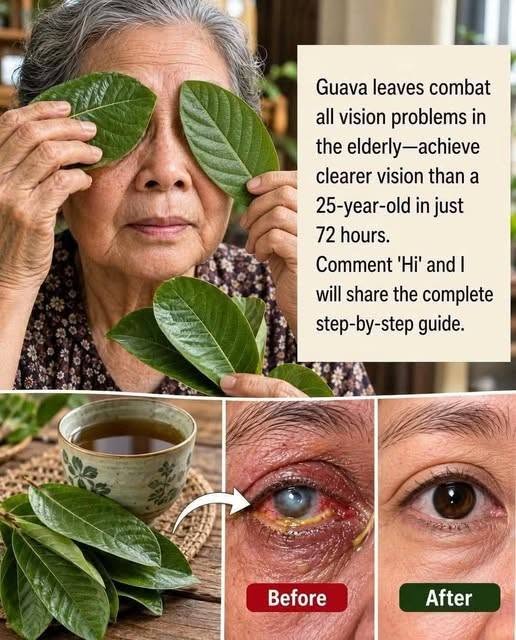
Although the image suggests that guava leaves can restore eyesight within 72 hours, there is no reliable scientific evidence supporting this claim. Guava leaf tea does not cure vision problems, cataracts, or eye infections. Never place guava leaves, leaf extracts, or homemade tea in or directly around the eyes. Homemade preparations are not sterile and may cause irritation or infection.
Recipe Information
-
Prep Time: 5 minutes
-
Cooking Time: 10 minutes
-
Total Time: 15 minutes
-
Servings: 2 cups
-
Category: Herbal Tea
-
Difficulty: Easy
-
Preparation Method: Stovetop
Ingredients
-
6–8 fresh guava leaves
-
2 cups (480 ml) drinking water
-
1 small cinnamon stick (optional)
-
1 teaspoon honey (optional)
-
1 teaspoon fresh lemon juice (optional)
Instructions
Step 1: Select Fresh Guava Leaves
Choose 6–8 fresh, healthy guava leaves. Avoid leaves that are damaged, discolored, or exposed to pesticides.
Step 2: Wash the Leaves
Rinse the leaves thoroughly under clean running water to remove dirt and other impurities.
Step 3: Boil the Water
Pour 2 cups of drinking water into a small saucepan and bring it to a gentle boil.
Step 4: Add Guava Leaves
Add the washed guava leaves to the boiling water. If desired, add a small cinnamon stick for extra aroma and flavor.
Step 5: Simmer
Reduce the heat and allow the mixture to simmer gently for approximately 8–10 minutes.
Step 6: Strain the Tea
Remove the saucepan from the heat. Strain the infusion through a fine strainer into two cups.
Step 7: Add Optional Flavor
Allow the tea to cool slightly. Add a little lemon juice or honey if desired.
Step 8: Serve
Enjoy the herbal tea warm. It can also be refrigerated and served chilled.
Notes
-
Fresh guava leaves are recommended for this recipe.
-
Wash all leaves thoroughly before preparation.
-
Avoid boiling the leaves for excessively long periods.
-
Honey is optional and adds natural sugar.
-
People with diabetes should account for honey in their carbohydrate intake.
-
Do not use this preparation as an eye wash or eye treatment.
-
If you take medication for diabetes or blood pressure, ask your healthcare professional before regularly consuming concentrated herbal preparations.
Helpful Tips
-
Choose young, healthy guava leaves without visible damage.
-
Use clean drinking water for preparation.
-
Start with a mild infusion rather than making it overly concentrated.
-
Add lemon for a refreshing citrus flavor.
-
Store leftover tea in a covered container in the refrigerator.
-
Prepare small quantities to maintain freshness.
-
Avoid adding excessive honey or sugar.
Nutritional Information
Approximate values per cup, without honey or other optional ingredients. Actual values may vary.
| Nutrient | Amount |
|---|---|
| Calories | 2–5 kcal |
| Protein | 0 g |
| Carbohydrates | Less than 1 g |
| Fat | 0 g |
| Fiber | 0 g |
| Sugar | 0 g |
| Sodium | 0–2 mg |
Potential Benefits of Guava Leaves
1. Contains Antioxidants
Guava leaves contain flavonoids and polyphenols, plant compounds that have antioxidant activity.
2. Supports a Healthy Diet
Unsweetened herbal tea can be an alternative to sugary beverages.
3. Provides Hydration
Drinking herbal tea contributes to daily fluid intake.
4. Traditional Digestive Use
Guava leaves have traditionally been used in herbal preparations for digestive complaints, although clinical evidence for their effectiveness remains limited.
5. Naturally Caffeine-Free
Guava leaf tea does not naturally contain caffeine, making it an option for people avoiding caffeinated beverages.
6. Plant-Based Beverage
This simple infusion offers a way to enjoy a traditional herbal drink without complicated ingredients.
Important: Guava Leaves and Eye Health
The picture claims that guava leaves can eliminate vision problems in older adults within 72 hours. This is not scientifically established.
For maintaining healthy eyesight:
-
Eat foods containing vitamin A, such as carrots, spinach, and sweet potatoes.
-
Include leafy green vegetables in your meals.
-
Eat foods containing omega-3 fatty acids.
-
Protect your eyes from excessive ultraviolet exposure.
-
Schedule regular eye examinations.
-
Seek medical attention for sudden blurred vision, eye pain, redness, or changes in eyesight.
Cataracts, glaucoma, diabetic eye disease, and other vision problems require appropriate eye examinations and medical treatment.
Frequently Asked Questions (Q&A)
Q1: Can guava leaf tea improve eyesight?
There is no reliable clinical evidence that drinking guava leaf tea improves eyesight or reverses age-related vision problems.
Q2: Can guava leaves cure cataracts?
No. Cataracts cannot be cured with guava leaves or herbal tea. An eye specialist can assess cataracts and recommend appropriate treatment.
Q3: Can I put guava leaves directly over my eyes?
No. This is not recommended. Leaves are not sterile and may introduce bacteria or irritate the delicate tissues around the eyes.
Q4: How many times can I drink guava leaf tea?
There is no established medically recommended daily amount. Avoid excessive or concentrated consumption, especially if you take regular medication.
Q5: Can I use dried guava leaves?
Yes. Food-grade dried guava leaves can be used instead of fresh leaves. Follow the product’s preparation instructions.
Q6: Can I drink guava leaf tea without honey?
Absolutely! It has a mild herbal flavor and can be enjoyed without any sweetener.
Q7: Is guava leaf tea suitable for people with diabetes?
Unsweetened tea contains very little carbohydrate, but it should not be considered a blood sugar treatment or a replacement for prescribed medication. People taking glucose-lowering medication should discuss regular herbal tea consumption with their healthcare professional.
Q8: Can older adults drink guava leaf tea?
Older adults should consider their medications and existing health conditions before regularly consuming herbal preparations. A healthcare professional can advise whether it is appropriate.
Q9: Can I prepare guava leaf tea in advance?
Yes. Refrigerate the strained tea in a clean, covered container and consume it within 24 hours.
Q10: Does guava leaf tea contain caffeine?
No. Guava leaf tea is naturally caffeine-free.
Storage Instructions
-
Room Temperature: Best consumed shortly after preparation.
-
Refrigerator: Store in a covered container for up to 24 hours.
-
Reheating: Warm gently on the stovetop if desired.
-
Freshness: Discard if the tea develops an unusual smell or appearance.
Final Thoughts
Guava Leaf Herbal Tea is a simple traditional beverage that can be prepared with just fresh guava leaves and water. Its naturally occurring plant compounds make it an interesting addition to a varied and balanced diet.
While guava leaves have a history of traditional use, they are not a proven treatment for eyesight problems, cataracts, or other eye conditions.
Enjoy this herbal tea as a refreshing beverage, but protect your eyesight with proper nutrition, regular eye examinations, and appropriate medical care.