We all crave that picture-perfect romance, but let’s be real—real life isn’t a movie. When the honeymoon phase fades and the daily grind sets in, you might find yourself pausing to wonder, Are we actually doing okay?
If you are asking yourself, “Are you in a healthy relationship?”, you are already taking a crucial step toward emotional well-being. A strong, secure partnership doesn’t just happen by accident. It requires intention, effort, and a willingness to grow together. In this comprehensive guide, we are going to dive deep into the core components of a thriving dynamic. You will learn how to spot green flags, navigate inevitable conflicts, and apply practical relationship advice to reach your ultimate love goals.
What is a healthy relationship? (Featured Snippet) A healthy relationship is a partnership built on a foundation of mutual respect, trust, and open communication. Both individuals feel safe, valued, and supported in their personal growth while sharing equal power in decision-making and resolving conflicts without emotional or physical harm.
Let’s explore the essential elements that separate a surviving partnership from a thriving one.
What Defines a Healthy Relationship? The Foundation
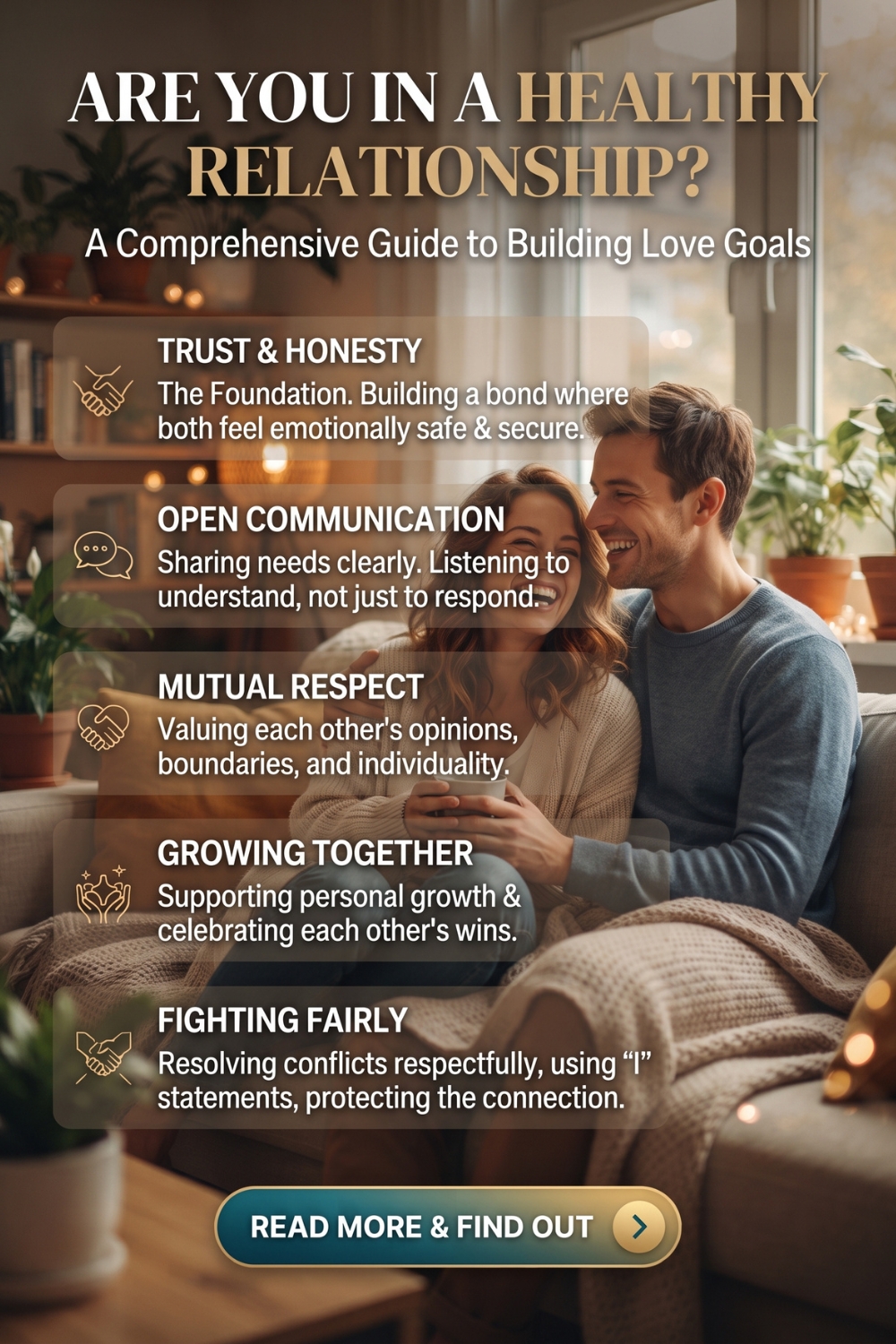
Building a lasting bond is a lot like building a house; if the foundation is cracked, the walls won’t hold up during a storm. The best love advice always circles back to a few non-negotiable pillars.
Trust and Honesty: The Core of Relationship Goals
Trust isn’t just about believing your partner won’t cheat on you. It is about emotional reliability. Can you trust them to listen when you are upset? Can you trust them to respect your boundaries? Honest communication builds this trust over time. When both partners feel secure enough to share their deepest fears without judgment, you are looking at top-tier relationship goals.
Open Communication: The Best Relationship Advice You’ll Hear
You’ve heard it a million times, but relationship tips always emphasize communication because it genuinely works. Healthy couples don’t expect each other to be mind readers. They articulate their needs clearly and listen to understand, rather than just waiting for their turn to speak.
Red Flags vs. Green Flags: Are You on the Right Track?
It is incredibly easy to normalize bad behavior when you care about someone. Learning to distinguish between toxic habits and healthy milestones is vital for your long-term happiness.
Signs of Toxic Dynamics (Protect Your Peace)
No one is perfect, but certain behaviors are major red flags. If you notice any of the following, it might be time to re-evaluate:
-
Constant Criticism: Teasing is one thing, but if your partner frequently belittles your choices or appearance, that chips away at your self-esteem.
-
Controlling Behavior: Dictating who you can see, what you wear, or how you spend your money is a severe warning sign.
-
Stonewalling: Shutting down completely during an argument and refusing to engage is manipulative and prevents any real resolution.
Positive Indicators of True Love and Respect
On the flip side, green flags show that your partnership is flourishing:
-
Mutual Encouragement: Your partner acts as your biggest cheerleader, celebrating your wins as if they were their own.
-
Shared Laughter: Never underestimate the power of shared humor. Finding joy in the mundane is a beautiful indicator of compatibility.
-
Respecting Boundaries: When you say “no” or ask for space, a healthy partner respects that boundary immediately, without making you feel guilty.
How to Cultivate Love Goals in Your Daily Life
You don’t need grand, expensive gestures to maintain a beautiful connection. Real intimacy is built in the quiet, everyday moments.
Small Gestures and Meaningful Love Quotes
Sometimes, the most impactful love tips are the simplest. Leaving a sweet note on the bathroom mirror, brewing their morning coffee, or sending a quick text just to say “I’m thinking of you” can turn a bad day around. If you struggle with words, sharing meaningful love quotes that remind you of them can be a beautiful way to express your feelings.
Quality Time and Active Listening
Put the phones away. In a world full of digital distractions, giving someone your undivided attention is one of the highest forms of respect. Whether you are cooking dinner together, going for an evening walk, or just sitting on the couch, make sure you are actively engaging with each other’s presence.
Top Relationship Tips for Overcoming Conflict
Every single couple fights. The difference between a healthy relationship and a toxic one isn’t the absence of conflict, but how that conflict is handled.
Fighting Fairly Without Damaging the Connection
When tensions run high, it is tempting to go for the low blow. Resist that urge. Use “I” statements instead of “You” statements. For example, instead of saying, “You never help around the house,” try, “I feel overwhelmed when I have to manage all the chores by myself.” This shifts the focus from an accusation to a shared problem that needs solving. Always remember that it is the two of you against the problem, not the two of you against each other.
Knowing When to Seek Outside Love Advice
There is no shame in admitting you need help. If you find yourselves having the exact same argument week after week with no resolution, it might be time to seek a neutral third party. Couples therapy or professional relationship coaching can provide invaluable tools to break negative cycles.
Nurturing Individuality While Growing Together
A massive misconception about romance is that you need to become one single entity. In reality, merging your entire life to the point where you lose yourself is a recipe for resentment.
Why Independence is Crucial for Relationship Goals
You are a complete person on your own. A partner should complement your life, not complete it. Maintain your own hobbies, nurture your friendships outside of the relationship, and spend time alone. Having your own distinct identity makes you a more interesting, fulfilled person, which in turn brings fresh, positive energy back into your partnership.
FAQ: Common Relationship Advice Questions
1. How often should couples argue? There is no “normal” number of arguments. Some couples bicker weekly about small things, while others have deeper disagreements every few months. What matters is that arguments are respectful, constructive, and ultimately lead to a deeper understanding of one another.
2. Can a toxic relationship become healthy? Yes, but it requires a massive amount of self-awareness and dedicated work from both partners. If only one person is trying to fix the toxicity, it will not work. Professional therapy is usually necessary to facilitate this kind of deep change.
3. Is it normal to lose the “spark” after a few years? Absolutely. The intense, butterflies-in-your-stomach feeling at the beginning (the honeymoon phase) transitions into a deeper, quieter, and more stable form of love. The spark isn’t dead; it just evolved. You can always reignite excitement through spontaneous date nights and trying new things together.
4. How do I know if it’s time to walk away? If the relationship is draining more energy than it gives, if abuse (emotional, verbal, or physical) is present, or if your core values and future goals are completely incompatible, it is usually healthiest to part ways.
Conclusion
So, are you in a healthy relationship? If your partnership is characterized by deep trust, mutual respect, and a genuine desire to see each other thrive, you are well on your way to achieving your ultimate love goals. Remember that love is a verb—it requires daily action, patience, and a whole lot of grace.
No relationship is perfect, but a healthy one is always worth the effort. By applying this relationship advice and focusing on open communication, you can build a bond that withstands the test of time.
What is one small thing you can do today to make your partner feel loved and appreciated? Let me know your favorite love tips in the comments below, and don’t forget to save this post to your favorite Pinterest board for later!