
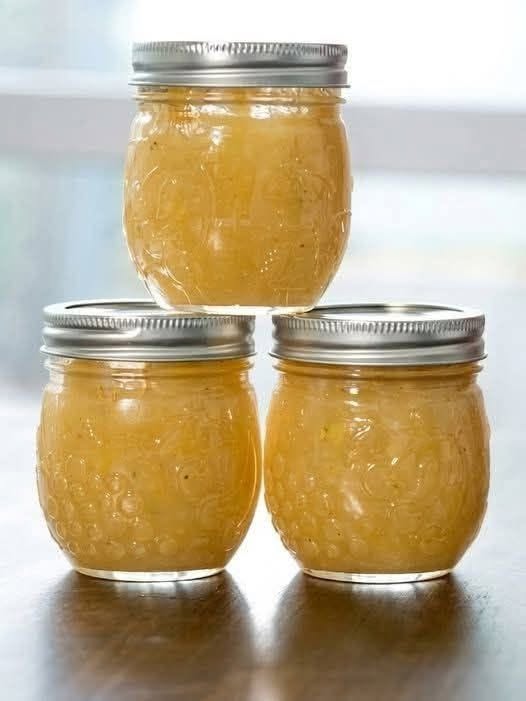
Homemade Golden Pineapple Jam
Description
Homemade Golden Pineapple Jam is a sweet, fruity preserve with a beautiful golden-yellow color and a soft, slightly chunky texture. Inspired by the golden fruit preserve shown in the picture, this recipe uses fresh pineapple, sugar, lemon juice, and water to create a delicious homemade spread.
The pineapple slowly cooks until it becomes tender and glossy, while the sugar helps the mixture thicken into a jam-like consistency. Fresh lemon juice balances the sweetness and adds a gentle tangy flavor. This jam is perfect for spreading on toast, serving with pancakes, filling pastries, or enjoying with biscuits and crackers.
This recipe is simple to prepare using everyday kitchen ingredients. You do not need special equipment to make a small batch, and you can adjust the texture depending on whether you prefer a smooth jam or one with small pieces of fruit.
Recipe note: The fruit in the image cannot be identified with certainty, so this recipe uses pineapple as a suggested version of the golden fruit preserve.
Recipe Information
-
Prep Time: 15 minutes
-
Cook Time: 30–45 minutes
-
Total Time: Approximately 45–60 minutes
-
Servings: Approximately 2–3 small jars
-
Yield: About 2½–3 cups, depending on cooking time
-
Course: Breakfast, Snack, Condiment
-
Cuisine: Homemade
-
Difficulty: Easy
-
Main Ingredient: Fresh pineapple
Ingredients
-
4 cups finely chopped fresh pineapple
-
1½ cups granulated sugar
-
2 tablespoons fresh lemon juice
-
¼ cup water, if needed
-
1 teaspoon finely grated lemon zest, optional
-
1 small pinch of salt, optional
Important: Pineapple contains less natural pectin than some fruits, so this recipe may produce a soft, spoonable preserve rather than a very firm, commercially set jam.
Instructions
Step 1: Prepare the Pineapple
Wash the outside of the pineapple before cutting it. Remove the peel, eyes, and tough core. Cut the fruit into small pieces and measure four cups.
For a chunky jam, chop the pineapple finely but leave some small pieces intact. For a smoother texture, blend the pineapple briefly before cooking.
Step 2: Combine the Ingredients
Place the chopped pineapple, sugar, lemon juice, and optional lemon zest in a heavy-bottomed saucepan.
Stir well to coat the pineapple with sugar. Let the mixture stand for approximately 10 minutes so the fruit begins releasing its juice.
If the pineapple is particularly dry or the mixture starts sticking, add up to ¼ cup of water.
Step 3: Bring the Mixture to a Simmer
Place the saucepan over medium heat and stir until the sugar dissolves.
Bring the mixture to a gentle simmer. Once it begins bubbling, reduce the heat to medium-low. Stir regularly to prevent the fruit and sugar from sticking to the bottom of the pan.
Step 4: Cook Until Thickened
Continue cooking for approximately 25–40 minutes, depending on the juiciness of the pineapple and the desired consistency.
As the mixture cooks, the pineapple will soften and the liquid will gradually reduce. Use the back of a spoon to mash some of the fruit against the side of the saucepan.
For a smoother preserve, carefully mash the pineapple with a potato masher or use an immersion blender briefly. Avoid blending if you prefer the chunky texture shown in many homemade fruit preserves.
Step 5: Check the Consistency
Place a small spoonful of the jam on a chilled plate and allow it to cool briefly. Push the edge gently with your finger or spoon. If it thickens and wrinkles slightly, it may be ready. If it remains very runny, continue simmering and test again.
Remember that hot jam is thinner than cooled jam. Avoid cooking it excessively, because too much evaporation can make it overly thick or cause it to scorch.
Step 6: Cool the Jam
Remove the saucepan from the heat and let the jam stand for about 5–10 minutes, stirring occasionally.
The mixture will continue to thicken as it cools. Taste carefully after it has cooled slightly. If desired, add a little extra lemon juice for a brighter flavor.
Step 7: Transfer to Jars
Spoon the jam into clean, heat-safe jars using a clean utensil. Allow it to cool before securing the lids and placing the jars in the refrigerator.
For this refrigerator recipe, use clean jars and utensils, and do not assume that a tight lid or a popping sound makes the jam shelf-stable.
Notes
-
Pineapple selection: Choose a ripe pineapple with a pleasant aroma and sweet flavor.
-
Sugar: Sugar adds sweetness and helps create the preserve’s texture. Reducing it may change the consistency and storage life.
-
Lemon juice: Adds brightness and balances the sweetness.
-
Texture: Mash more fruit for a smoother spread or leave small pieces for a chunky finish.
-
Cooking temperature: Gentle simmering helps prevent burning and encourages even thickening.
-
Jar size: Small jars are convenient because you can finish one before opening another.
-
Food safety: This recipe is for refrigerator storage, not shelf-stable canning.
Helpful Tips for the Best Pineapple Jam
1. Use a heavy-bottomed saucepan. It distributes heat more evenly and reduces the chance of scorching.
2. Stir frequently near the end. As the liquid evaporates, the jam becomes thicker and can stick more easily.
3. Avoid rushing the process. A moderate simmer allows the fruit to soften and the liquid to reduce without excessive browning.
4. Adjust the sweetness carefully. Pineapples vary in sweetness, so taste the fruit before deciding whether the flavor needs adjustment.
5. Do not judge the jam while it is hot. It will thicken as it cools, so stop cooking when it is slightly looser than your desired final consistency.
6. Keep everything clean. Use clean jars, lids, spoons, and hands when transferring and serving the jam.
7. Label your jars. Write the preparation date on each container so you can keep track of freshness.
Serving Suggestions
Homemade Golden Pineapple Jam is versatile and can be enjoyed in many ways.
-
Spread it on toast, bagels, or warm bread.
-
Serve it with pancakes, waffles, or French toast.
-
Use it as a filling for cookies, tarts, and pastries.
-
Stir a spoonful into plain yogurt or oatmeal.
-
Serve it alongside crackers and cheese.
-
Spread a thin layer inside sponge cakes or sweet rolls.
-
Use a small amount as a glaze for roasted foods, adjusting the recipe as needed.
For breakfast, try serving the jam with whole-grain toast and plain yogurt for a combination of carbohydrates, protein, and fruit flavor.
Storage Instructions
Because this is a homemade refrigerator preserve without a validated canning process, it should not be stored at room temperature.
-
Refrigerator: Store in clean, sealed containers and use within about 2 weeks for best quality.
-
Freezer: Freeze in suitable freezer-safe containers, leaving a little space for expansion. Use within approximately 3 months for best quality.
-
After opening: Always use a clean spoon and return the jar to the refrigerator promptly.
Discard the jam if you notice mold, fermentation, an unusual odor, or other signs of spoilage. Do not scrape off mold and eat the remaining jam.
For shelf-stable storage, use a tested pineapple jam canning recipe with validated ingredient proportions and processing instructions. Simply filling jars with hot jam and tightening the lids is not a safe substitute.
Approximate Nutritional Information
Estimated per tablespoon, assuming the recipe makes approximately 48 tablespoons:
| Nutrient | Approximate Amount |
|---|---|
| Calories | 30–40 kcal |
| Carbohydrates | 8–10 g |
| Sugars | 7–9 g |
| Protein | Less than 0.5 g |
| Fat | Less than 0.5 g |
| Fiber | Approximately 0.1–0.3 g |
| Vitamin C | Small amount; varies |
These values are estimates and vary according to the pineapple’s natural sweetness, the quantity of sugar used, and the final yield.
Potential Benefits
1. Provides fruit-derived nutrients: Pineapple contains vitamin C and other naturally occurring plant compounds, although cooking can reduce some heat-sensitive nutrients.
2. Adds fruit flavor to meals: A small spoonful can add sweetness and fruity flavor to breakfast foods and homemade desserts.
3. Useful in home cooking: Homemade jam can be used in pastries, sauces, and fillings, giving you flexibility in the kitchen.
4. Allows control over ingredients: Making jam at home lets you choose the ingredients and avoid certain additives found in some commercial products.
5. Can help reduce food waste: Making a preserve is one way to use ripe pineapple before it becomes overripe.
Although pineapple has nutritional value, jam made with added sugar is still a sweetened preserve. Enjoy it in moderate portions rather than treating it as a concentrated health food.
Frequently Asked Questions
1. Can I use canned pineapple?
Yes. Drain it well before measuring and chopping. The flavor and texture may differ from fresh pineapple, and canned pineapple packed in syrup can make the jam sweeter.
2. Why is my pineapple jam runny?
It may need additional simmering, or the pineapple may have released more liquid than expected. Continue cooking gently and test the consistency on a chilled plate.
3. Can I make this jam without lemon juice?
Lemon juice contributes acidity and flavor. You can omit it for taste, but do not assume the resulting preserve is suitable for shelf-stable canning. Follow a tested recipe if you intend to can it.
4. Can I reduce the sugar?
You can experiment with a smaller amount for a refrigerator preserve, but the result may be less thick and have a shorter storage life. For a reliable reduced-sugar jam, use a recipe specifically designed for low sugar.
5. Do I need pectin?
Not necessarily. The pineapple will soften and the liquid will reduce, producing a spoonable preserve. Commercial pectin can help create a firmer set, but follow the pectin manufacturer’s instructions and a suitable recipe.
6. How do I make the jam smoother?
Mash the cooked fruit or briefly blend it with an immersion blender. Be careful with hot liquid to avoid splashes and burns.
7. Can I use this jam in cakes?
Yes. It works well as a filling for sponge cakes, thumbprint cookies, pastries, and sweet rolls. Cool it completely before spreading it between cake layers.
8. Is pineapple jam suitable for people with diabetes?
It contains carbohydrates and added sugar, so portion size matters. People managing blood glucose should consider the carbohydrate content and their individual dietary guidance.
9. Why did my jam become too thick?
It may have cooked for too long or lost too much moisture. For a refrigerated batch, stir in a little hot water and reheat gently until the texture is smoother.
10. Can I leave the jars on the kitchen counter?
No. This recipe has not been processed for shelf-stable storage. Refrigerate the jars after cooling, and freeze any portion you want to keep longer.
Conclusion
Homemade Golden Pineapple Jam is a simple, fruity preserve with a beautiful golden color and a sweet-tangy flavor. Fresh pineapple, sugar, and lemon juice cook together to create a glossy spread that works beautifully on toast, pancakes, pastries, and desserts.