
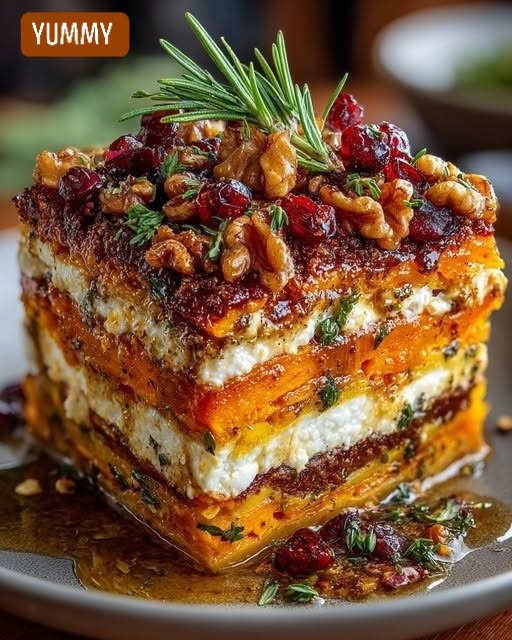
Layered Sweet Potato, Butternut Squash, Carrot Lasagna with Feta, Walnuts, and Cranberry-Honey Glaze
Description
This layered sweet potato, butternut squash, and carrot lasagna is a delicious vegetable dish made with thin slices of fresh vegetables, creamy feta cheese, crunchy walnuts, and a sweet-tangy cranberry-honey glaze. The vegetables become tender and flavorful as they bake, while the feta adds a salty taste and the walnuts provide a satisfying crunch.
Unlike traditional lasagna, this recipe uses vegetables instead of pasta sheets. It is colorful, comforting, and perfect for family dinners, holiday meals, or a special vegetarian lunch.
Recipe Information
-
Prep Time: 25 minutes
-
Cook Time: 45–55 minutes
-
Total Time: 70–80 minutes
-
Servings: 6
-
Course: Main Course or Side Dish
-
Cuisine: Modern Vegetarian
-
Cooking Method: Baking
Ingredients
For the Vegetable Layers
-
2 medium sweet potatoes, peeled and thinly sliced
-
2 cups butternut squash, peeled and thinly sliced
-
2 large carrots, peeled and thinly sliced
-
2 tablespoons olive oil
-
1 teaspoon salt, or to taste
-
½ teaspoon black pepper
-
½ teaspoon dried thyme
-
½ teaspoon garlic powder
For the Cheese and Walnut Layers
-
1 cup crumbled feta cheese
-
½ cup chopped walnuts
-
¼ cup grated Parmesan cheese (optional)
-
1 tablespoon fresh parsley, chopped (optional)
For the Cranberry-Honey Glaze
-
½ cup fresh or frozen cranberries
-
2 tablespoons honey
-
2 tablespoons water
-
1 teaspoon lemon juice
-
1 teaspoon balsamic vinegar (optional)
Instructions
Step 1: Prepare the Vegetables
Preheat the oven to 375°F (190°C). Lightly grease a medium baking dish with olive oil. Peel the sweet potatoes, butternut squash, and carrots, then slice them into thin, even pieces. Uniform slices help the vegetables cook evenly.
Step 2: Season the Vegetables
Place the sliced vegetables in a large bowl. Add olive oil, salt, black pepper, dried thyme, and garlic powder. Toss gently until all the slices are coated with the seasoning.
Step 3: Layer the Vegetables
Arrange a layer of sweet potato slices in the prepared baking dish, slightly overlapping them. Add a layer of butternut squash, followed by a layer of carrots. Sprinkle some feta cheese and chopped walnuts over the vegetables. Repeat the layers until all the vegetables are used, finishing with feta cheese and a few walnuts on top.
Step 4: Bake the Lasagna
Cover the baking dish with foil and bake for 30 minutes. Remove the foil and continue baking for another 15–25 minutes, or until the vegetables are tender when pierced with a knife. If using Parmesan cheese, sprinkle it over the top during the last 5 minutes of baking.
Step 5: Prepare the Cranberry-Honey Glaze
While the lasagna bakes, add the cranberries, honey, water, and lemon juice to a small saucepan. Cook over medium-low heat for 5–8 minutes, stirring occasionally, until the cranberries soften and begin to burst. Gently mash some cranberries to create a slightly thick sauce. Stir in the balsamic vinegar if desired.
Step 6: Finish and Serve
Remove the lasagna from the oven and allow it to rest for 5–10 minutes. Drizzle the cranberry-honey glaze over the top and garnish with the remaining walnuts and fresh parsley. Cut into portions and carefully lift each piece with a spatula. Serve warm.
Recipe Notes
-
Vegetable slices: Keep the slices thin and similar in thickness for even cooking.
-
Feta cheese: Feta provides a salty, tangy flavor that balances the sweetness of the vegetables and honey.
-
Walnuts: Lightly toast the walnuts before adding them for a richer flavor.
-
Cranberry glaze: Adjust the honey and lemon juice according to your preferred balance of sweetness and tartness.
-
Baking time: Thicker vegetable slices may require additional cooking time.
-
Moisture: Allow the lasagna to rest uncovered after baking so excess steam can escape.
-
Make ahead: Assemble the vegetable layers in advance, refrigerate, and bake when needed. Add the glaze just before serving.
Helpful Tips
-
Use a mandoline slicer to create even vegetable slices, taking care to use its safety guard.
-
Choose a baking dish that holds the vegetable layers snugly without compressing them too much.
-
Check the center of the lasagna with a knife before removing it from the oven.
-
Add the glaze after baking to preserve its fresh, sweet-tangy flavor.
-
Allow the lasagna to rest before cutting so the layers hold together better.
-
Reserve a few walnuts and a little feta for an attractive topping.
Serving Suggestions
Serve this vegetable lasagna with a fresh green salad, roasted green beans, crusty bread, or steamed vegetables. For a more filling meal, pair it with grilled chicken, baked fish, lentils, or chickpeas.
It also makes a lovely side dish for holiday dinners and family gatherings.
Nutritional Information
Estimated values per serving, based on 6 servings:
| Nutrient | Amount |
|---|---|
| Calories | 300–350 kcal |
| Protein | 7–9 g |
| Carbohydrates | 35–42 g |
| Fat | 15–19 g |
| Fiber | 6–8 g |
| Sugar | 13–18 g |
| Sodium | 400–600 mg |
Nutrition information is approximate and varies with ingredient sizes, cheese brands, and the amount of salt and honey used.
Health Benefits
1. Supports digestive health
Sweet potatoes, carrots, and butternut squash provide dietary fiber, which supports digestion and regular bowel movements.
2. Provides vitamin A
Sweet potatoes and carrots contain beta-carotene, which the body converts into vitamin A. This nutrient supports normal vision, skin health, and immune function.
3. Contains heart-friendly fats
Walnuts and olive oil provide unsaturated fats. Walnuts also contain plant-based omega-3 fatty acids.
4. Supports bone health
Feta cheese provides calcium and protein, which help maintain healthy bones and support normal muscle function.
5. Adds a variety of vegetables
This recipe combines several colorful vegetables, making it a flavorful way to add more plant foods to your meals.
These benefits are part of an overall balanced diet. The recipe contains dairy, walnuts, and added honey.
Frequently Asked Questions
Q1: Can I make this lasagna without pasta?
Yes. This recipe uses thinly sliced sweet potatoes, butternut squash, and carrots instead of traditional pasta sheets.
Q2: Can I prepare it ahead of time?
Yes. Assemble the layers, cover the dish, and refrigerate for up to 24 hours before baking. Allow extra cooking time if baking directly from the refrigerator.
Q3: Can I replace feta cheese?
Yes. Goat cheese provides a similar tangy flavor, while ricotta creates a milder, creamier result.
Q4: Can I use frozen butternut squash?
Yes. Thaw it and pat it dry before layering to remove excess moisture.
Q5: What can I use instead of walnuts?
Pecans or pumpkin seeds can provide a crunchy topping. You can also leave them out if you prefer a nut-free dish.
Q6: How should I store leftovers?
Store cooled leftovers in an airtight container in the refrigerator for 3–4 days. Reheat in the oven until hot throughout.
Q7: Can I freeze this vegetable lasagna?
Yes. Freeze cooled portions in airtight, freezer-safe containers for up to 2 months for best quality. The vegetables may become softer after thawing.
Q8: Is the cranberry-honey glaze necessary?
No, but it adds a sweet and tangy flavor that complements the vegetables and feta. You can omit it or use a little balsamic glaze instead.
Q9: How do I know when it is fully cooked?
Insert a knife into the center. If it passes through the vegetable layers easily, the lasagna is ready. If the vegetables are still firm, continue baking for another 5–10 minutes.
Q10: Can I make this recipe vegan?
Yes. Replace the feta and Parmesan with plant-based alternatives and use maple syrup instead of honey. Check that the substitute cheeses are suitable for your dietary needs.