
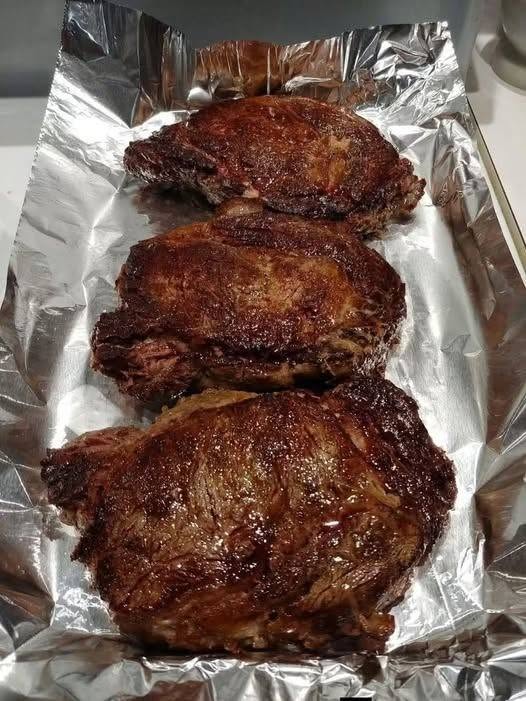
Perfect Juicy Ribeye Steak
Prep Time: 10 minutes
Resting Time: 25–30 minutes
Cook Time: 8–12 minutes
Total Time: 45–50 minutes
Servings: 2
Description
Perfect Juicy Ribeye Steak is a delicious restaurant-style meal featuring beautifully seared beef with a golden-brown crust, tender juicy center, and rich garlic butter flavor. Seasoned with garlic powder, onion powder, paprika, salt, and black pepper, each steak is cooked in a hot cast-iron skillet and finished with melted butter, crushed garlic, and fresh rosemary or thyme.
This simple steakhouse favorite is perfect for date nights, special occasions, weekend dinners, or whenever you’re craving a flavorful homemade steak.
Ingredients
-
2 ribeye steaks
-
2 tablespoons olive oil
-
1 teaspoon garlic powder
-
1 teaspoon onion powder
-
1 teaspoon paprika
-
1 teaspoon salt, or to taste
-
½ teaspoon black pepper
-
2 tablespoons butter
-
3 cloves garlic, crushed
-
2 sprigs fresh rosemary or thyme (optional)
Instructions
1. Prepare the steaks.
Remove the ribeye steaks from the refrigerator about 20–30 minutes before cooking. Pat both sides thoroughly dry with paper towels. Removing excess moisture helps create a beautiful golden-brown crust.
2. Season the steaks.
Rub both steaks with olive oil. In a small bowl, combine garlic powder, onion powder, paprika, salt, and black pepper. Sprinkle the seasoning mixture generously over both sides of the steaks, pressing gently so it sticks.
3. Heat the skillet.
Place a cast-iron skillet over medium-high to high heat. Allow it to become very hot before adding the steaks. A properly heated skillet helps create a delicious crust.
4. Sear the ribeye steaks.
Carefully place both steaks in the hot skillet, leaving enough space between them. Cook for approximately 3–5 minutes on the first side without moving them, then flip and cook another 3–5 minutes. Adjust the cooking time according to steak thickness and your preferred doneness.
5. Prepare the garlic butter.
Reduce the heat slightly. Add butter, crushed garlic, and fresh rosemary or thyme to the skillet. Allow the butter to melt and become fragrant.
6. Baste the steaks.
Tilt the skillet slightly and use a spoon to collect the melted garlic butter. Continuously spoon the butter over the steaks for about 1 minute, coating the surface with rich buttery flavor.
7. Check the doneness.
Insert an instant-read meat thermometer into the thickest part of each steak. Use these approximate temperatures as cooking preferences:
-
Rare: 120–125°F (49–52°C)
-
Medium rare: 130–135°F (54–57°C)
-
Medium: 140–145°F (60–63°C)
-
Medium well: 150–155°F (66–68°C)
For food safety, USDA recommends cooking whole beef steaks to 145°F (63°C), followed by a 3-minute rest.
8. Rest the steaks.
Transfer the steaks to a clean plate or cutting board. Let them rest for 5–10 minutes before slicing. This helps the juices redistribute throughout the meat.
9. Serve and enjoy.
Spoon the remaining garlic butter over the steaks. Garnish with fresh rosemary or thyme and serve immediately while warm.
Recipe Notes
-
Steak thickness: Ribeye steaks around 1–1½ inches thick work especially well for skillet cooking.
-
Room temperature: Allowing steaks to sit briefly before cooking helps them cook more evenly. Do not leave raw meat at room temperature for more than 2 hours.
-
Dry surface: Patting the steaks dry is important for achieving a flavorful crust.
-
Cast-iron skillet: A cast-iron pan distributes heat well and creates excellent browning.
-
Butter: Add butter toward the end of cooking to prevent the garlic and butter from burning.
-
Fresh herbs: Rosemary and thyme both add a wonderful steakhouse aroma.
Helpful Tips for the Juiciest Ribeye
-
Choose ribeye steaks with good marbling because the fat contributes flavor and tenderness.
-
Use a hot skillet before adding the meat.
-
Avoid repeatedly flipping or pressing down on the steaks.
-
Do not overcrowd the pan; cook in batches if necessary.
-
Use a meat thermometer instead of relying only on cooking time.
-
Let the steaks rest before cutting.
-
Slice against the grain for a more tender bite.
Serving Suggestions
Perfect Juicy Ribeye Steak tastes wonderful with:
-
Creamy mashed potatoes
-
Garlic butter roasted potatoes
-
Grilled asparagus
-
Roasted broccoli
-
Buttered green beans
-
Creamed spinach
-
Fresh garden salad
-
Garlic bread
-
Sautéed mushrooms
Storage and Reheating
Refrigerator: Store leftover steak in an airtight container for up to 3–4 days.
Freezer: Wrap cooled steak tightly and freeze for up to 2–3 months for best quality.
Reheating: Warm gently in a covered skillet over low heat with a little butter. Avoid overheating, as this can make the steak dry and tough.
Approximate Nutritional Information
Per serving (1 steak, based on two servings):
-
Calories: 650
-
Protein: 48g
-
Carbohydrates: 2g
-
Fat: 49g
-
Fiber: 0g
-
Sugar: 0g
-
Sodium: 650mg
Nutritional values are estimates and vary depending on steak size, marbling, and the amount of butter and seasoning used.
Benefits of Ribeye Steak
-
High in protein: Beef provides protein that supports muscle maintenance and repair.
-
Provides iron: Beef contains heme iron, which helps the body produce healthy red blood cells.
-
Vitamin B12: Ribeye provides vitamin B12, which supports normal nerve function and red blood cell formation.
-
Zinc: Beef supplies zinc, an essential mineral involved in immune function.
-
Satisfying meal: Its protein and fat content can make a serving filling and satisfying.
Frequently Asked Questions
1. What is the best pan for cooking ribeye steak?
A cast-iron skillet is an excellent choice because it retains heat and helps develop a beautiful golden-brown crust.
2. How long should I cook ribeye steak?
For a 1-inch-thick steak, start with approximately 3–5 minutes per side. Cooking time depends on thickness, pan temperature, and desired doneness.
3. Should I use oil or butter to cook steak?
Use olive oil for the initial sear because it helps prevent sticking. Add butter near the end for a rich garlic-butter finish.
4. Why should I let steak rest after cooking?
Resting allows the juices to redistribute throughout the meat, helping keep each slice flavorful and moist.
5. Can I cook ribeye without a cast-iron skillet?
Yes. A heavy stainless-steel skillet also works well. Make sure the pan is properly heated before adding the steaks.
6. Can I use dried rosemary instead of fresh rosemary?
Yes. Use a small pinch of dried rosemary because its flavor is more concentrated than fresh herbs.
7. How do I know when my ribeye is done?
The most reliable method is using an instant-read meat thermometer inserted into the thickest part of the steak.
8. Can I prepare the seasoning ahead of time?
Absolutely! Mix the dry seasonings in advance and store them in an airtight container until ready to use.
Final Thoughts
Perfect Juicy Ribeye Steak is a simple yet impressive meal that delivers everything you love about a classic steakhouse dinner. The flavorful seasoning, beautifully seared crust, tender beef, and rich garlic butter make every bite delicious. Serve it with your favorite potatoes and vegetables for a satisfying homemade dinner that feels special without requiring complicated ingredients or techniques.