
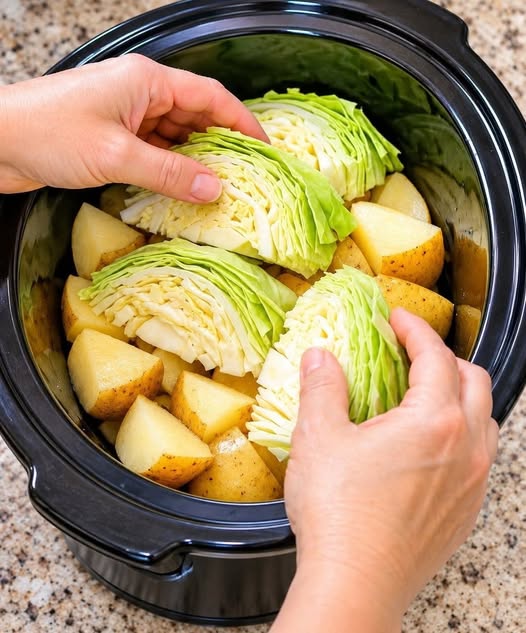
Slow Cooker Amish Cabbage and Potatoes
Description
Slow Cooker Amish Cabbage and Potatoes is a simple, old-fashioned comfort food made with tender potatoes, sweet green cabbage, butter, salt, and black pepper. This traditional farmhouse-style dish uses a handful of everyday ingredients to create a warm, hearty, and satisfying side dish with very little preparation.
The potatoes slowly cook until soft and fluffy, while the cabbage becomes tender and develops a naturally sweet flavor. Butter melts throughout the vegetables, creating delicious buttery juices that coat every bite.
One of the best things about this recipe is its simplicity. There is no complicated sauce, no long list of seasonings, and no need to stand over the stove. Simply layer the vegetables in your slow cooker, add butter and seasoning, cover, and let everything cook until tender.
Serve it alongside roasted chicken, baked fish, pork chops, or beef for a comforting homemade meal. It can also be enjoyed as a simple meatless dinner.
Recipe Information
-
Preparation Time: 15 minutes
-
Cooking Time: 6–7 hours on LOW or 3–4 hours on HIGH
-
Total Time: Approximately 6–7 hours
-
Servings: 6–8
-
Difficulty: Easy
-
Cooking Method: Slow Cooker
-
Cuisine: Amish-inspired farmhouse cooking
Ingredients
-
2 pounds russet or Yukon Gold potatoes, scrubbed and quartered
-
1 medium head green cabbage (about 2–2½ pounds), cored and cut into 8 thick wedges
-
4 tablespoons unsalted butter, cut into small pieces
-
1½ teaspoons kosher salt, or to taste
-
1 teaspoon black pepper, or to taste
Instructions
Step 1: Prepare the slow cooker
Lightly grease the inside of a 5–6-quart slow cooker with butter or nonstick cooking spray.
This helps prevent the vegetables from sticking and makes cleanup easier.
Step 2: Prepare the potatoes
Wash and scrub the potatoes thoroughly. Remove any damaged areas and cut them into quarters.
If using Yukon Gold potatoes, you can leave the skins on for extra texture and flavor. Russet potatoes can also be used with their skins left on or peeled according to your preference.
Arrange the potato pieces in an even layer across the bottom of the slow cooker.
Step 3: Season the potatoes
Sprinkle approximately half of the salt and black pepper over the potatoes.
Seasoning the layers separately helps distribute the flavor throughout the dish.
Step 4: Prepare the cabbage
Remove any damaged outer cabbage leaves. Rinse the cabbage under cool running water and pat it dry.
Cut out the hard central core, then divide the cabbage into eight thick wedges.
Arrange the cabbage wedges over the potatoes. They can overlap slightly, but try to distribute them evenly.
Step 5: Season the cabbage
Sprinkle the remaining salt and black pepper over the cabbage wedges.
Make sure the seasoning reaches as much of the cabbage as possible.
Step 6: Add the butter
Scatter the small pieces of unsalted butter over the cabbage and exposed potatoes.
Tuck a few pieces between the vegetable layers so the butter melts throughout the dish.
As the vegetables cook, the butter combines with their natural moisture to create flavorful cooking juices.
Step 7: Slow cook the vegetables
Cover the slow cooker with its lid.
Cook according to your preferred setting:
-
LOW: 6–7 hours
-
HIGH: 3–4 hours
Cook until the potatoes are fork-tender and the cabbage is soft.
Cooking time can vary depending on the size of the potato pieces, thickness of the cabbage wedges, and your slow cooker.
Step 8: Check for tenderness
Carefully remove the lid and test the potatoes with a fork.
They should be soft enough to pierce easily without falling apart completely.
The cabbage should be tender and easy to cut with a fork.
Step 9: Serve with buttery juices
Carefully lift the cabbage wedges from the slow cooker using a large spoon or spatula.
Spoon the potatoes onto serving plates and drizzle the buttery cooking juices over the vegetables.
Serve warm as a comforting side dish or a simple vegetarian meal.
Notes
-
Yukon Gold potatoes hold their shape well and have a naturally buttery texture.
-
Russet potatoes become softer and fluffier during slow cooking.
-
Cut the potatoes into similar-sized pieces so they cook evenly.
-
Keep the cabbage wedges thick to help them hold together.
-
Unsalted butter allows you to control the amount of salt.
-
The cabbage releases moisture as it cooks, so additional liquid is generally unnecessary for this recipe.
-
Avoid opening the slow cooker frequently because heat escapes and cooking time increases.
-
If your slow cooker is very full, arrange the vegetables carefully without packing them too tightly.
Helpful Tips for the Best Results
-
Choose fresh cabbage: Look for a firm head with tightly packed leaves and no large damaged areas.
-
Use evenly cut potatoes: Similar-sized pieces help prevent some potatoes from becoming mushy while others remain firm.
-
Keep the wedges thick: Thin cabbage slices may become overly soft during several hours of cooking.
-
Layer correctly: Potatoes should go on the bottom, with cabbage arranged on top.
-
Distribute the butter: Placing butter between the layers helps spread its flavor throughout the vegetables.
-
Season gradually: Start with the recommended salt and pepper, then adjust after cooking.
-
Check before serving: Slow cookers vary, so use a fork to check tenderness rather than relying only on the clock.
-
Serve the cooking juices: The buttery liquid at the bottom adds moisture and flavor to the potatoes and cabbage.
Delicious Recipe Variations
Amish Cabbage and Potatoes with Carrots: Add 2 peeled and sliced carrots for extra color and natural sweetness.
Garlic Butter Cabbage and Potatoes: Add 2–3 minced garlic cloves with the butter for a more savory flavor.
Herbed Cabbage and Potatoes: Add ½ teaspoon dried thyme or parsley to complement the vegetables.
Smoky Version: Add a little smoked paprika for a deeper flavor.
With Smoked Sausage: Add sliced smoked sausage for a heartier one-pot meal. Make sure the sausage is heated thoroughly.
With Bacon: Cook and crumble bacon, then sprinkle it over the finished vegetables for a smoky, savory topping.
Lemon Butter Version: Add a small squeeze of fresh lemon juice just before serving for a brighter taste.
Serving Suggestions
Slow Cooker Amish Cabbage and Potatoes pair beautifully with many main dishes.
Try serving them with:
-
Roasted chicken
-
Grilled chicken breast
-
Baked fish
-
Pork chops
-
Roasted beef
-
Meatloaf
-
Turkey breast
-
Grilled sausages
-
Fresh green beans
-
A simple garden salad
For a vegetarian meal, serve a generous portion with beans or another protein-rich side dish.
Storage and Reheating
Refrigerator: Allow leftovers to cool and place them in an airtight container. Refrigerate within 2 hours and consume within 3–4 days.
Freezer: Freezing is possible, but the potatoes and cabbage may become softer after thawing. For best quality, freeze in airtight containers for up to 2 months.
Stovetop Reheating: Place the vegetables in a saucepan with a small splash of water or broth. Cover and warm gently over low heat.
Microwave Reheating: Place a serving in a microwave-safe dish, cover loosely, and heat in short intervals until thoroughly hot.
Avoid reheating the entire batch repeatedly. Reheat only the portion you plan to eat.
Nutritional Information
Estimated nutrition per serving, assuming 8 servings:
-
Calories: 180–220
-
Protein: 4–5g
-
Carbohydrates: 27–32g
-
Fat: 7–9g
-
Fiber: 4–5g
-
Sugar: 3–5g
-
Sodium: Depends on the amount of salt used
Actual values vary depending on potato variety, cabbage size, butter quantity, and serving size.
Potential Health Benefits
1. Provides Dietary Fiber
Cabbage and potatoes provide dietary fiber, which contributes to digestive health and regular bowel movements.
2. Contains Vitamin C
Both cabbage and potatoes provide vitamin C, which supports normal immune function and collagen production.
3. Provides Potassium
Potatoes are a source of potassium, an essential mineral involved in normal muscle function and blood pressure regulation.
4. Supports Digestive Health
The fiber in cabbage and potatoes helps support a healthy digestive system.
5. Contains Vitamin K
Green cabbage provides vitamin K, which plays an important role in normal blood clotting and bone health.
6. Provides Energy
Potatoes contain carbohydrates that supply energy for everyday activities.
7. Contains Plant Compounds
Cabbage contains naturally occurring plant compounds, including glucosinolates, which are being studied for their potential health properties.
8. Offers a Vegetable-Rich Side Dish
This recipe provides two vegetables in one simple preparation, making it easier to include more plant foods in everyday meals.
Diabetes-Friendly Note: This recipe contains no added sugar, but potatoes are a significant source of carbohydrates and can raise blood glucose. If managing diabetes, consider a smaller potato portion, add non-starchy vegetables and protein, and monitor your individual blood glucose response.
Frequently Asked Questions
Q1: Do I need to add water or broth to the slow cooker?
Not usually. Cabbage releases moisture as it cooks, and the butter adds richness. If your slow cooker tends to run dry or the vegetables begin sticking, check the manufacturer’s guidance and add a small amount of water or broth if needed.
Q2: Can I use red potatoes instead of russet potatoes?
Yes. Red potatoes work well and generally hold their shape during slow cooking. Cut them into evenly sized pieces.
Q3: Should I peel the potatoes?
Peeling is optional. Yukon Gold and red potatoes are delicious with their skins on. Scrub them thoroughly before cooking.
Q4: Can I use salted butter?
Yes. If using salted butter, reduce the added salt and adjust the seasoning after cooking.
Q5: Why is my cabbage mushy?
It may have been cut too small or cooked longer than necessary. Use thick wedges and check for tenderness toward the end of the recommended cooking time.
Q6: Can I prepare this recipe the night before?
You can wash and cut the vegetables ahead of time. Store the potatoes in cold water in the refrigerator to prevent browning, and keep the cabbage separately refrigerated. Drain and dry the potatoes before assembling the slow cooker.
Q7: Can I make this recipe on HIGH?
Yes. Cook on HIGH for approximately 3–4 hours, checking that the potatoes and cabbage are tender.
Q8: Can I add onions?
Absolutely. One sliced yellow onion can be layered with the potatoes for additional sweetness and flavor.
Q9: Is this recipe suitable for vegetarians?
Yes. The basic recipe contains only potatoes, cabbage, butter, salt, and pepper. Check that any optional additions are suitable for your dietary preferences.
Q10: Can I make it dairy-free?
Yes. Replace the butter with a suitable plant-based butter or olive oil. The flavor and richness will be slightly different.
Final Thoughts
Slow Cooker Amish Cabbage and Potatoes is a wonderful example of how a few simple ingredients can create a comforting homemade meal. Tender potatoes, soft cabbage, melted butter, and simple seasonings come together to make a delicious farmhouse-style dish.
It is affordable, easy to prepare, and perfect for family dinners or busy days when you want a warm meal without spending hours in the kitchen.
Serve it fresh from the slow cooker, spoon the buttery juices over every portion, and enjoy this simple old-fashioned comfort food!