
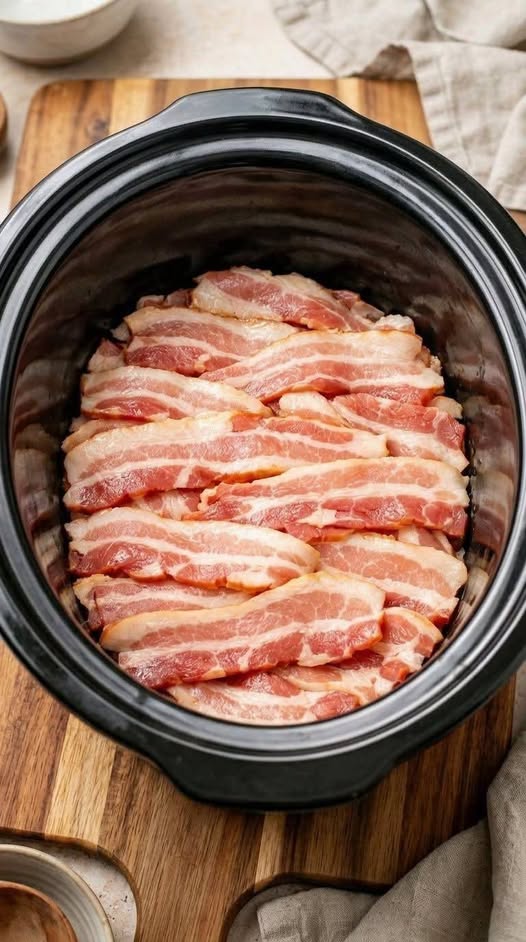
Slow Cooker Bacon
Description
Slow Cooker Bacon is an easy, hands-off way to prepare thick-cut bacon with minimal effort. This method allows the bacon to cook gradually in the slow cooker until the strips are tender, flavorful, and cooked through. You can keep the seasoning simple with traditional bacon flavor or add brown sugar, black pepper, maple syrup, or honey for a sweet-and-savory variation. If you love bacon but want to avoid standing over a hot skillet, this recipe offers a convenient alternative for breakfast, brunch, sandwiches, salads, and family meals. For extra-crispy results, finish the cooked bacon briefly under the broiler, in a skillet, or in an air fryer.
Recipe Information
-
Preparation Time: 5–10 minutes
-
Cooking Time: 3–4 hours on LOW or 2–3 hours on HIGH, depending on the slow cooker and bacon thickness
-
Total Time: Approximately 3–4 hours
-
Servings: 8–10, depending on portion size
-
Course: Breakfast, brunch, or side dish
-
Cuisine: American-inspired
-
Cooking Method: Slow cooker
-
Difficulty: Easy
Ingredients
-
1½–2 pounds thick-cut bacon
-
2 tablespoons brown sugar, optional
-
1 teaspoon black pepper, optional
-
1 teaspoon maple syrup or honey, optional for a sweet flavor
Equipment Needed
-
4–6-quart slow cooker
-
Kitchen tongs
-
Paper towels
-
Plate or baking tray
-
Optional skillet, broiler, or air fryer for crisping
Instructions
Step 1: Prepare the Slow Cooker
Make sure the slow cooker is clean and dry. Cut the bacon strips in half if necessary so they fit comfortably inside the cooking pot. There is no need to add oil or butter because bacon releases its own fat as it cooks.
Step 2: Arrange the Bacon
Place the bacon strips in the slow cooker in loose layers. Avoid packing them too tightly, and arrange the strips as evenly as possible. Thick-cut bacon may overlap initially, but the pieces will shrink as the fat renders.
If using brown sugar and black pepper, sprinkle a small amount between the layers. For a sweet variation, lightly drizzle the maple syrup or honey over the bacon. Use sweeteners sparingly because they can caramelize quickly during the final crisping stage.
Step 3: Cook the Bacon
Cover the slow cooker and cook on LOW for approximately 3–4 hours or HIGH for approximately 2–3 hours. These times are estimates, and the bacon’s thickness, quantity, and slow cooker model will affect the results.
Begin checking the bacon after about two hours. Use clean tongs to reposition the strips if needed so they cook more evenly. Make sure the bacon reaches a fully cooked state before serving.
For the best texture, avoid assuming that every strip will become crispy inside the slow cooker. The moist cooking environment tends to produce softer bacon, so additional crisping may be necessary.
Step 4: Drain the Excess Grease
Once the bacon is cooked, carefully transfer the strips to a paper towel-lined plate or baking tray using tongs. Allow excess grease to drain away.
Be cautious when handling the hot bacon and rendered fat. Do not pour hot grease into the sink because it can cause plumbing problems. Allow the grease to cool in a heat-safe container before disposing of it according to local guidance.
Step 5: Make the Bacon Crispy
If you prefer crispier bacon, use one of these finishing methods:
-
Oven broiler: Arrange the cooked strips on a suitable baking tray and broil briefly, checking every minute to prevent burning.
-
Skillet: Place the bacon in a hot skillet and cook for about 1–2 minutes, turning as needed.
-
Air fryer: Arrange the strips in a single layer and heat at 375°F (190°C) for approximately 2–4 minutes, checking frequently.
The finishing time depends on the thickness and initial texture of the bacon. Watch closely if you used brown sugar, honey, or maple syrup because the sugars can burn quickly.
Step 6: Serve and Enjoy
Transfer the finished bacon to a serving plate. Serve it warm with scrambled eggs, pancakes, waffles, toast, or your favorite breakfast dishes. You can also crumble it over salads, baked potatoes, soups, and sandwiches.
Recipe Notes
-
Thick-cut bacon: This works particularly well because it is substantial and less likely to break apart during handling.
-
Regular bacon: Thinner slices can be used, but they may cook faster and require closer monitoring.
-
No added oil: Bacon releases plenty of fat during cooking, so extra cooking oil is generally unnecessary.
-
Seasoning options: Brown sugar, black pepper, maple syrup, and honey are optional. Plain bacon is delicious without them.
-
Texture: Slow-cooked bacon is generally softer than oven-baked or pan-fried bacon unless it is crisped afterward.
-
Batch size: Avoid filling the slow cooker beyond its recommended capacity.
-
Grease management: Handle rendered fat carefully and never pour it down the drain.
Tips for Perfect Slow Cooker Bacon
-
Use evenly sized strips for more consistent cooking.
-
Cut long strips in half if needed to fit the slow cooker.
-
Avoid adding water because the bacon releases its own moisture and fat.
-
Check the bacon regularly near the end of cooking.
-
Use tongs to separate overlapping strips carefully.
-
Drain the cooked bacon before using a second cooking method to crisp it.
-
Add sweet seasonings sparingly to prevent burning.
-
For crispier results, finish the bacon in a skillet or air fryer.
-
Keep cooked bacon warm in a low oven if serving a large breakfast.
-
Refrigerate leftovers promptly rather than leaving them at room temperature.
Serving Suggestions
Slow Cooker Bacon can be enjoyed in many different ways:
-
Serve alongside scrambled or fried eggs.
-
Add to breakfast sandwiches with cheese and tomato.
-
Crumble over baked potatoes with sour cream.
-
Sprinkle over creamy vegetable soup.
-
Add to a chicken or turkey sandwich.
-
Use as a topping for salads or roasted vegetables.
-
Serve with pancakes or waffles for a sweet-and-savory breakfast.
-
Crumble into omelets, quiches, or breakfast casseroles.
For a simple brunch, pair the bacon with eggs, whole-grain toast, and fresh fruit.
Storage and Reheating
Refrigeration: Place cooked bacon in a covered, airtight container and refrigerate within two hours. Use within 4–5 days.
Freezing: Arrange cooled strips between sheets of parchment paper and place them in a freezer-safe container or bag. Freeze for up to one month for best quality.
Reheating in a skillet: Warm over medium-low heat until heated through and crisp.
Reheating in an air fryer: Heat at approximately 350°F (175°C) for 2–3 minutes, checking frequently.
Reheating in the microwave: Place the bacon on a microwave-safe plate lined with paper towels and heat in short intervals until hot.
Avoid repeatedly reheating the same batch. Reheat only the amount you plan to eat.
Nutritional Information
Estimated values per serving, assuming 10 servings from 1½–2 pounds of bacon and excluding optional sweeteners:
-
Calories: 180–280
-
Protein: 10–16 g
-
Carbohydrates: 0–3 g
-
Fat: 15–24 g
-
Saturated Fat: 5–9 g
-
Sugar: 0–2 g
-
Sodium: 450–800 mg
Actual values vary according to the type of bacon, portion size, and amount of rendered fat retained. Brown sugar, maple syrup, or honey will increase the carbohydrate and sugar content.
Benefits of Slow Cooker Bacon
Convenient preparation: The slow cooker reduces the need for constant attention compared with cooking multiple batches in a skillet.
Flexible serving options: Bacon can be served at breakfast or used as a topping for many savory dishes.
Provides protein: Bacon contains protein, which contributes to normal muscle maintenance and other body functions.
Customizable flavor: You can prepare it plain, peppered, or with a sweet glaze.
Useful for batch cooking: Preparing a larger quantity can help simplify breakfast preparation for several people.
However, bacon is a processed meat that can be high in sodium and saturated fat. It is best enjoyed in moderate portions as part of a balanced diet rather than treated as an everyday health food.
Frequently Asked Questions
1. Can I cook bacon entirely in a slow cooker?
Yes. The slow cooker can cook bacon without a separate skillet, although the result is generally softer than traditionally fried bacon. A brief finishing step helps create crisp edges.
2. Do I need to add water?
No. Bacon releases its own fat and moisture as it cooks. Adding water is generally unnecessary for this recipe.
3. Can I use frozen bacon?
Thaw bacon safely in the refrigerator before placing it in the slow cooker. Frozen strips may stick together and cook unevenly.
4. Why is my bacon not crispy?
The slow cooker traps moisture, which makes crispness difficult to achieve. Drain the bacon and finish it in a skillet, broiler, or air fryer.
5. Can I add brown sugar?
Yes. Brown sugar adds a sweet, caramelized flavor. Use it sparingly and watch the bacon carefully during the crisping stage to prevent burning.
6. Can I cook a large batch for a party?
Yes, provided the quantity fits within your slow cooker’s capacity and the bacon cooks evenly. You may need to work in batches for the best results.
7. How do I keep bacon warm for brunch?
Once fully cooked, keep it in a low oven on a suitable baking tray. Avoid holding it at room temperature for extended periods.
8. Is slow cooker bacon healthier than fried bacon?
Not necessarily. The cooking method does not eliminate the sodium or other characteristics of processed bacon. Some fat may drain away, but the overall nutritional difference depends on preparation and portion size.
9. Can I use maple syrup instead of brown sugar?
Yes. Maple syrup adds sweetness and a distinctive flavor. Apply a small amount and monitor the bacon closely when crisping.
10. What is the best way to serve leftover bacon?
Reheat it in a skillet or air fryer and add it to sandwiches, salads, omelets, baked potatoes, or soups.
Conclusion
Slow Cooker Bacon is a convenient way to prepare a generous batch of bacon with minimal hands-on effort. With thick-cut strips and optional seasonings, you can create a simple savory version or a sweet-and-salty variation. The slow cooker handles most of the cooking, while an optional skillet, broiler, or air fryer gives the bacon its final crispy texture. Serve it with your favorite breakfast dishes or use it to add smoky flavor to everyday meals.