
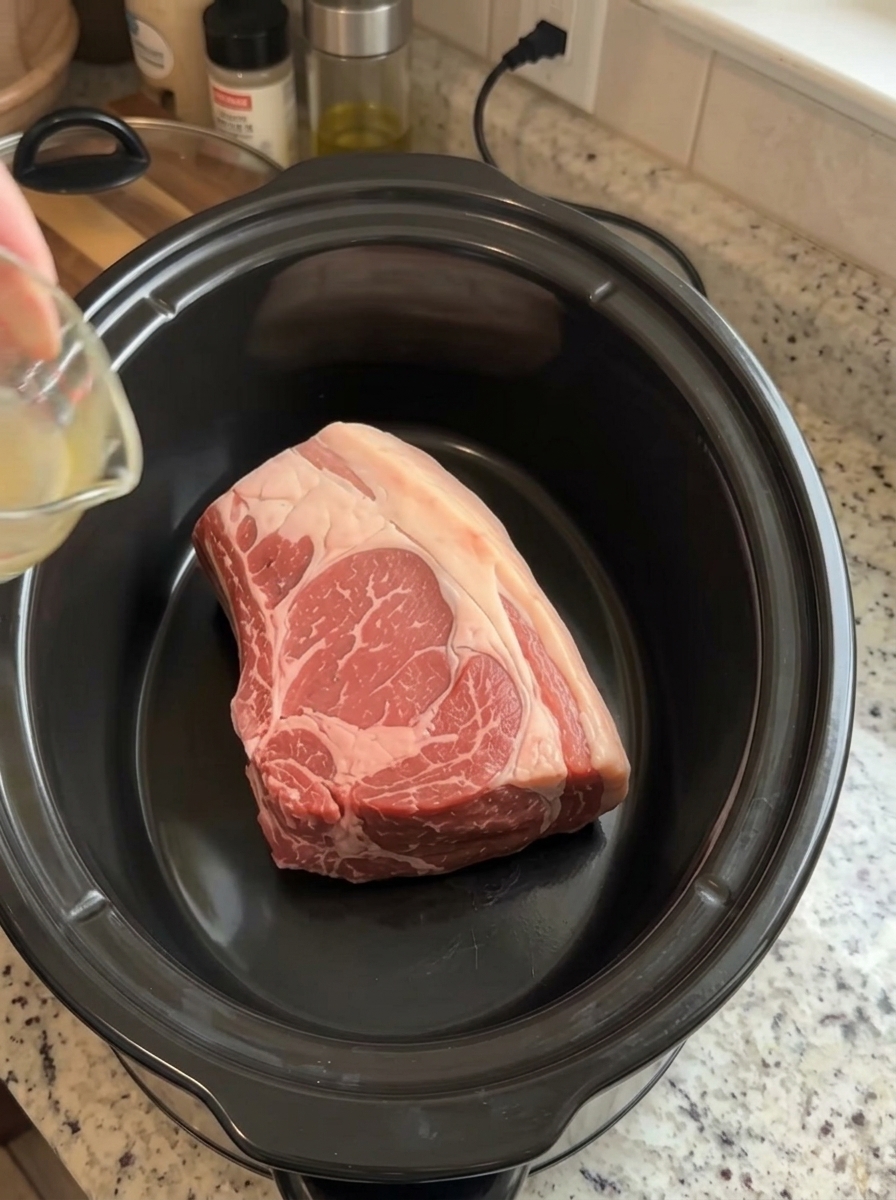
Slow Cooker Prime Rib Roast
Description For Slow Cooker Prime Rib Roast
Slow Cooker Prime Rib Roast is an impressive, tender, and flavorful main dish that makes any dinner feel special. This classic comfort-food favorite is perfect for Christmas, Thanksgiving, Sunday family dinners, or any occasion when you want a delicious roast without spending hours watching the oven.
Cooking prime rib in a slow cooker allows the meat to become tender while absorbing the flavors of garlic, rosemary, thyme, butter, and savory beef broth. The gentle cooking process helps keep the roast moist and juicy, while the seasonings create a delicious aroma throughout your kitchen.
Prime rib is naturally rich and flavorful, so it does not require complicated ingredients. A simple mixture of garlic, herbs, butter, salt, and black pepper is enough to complement its delicious beef flavor.
The slow cooker makes preparation convenient. Simply season the roast, prepare the flavorful cooking liquid, place everything in the slow cooker, and allow it to cook until it reaches your preferred level of doneness.
Preparation Time: 15 minutes
Cooking Time: 4–6 hours, depending on roast size and slow cooker
Total Time: Approximately 4–6 hours
Servings: 6–8 people
Ingredients For Slow Cooker Prime Rib Roast
For the Prime Rib Roast:
-
4–5 lb bone-in or boneless prime rib roast
-
4 cloves garlic, minced
-
3 tablespoons unsalted butter, softened
-
1 tablespoon olive oil
-
2 teaspoons salt, or to taste
-
1 teaspoon freshly ground black pepper
-
1 teaspoon dried rosemary
-
1 teaspoon dried thyme
-
1 teaspoon onion powder
-
½ teaspoon paprika
For the Cooking Liquid:
-
1 cup beef broth
-
1 tablespoon Worcestershire sauce
-
1 small onion, sliced
-
2 sprigs fresh rosemary
-
2 sprigs fresh thyme
Optional Gravy Ingredients
-
2 tablespoons cornstarch
-
2 tablespoons cold water
-
1–2 cups strained cooking juices
Instructions For Slow Cooker Prime Rib Roast
Step 1: Prepare the Roast
Remove the prime rib roast from the refrigerator approximately 30–45 minutes before cooking to take some of the chill off. Pat the surface dry with paper towels. Removing excess moisture helps the seasonings stick and makes browning easier.
Step 2: Prepare the Garlic Herb Butter
In a small bowl, combine softened butter, minced garlic, olive oil, rosemary, thyme, onion powder, paprika, salt, and black pepper. Mix until everything forms a fragrant herb butter.
Step 3: Season the Beef
Rub the garlic herb butter mixture generously over the entire surface of the prime rib roast. Make sure the top, sides, and ends are coated evenly. This seasoning mixture adds wonderful flavor as the roast cooks.
Step 4: Prepare the Slow Cooker
Arrange the sliced onion in the bottom of the slow cooker. Add the beef broth and Worcestershire sauce. Place the fresh rosemary and thyme sprigs around the onions.
Step 5: Add the Prime Rib
Place the seasoned roast in the slow cooker on top of the onions. For a better roasting-style texture, position the meat with the fat cap facing upward. Avoid submerging the roast in the cooking liquid.
Step 6: Slow Cook
Cover with the lid and cook on LOW, checking the internal temperature regularly. Cooking time depends on the size and shape of the roast and your slow cooker. Prime rib is best cooked using a reliable meat thermometer rather than relying only on time.
Step 7: Check the Temperature
Insert an instant-read meat thermometer into the thickest part of the roast without touching the bone.
For food safety, whole beef roasts should reach at least 145°F (63°C), followed by a 3-minute rest. If you prefer a more well-done roast, continue cooking to your desired temperature.
Step 8: Optional Browning
If you want a beautifully browned exterior, carefully remove the roast from the slow cooker when it is ready. Place it under a preheated broiler for a few minutes, watching closely until the outside develops a golden-brown crust.
Step 9: Rest the Meat
Transfer the roast to a cutting board and loosely cover it with foil. Allow it to rest for at least 15–20 minutes before slicing. Resting helps the juices settle and makes carving easier.
Step 10: Prepare the Gravy
Strain the cooking liquid into a small saucepan. In a separate bowl, mix cornstarch with cold water until smooth. Bring the cooking liquid to a gentle simmer and gradually whisk in the cornstarch mixture. Cook until the gravy thickens to your preferred consistency.
Step 11: Slice and Serve
Slice the prime rib against the grain into thick or thin slices, depending on your preference. Arrange on a serving platter and spoon a little warm gravy over the top. Serve immediately with your favorite side dishes.
Tips for the Best Slow Cooker Prime Rib
-
Choose a well-marbled prime rib roast for the best flavor and tenderness.
-
Pat the beef dry before adding the herb butter.
-
Use fresh garlic for a stronger, more delicious flavor.
-
Keep the fat cap facing upward during cooking.
-
Avoid adding too much liquid because prime rib does not need to be submerged.
-
Use a meat thermometer to prevent overcooking.
-
Do not lift the slow cooker lid repeatedly because heat escapes.
-
Allow the roast to rest before slicing.
-
Brown the roast under the broiler if you prefer a crispy exterior.
-
Always slice against the grain for more tender pieces.
Recipe Notes For Slow Cooker Prime Rib Roast
-
Bone-In or Boneless: Both work well. Bone-in roasts may require more space and slightly different cooking times.
-
Fresh Herbs: Fresh rosemary and thyme can replace dried herbs. Use approximately three times the amount of dried herbs when substituting with fresh herbs.
-
Cooking Temperature: LOW is recommended for more controlled cooking. Avoid assuming that a particular number of hours guarantees the desired doneness.
-
Liquid: Beef broth provides moisture and creates a flavorful base for gravy.
-
Storage: Refrigerate leftover beef in an airtight container within 2 hours of cooking for up to 3–4 days.
-
Freezing: Freeze cooked slices with a little gravy for up to 2–3 months for best quality.
-
Reheating: Reheat gently with a little broth or gravy to help prevent the meat from drying out.
Serving Suggestions For Slow Cooker Prime Rib Roast
Slow Cooker Prime Rib Roast pairs wonderfully with classic side dishes, including:
-
Creamy mashed potatoes
-
Roasted garlic green beans
-
Buttered carrots
-
Creamed spinach
-
Roasted Brussels sprouts
-
Homemade dinner rolls
-
Garlic mashed cauliflower
-
Fresh garden salad
-
Yorkshire pudding
Approximate Nutritional Information For Slow Cooker Prime Rib Roast
Per serving, assuming 8 servings and depending on the cut and fat trimmed:
-
Calories: 450–550 kcal
-
Protein: 35–42 g
-
Carbohydrates: 2–4 g
-
Fat: 32–42 g
-
Saturated Fat: 13–17 g
-
Fiber: 0–1 g
-
Sugar: 1–2 g
-
Sodium: 450–650 mg
Nutritional values are estimates and will vary depending on the size of the roast, marbling, portion size, and amount of gravy served.
Benefits of Slow Cooker Prime Rib Roast
1. High in Protein
Beef provides high-quality protein that supports muscle maintenance, tissue repair, and normal body functions.
2. Provides Important Vitamins
Beef contains vitamin B12 and other B vitamins that help support energy metabolism and healthy nervous system function.
3. Contains Iron
Beef provides heme iron, a form of iron that is readily absorbed by the body. Iron helps support normal red blood cell production.
4. Provides Zinc
Zinc contributes to immune function, wound healing, and many important processes in the body.
5. Convenient Meal Preparation
The slow cooker makes meal preparation easier because it requires less hands-on attention than traditional roasting.
6. Naturally Low in Carbohydrates
The beef itself contains virtually no carbohydrates. The carbohydrate content of the complete meal depends on the gravy and side dishes.
Frequently Asked Questions (Q&A) For Slow Cooker Prime Rib Roast
Q1: Can I cook prime rib in a slow cooker?
Yes. Prime rib can be cooked in a slow cooker, although it produces a different texture from traditional oven-roasted prime rib. It is important to monitor the internal temperature carefully.
Q2: Should I brown prime rib before slow cooking?
Browning is optional but recommended for additional flavor. Sear the roast in a hot skillet on all sides before placing it in the slow cooker.
Q3: Should prime rib be covered with liquid?
No. Add a small amount of beef broth to the bottom of the slow cooker. The roast should sit above the liquid rather than being completely submerged.
Q4: How do I keep prime rib from drying out?
Choose a well-marbled roast, avoid overcooking, monitor the internal temperature, and allow the meat to rest before slicing.
Q5: Can I use frozen prime rib?
No. Thaw the roast completely in the refrigerator before placing it in the slow cooker. Cooking large frozen cuts in a slow cooker can keep the meat at unsafe temperatures for too long.
Q6: Can I prepare the roast the night before?
Yes. Mix the garlic herb butter and season the roast the night before. Keep it covered in the refrigerator and cook it the following day.
Q7: How do I make the gravy thicker?
Mix cornstarch with cold water and gradually whisk it into simmering cooking juices until the gravy reaches your desired consistency.
Q8: Is prime rib suitable for a low-carb meal?
Yes. Beef is naturally very low in carbohydrates. Serve it with low-carb vegetables instead of traditional high-carbohydrate sides.
Q9: Can I use beef broth instead of water?
Absolutely. Beef broth adds a richer, deeper flavor to the cooking liquid and makes a delicious base for homemade gravy.
Q10: How should I store leftovers?
Store sliced prime rib in an airtight container in the refrigerator for 3–4 days. Add a little gravy or broth when reheating to help maintain moisture.
Conclusion For Slow Cooker Prime Rib Roast
Slow Cooker Prime Rib Roast is a flavorful and impressive meal that brings together tender beef, aromatic garlic, fresh herbs, and rich homemade gravy. It is a wonderful choice for holiday celebrations, family gatherings, and special Sunday dinners. With simple preparation and careful temperature monitoring, you can create a delicious roast with minimal hands-on effort. Serve it alongside your favorite vegetables and potatoes for a comforting meal everyone can enjoy.