
Soursop Leaf Tea Recipe: Simple 7-Minute Herbal Tea
Soursop leaf tea is a traditional herbal drink prepared from the leaves of the soursop fruit tree, also known as graviola or Annona muricata. It is commonly prepared by gently boiling fresh leaves in water and drinking the resulting herbal infusion warm or at room temperature.
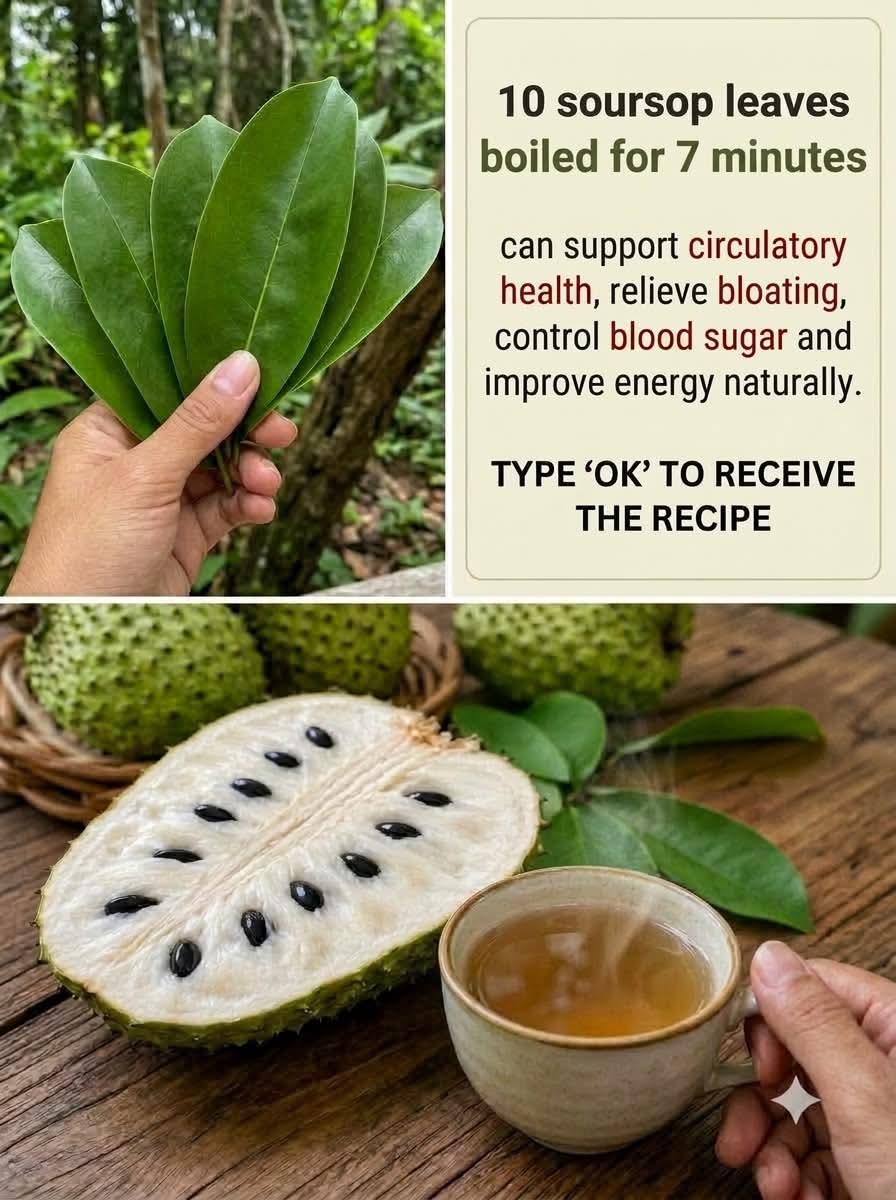
The recipe shown in the image uses 10 soursop leaves boiled for 7 minutes. While this preparation is traditionally used by some people as a wellness drink, it is important to understand that many of the health claims made about soursop leaves have not been firmly established in human studies. Therefore, this tea should be enjoyed as a traditional herbal beverage rather than as a treatment for a medical condition.
Soursop Leaf Tea Recipe
Servings
2 cups
Preparation Time
5 minutes
Cooking Time
7 minutes
Total Time
12 minutes
Ingredients
-
10 fresh soursop leaves
-
2½ cups water
-
1 teaspoon honey, optional
-
A small piece of fresh ginger, optional
-
A few drops of lemon juice, optional
Fresh, healthy-looking leaves are preferable. Always wash the leaves thoroughly before preparing the tea, particularly if they have been collected outdoors.
How to Make Soursop Leaf Tea
Step 1: Wash the Leaves
Take approximately 10 fresh soursop leaves and wash them carefully under clean running water. Remove dirt, dust, insects, or damaged portions from the leaves.
Step 2: Prepare the Water
Pour 2½ cups of water into a small saucepan and bring it to a boil.
Step 3: Add the Leaves
Once the water begins boiling, add the washed soursop leaves. Reduce the heat and allow the leaves to gently boil or simmer.
Step 4: Cook for 7 Minutes
Continue cooking for approximately 7 minutes. There is no need for vigorous boiling. Gentle simmering is sufficient to prepare the infusion.
Step 5: Strain
Turn off the heat and allow the tea to sit for another few minutes. Strain the liquid through a clean strainer to remove the leaves.
Step 6: Serve
Pour the tea into cups and serve warm. If you prefer a sweeter flavor, you can add a small amount of honey after the tea has cooled slightly.
You can also add a little fresh ginger or lemon for flavor. These additions are optional and are not required for the basic recipe.
What Does Soursop Leaf Tea Taste Like?
Soursop leaf tea generally has an earthy, herbal taste. Some people find it slightly bitter or grassy. The flavor can vary depending on the freshness of the leaves, the amount of water used, and how long the leaves are boiled.
If you find the flavor too strong, you can use fewer leaves or dilute the prepared tea with additional warm water. Honey, ginger, or lemon can also make the flavor more pleasant.
Traditional Uses and Possible Benefits
Soursop leaves have traditionally been used in different cultures to prepare herbal drinks. People may drink the tea as part of their general wellness routine.
Soursop and its leaves have been studied in laboratory and animal research for several biological effects. However, laboratory findings do not automatically mean that the same effects occur in humans.
The tea is sometimes promoted online for:
-
Supporting general wellness
-
Helping with digestion
-
Reducing feelings of bloating
-
Supporting normal blood sugar
-
Supporting circulation
-
Providing a relaxing warm beverage
However, these claims should be treated carefully. There is not enough high-quality human evidence to say that soursop leaf tea can reliably treat blood sugar problems, circulation problems, digestive disorders, cancer, or other diseases.
In particular, you should not replace prescribed medicines with soursop leaf tea.
Soursop Leaf Tea and Blood Sugar
One of the most common claims about soursop leaves is that they can help control blood sugar.
Some experimental research has investigated this possibility, but evidence from laboratory or animal studies is not enough to establish that drinking soursop leaf tea safely controls blood sugar in people.
If you have diabetes, monitoring your blood glucose and following your healthcare professional’s treatment plan is much more important than relying on herbal tea.
People taking blood-sugar-lowering medication should be particularly cautious because combining different substances that may affect blood sugar could potentially cause unwanted effects.
Soursop Leaf Tea and Digestion
Some people traditionally drink herbal teas after meals because warm beverages can feel soothing and comfortable.
Soursop leaf tea is sometimes promoted for bloating and digestion, but there is not strong evidence that it specifically treats bloating or digestive disease.
If bloating is frequent, severe, painful, or accompanied by unexplained weight loss, vomiting, blood in the stool, or persistent changes in bowel habits, it is better to speak with a healthcare professional rather than relying on herbal tea.
Important Safety Information
Although soursop is a natural plant, natural does not automatically mean completely safe.
Soursop leaves contain naturally occurring compounds called acetogenins. One of these compounds, annonacin, has raised safety concerns because of potential effects on the nervous system. The amount of these compounds can vary according to the plant, leaf, preparation method, and other factors.
For this reason, regular high-dose or long-term consumption of concentrated soursop leaf preparations should be approached cautiously.
Avoid using it as a medical treatment if:
-
You are pregnant or breastfeeding unless your healthcare professional specifically approves it.
-
You take medication for diabetes.
-
You take medication for high blood pressure.
-
You have a neurological disorder.
-
You have a serious or chronic medical condition.
-
You are receiving treatment for cancer or another major illness.
If you take prescription medication, it is sensible to ask your doctor or pharmacist before regularly consuming medicinal amounts of soursop leaves.
Storage
Soursop leaf tea is best consumed fresh.
If you make extra tea, allow it to cool and place it in a clean covered container in the refrigerator. Use it promptly rather than keeping it for many days.
Do not leave prepared herbal tea sitting at room temperature for extended periods.
Nutritional Information
Because this is a leaf infusion rather than a standardized food product, exact nutritional information is difficult to provide.
A plain cup without honey is likely to contain very few calories because most of the plant material is removed when the tea is strained.
Approximate per cup:
-
Calories: 0–5 kcal
-
Protein: negligible
-
Fat: negligible
-
Carbohydrates: less than 1 g
-
Sugar: negligible
-
Fiber: essentially 0 g after straining
Adding honey will increase the calorie and carbohydrate content.
Frequently Asked Questions
1. Can I drink soursop leaf tea every day?
It is better not to assume that daily, long-term consumption is safe. There is no well-established standard daily dose for soursop leaf tea, and its long-term safety has not been adequately established.
2. Why does this recipe use 10 leaves?
The 10-leaf, 7-minute preparation comes from the traditional recipe shown in the image. It should not be considered a medically established dosage.
3. Can I drink it before sleeping?
Some people may enjoy it as a warm evening beverage, but there is no established evidence that soursop leaf tea specifically improves sleep.
4. Can I add honey?
Yes. Honey is optional and mainly improves the taste. If you are watching your blood sugar, remember that honey contains sugar.
5. Can I add ginger?
Yes. A small piece of fresh ginger can be added while preparing the tea to provide additional flavor.
6. Does soursop leaf tea cure cancer?
No. There is no reliable clinical evidence that soursop leaf tea cures cancer. Anyone undergoing cancer treatment should not replace medical treatment with soursop products.
7. Can children drink it?
Because the safety and appropriate dosage of soursop leaf preparations are not well established, it is best to avoid giving medicinal amounts to children unless advised by a qualified healthcare professional.