
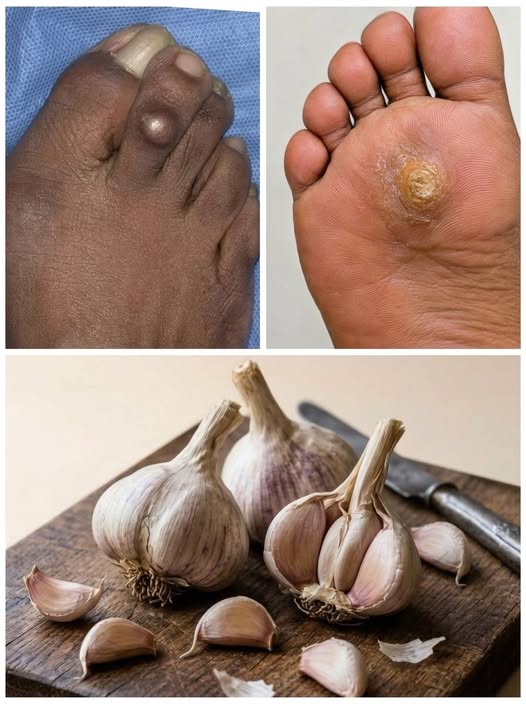
Traditional Garlic Remedy for Corns
Introduction
Corns are small, thickened areas of skin that usually develop on the toes, soles, or sides of the feet due to repeated pressure and friction. They may appear as hard, round, yellowish patches and can cause discomfort while walking, standing, or wearing tight shoes.
Garlic is a common kitchen ingredient that has been used in traditional home remedies for generations. It contains natural compounds, including allicin, which have antimicrobial properties. In traditional practices, crushed garlic is sometimes suggested as a remedy for thickened skin and corns.
However, there is insufficient scientific evidence that garlic can safely or effectively remove corns. Applying raw garlic directly to the skin can cause irritation, blisters, and chemical burns, especially when covered with a plaster or bandage. This article explains the traditional preparation while highlighting safer foot-care alternatives.
Recipe Information
Recipe Name: Traditional Garlic Remedy for Corns
Category: Traditional Home Remedy
Main Ingredient: Fresh garlic
Preparation Time: 5 minutes
Traditional Treatment Duration: 2–3 days (not recommended)
Servings: One small batch
Difficulty Level: Easy
Purpose: Traditional remedy for thickened skin and corns
Ingredients
1–2 fresh garlic cloves
A few drops of clean water (optional)
1 small bowl
1 garlic crusher or mortar and pestle
1 clean towel
1 clean pumice stone for appropriate foot care
Traditional Preparation Method
Step 1: Prepare the garlic
Take one or two fresh garlic cloves. Remove their outer papery skin and rinse them thoroughly with clean water.
Step 2: Crush the garlic
Place the peeled garlic cloves into a mortar or garlic crusher. Crush them until they become finely mashed.
Step 3: Make a smooth paste
Continue grinding until the garlic forms a smooth paste. A few drops of water may be added if necessary.
Step 4: Prepare the mixture
Transfer the freshly prepared garlic paste into a small, clean bowl. Traditionally, this paste is suggested for application to the affected area.
Important safety warning: Do not apply the garlic paste to a corn or cover it with a plaster. Raw garlic can cause chemical burns and damage healthy skin. The traditional application method is not recommended.
Safer Method for Managing Corns
Instead of using garlic, consider these safer foot-care practices if you do not have diabetes, poor circulation, or reduced sensation in your feet.
Soak the affected foot in comfortably warm water for approximately 5–10 minutes.
Gently dry the foot with a clean towel.
Use a clean pumice stone to gently smooth thickened skin.
Avoid aggressive rubbing, cutting, or scraping.
Apply a suitable foot moisturiser, preferably one containing urea.
Wear comfortable shoes with sufficient room for the toes.
Use non-medicated protective pads to reduce friction and pressure.
Stop if the skin becomes painful, irritated, or starts bleeding. People with diabetes or circulation problems should seek professional foot care rather than attempting self-treatment.
Description of the Remedy
Garlic is widely recognised as a flavourful ingredient in cooking and has a long history of traditional medicinal use. It contains sulfur-containing compounds that have attracted scientific interest because of their antimicrobial properties.
Traditional home remedies sometimes suggest that garlic paste can soften thickened skin. However, antimicrobial properties do not establish that garlic can remove corns.
Corns develop as the skin responds to repeated pressure or friction. The body produces additional layers of hard skin to protect the affected area. Therefore, reducing pressure and friction is essential when managing corns.
Proper footwear, gentle foot care, and professional treatment when necessary are more reliable approaches than applying household ingredients.
Benefits and Limitations
The following are potential benefits of appropriate foot care rather than proven benefits of garlic paste:
Improved comfort: Reducing pressure can make walking more comfortable.
Softer skin: Appropriate moisturisers can help soften dry, thickened skin.
Reduced friction: Comfortable footwear can help prevent further corn formation.
Better foot hygiene: Regular washing and drying support healthy skin.
Prevention: Protective footwear and pressure-relieving pads may reduce recurrence.
Limitations of Garlic
Garlic has not been established as a treatment for corns.
Direct application may cause skin irritation.
Covering garlic with a bandage can increase the risk of burns.
It may damage surrounding healthy skin.
It does not address the underlying pressure causing the corn.
Tips and Precautions
Always choose comfortable footwear that does not squeeze your toes.
Avoid walking in shoes that repeatedly rub against the affected area.
Keep your feet clean and dry.
Do not cut corns using blades, scissors, or knives.
Never apply raw garlic directly to the skin.
Avoid aggressive rubbing with a pumice stone.
Do not use medicated corn-removal products without professional advice if you have diabetes or circulation problems.
Consult a healthcare professional if the corn becomes painful, swollen, infected, or starts bleeding.
Seek an assessment if you are unsure whether the lesion is a corn or a plantar wart.
Servings and Storage Information
Yield: One small batch of traditional garlic paste.
Traditional purpose: Intended for one affected area.
Preparation: Freshly crushed garlic.
Storage: No storage is recommended for a skin treatment.
Reusability: Do not save leftover paste for future skin applications.
Recommended application: Direct application to corns is not recommended.
Nutritional Information
This is a topical home remedy rather than an edible recipe, so it does not provide meaningful nutritional benefits to the skin.
For reference, one fresh garlic clove contains approximately:
Nutritional Component Approximate Amount
Calories 4–5 kcal
Carbohydrates 1 g
Protein 0.2 g
Fat 0 g
Fibre 0.1 g
Vitamin C Small amount
Vitamin B6 Small amount
Manganese Small amount
These values refer to eating garlic, not applying it to the skin.
Frequently Asked Questions
Q1. What are corns?
Corns are small, thickened areas of skin that develop because of repeated pressure or friction. They commonly appear on the toes and soles of the feet.
Q2. Can garlic remove corns?
There is insufficient reliable clinical evidence that garlic removes corns. Raw garlic can cause irritation and chemical burns, so it should not be applied directly to the skin.
Q3. Why is garlic used in traditional remedies?
Garlic contains compounds such as allicin, which have antimicrobial properties. These properties have contributed to its popularity in traditional household remedies, but they do not prove that garlic treats corns.
Q4. How long does a corn take to disappear?
The time varies depending on the size of the corn and whether the pressure causing it is removed. Some improve gradually with appropriate foot care and footwear changes.
Q5. Can I use a pumice stone?
People without diabetes, circulation problems, or reduced foot sensation may gently use a clean pumice stone on softened, intact skin. Avoid excessive rubbing.
Q6. Are corns contagious?
No. Ordinary corns are caused by pressure and friction, not infection. However, plantar warts can sometimes look similar and are caused by a virus.
Q7. Can corns return?
Yes. Corns can return if the pressure or friction responsible for their formation continues. Properly fitting footwear helps reduce the risk.
Q8. When should I see a doctor?
Seek professional advice if the corn is painful, persistent, swollen, bleeding, or producing discharge. People with diabetes or poor circulation should avoid self-treatment.
Q9. Is garlic suitable for sensitive skin?
Raw garlic can irritate even healthy skin and may cause significant burns. It is particularly unsuitable for sensitive, damaged, or broken skin.
Q10. What is the safest way to prevent corns?
Wear comfortable shoes, avoid excessive pressure on the toes, use suitable protective pads, and maintain regular foot hygiene.
Final Thoughts
Garlic is a familiar kitchen ingredient with a long history in traditional home remedies. The garlic paste remedy for corns is an example of how everyday ingredients have been used in traditional skin-care practices.
However, natural ingredients are not always harmless. Applying raw garlic directly to a corn and covering it with a plaster can cause painful irritation and chemical burns.
For healthier feet, focus on comfortable footwear, reducing pressure, gentle skin care, and professional treatment when needed. These measures are more appropriate than relying on unproven garlic applications.
Disclaimer: This article is for educational purposes only. The traditional garlic remedy is not a scientifically established or recommended treatment for corns. It should not replace professional medical advice, diagnosis, or treatment.