
Technology has transformed modern relationships in countless ways. Couples can stay connected throughout the day, share memories instantly, and communicate across any distance with a simple tap on a screen. While these advances have brought people closer together, they’ve also created new opportunities for secrecy and emotional betrayal.
Today, infidelity doesn’t always begin with a secret meeting or a hidden relationship in the real world. Sometimes it starts with late-night messages, private conversations, disappearing chats, or online connections that gradually cross emotional boundaries. Because so much of modern communication happens through phones, changes in digital behavior can sometimes reveal problems within a relationship long before the truth comes to light.
It’s important to remember that no single behavior proves someone is cheating. People deserve privacy, and there are many innocent reasons for changes in phone habits. However, when several warning signs appear together and are accompanied by emotional distance, dishonesty, or suspicious behavior, they may indicate that something deeper is happening.
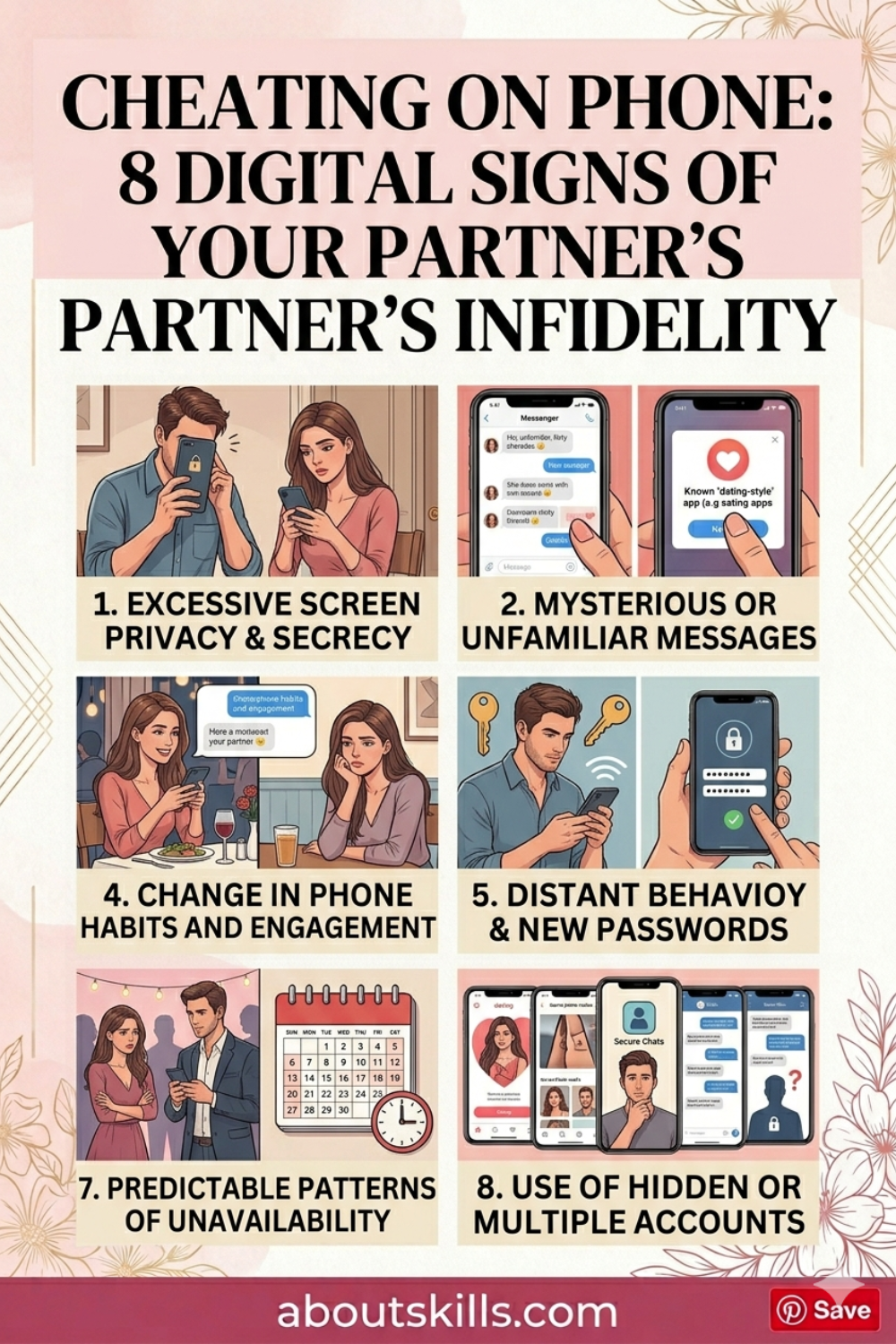
If you’ve noticed unusual changes in your partner’s relationship with their phone, here are eight digital signs that could suggest infidelity.
Their Phone Suddenly Becomes Off-Limits
One of the most noticeable changes often involves how protective someone becomes of their device.
Most people value their privacy, and healthy relationships don’t require constant access to each other’s phones. However, if your partner previously had no problem leaving their phone nearby and suddenly starts guarding it like a state secret, it may raise questions.
You may notice them carrying it everywhere, even to the bathroom. They never leave it unattended on a table. The screen is immediately turned face down whenever you’re nearby. If you accidentally glance toward the device, they appear nervous or defensive.
The issue isn’t necessarily the phone itself. It’s the dramatic shift in behavior.
When someone begins treating ordinary interactions with their phone as potential threats, it can create feelings of suspicion and uncertainty within the relationship.
They Change Passwords Without Explanation
Another common digital red flag occurs when a partner suddenly updates passwords, security settings, or privacy controls without any obvious reason.
Again, everyone has the right to secure their personal information. The concern arises when the change feels unusually secretive or coincides with other suspicious behaviors.
Perhaps they previously shared access to certain accounts but now refuse to discuss them. Maybe biometric locks suddenly appear on every device they own. If these changes happen alongside increased secrecy, they may indicate an effort to hide specific conversations or activities.
Trust is often damaged not by privacy itself but by unexplained secrecy.
They Receive Frequent Notifications but Never Open Messages Around You
Many people receive dozens of notifications daily. Work messages, family chats, social media updates, and app alerts are completely normal.
What becomes unusual is when someone consistently avoids opening certain messages while you’re present.
You may hear notifications arrive repeatedly, yet they wait until they’re alone to respond. They glance at incoming messages, quickly lock the screen, and continue the conversation later in private.
In some cases, they appear anxious whenever a notification arrives unexpectedly.
While this behavior doesn’t automatically mean infidelity, it can suggest they’re having conversations they don’t want you to see.
They Suddenly Spend Much More Time on Their Phone
A noticeable increase in phone usage can sometimes signal emotional involvement with someone new.
At first, the change may seem minor. They spend a little more time texting. They stay online later than usual. They appear distracted during conversations because they’re focused on their device.
Over time, the behavior becomes harder to ignore.
You may notice them smiling at messages while refusing to explain what’s so funny. They remain engaged with their phone during meals, television time, or moments that were once spent together.
If increased phone usage is paired with emotional distance in the relationship, it may indicate that their attention is being directed elsewhere.
They Delete Messages Regularly
Most people occasionally clear old messages to free storage space or organize their devices. However, constantly deleting conversations can sometimes be a warning sign.
If you notice that message histories mysteriously disappear, chat logs remain empty, or conversations are routinely erased, it may suggest an effort to remove evidence of communication.
Some people also rely on disappearing-message features within various apps to ensure conversations leave no lasting record.
Again, deletion alone doesn’t prove anything. However, when combined with secrecy and defensiveness, it can contribute to a larger pattern of suspicious behavior.
They Become Defensive About Simple Questions
One of the strongest indicators that something may be wrong is not necessarily what they’re doing but how they react when asked about it.
If you calmly ask who they’re texting and receive an unusually defensive response, it may signal discomfort.
Healthy partners generally don’t view every question as an accusation. While nobody enjoys feeling interrogated, simple curiosity shouldn’t trigger anger or hostility.
When someone consistently reacts with irritation, refuses reasonable conversations, or accuses you of being controlling whenever their phone habits are mentioned, it can sometimes indicate that they’re hiding something.
Defensiveness often emerges when people fear that ordinary questions could expose information they want to keep secret.
Their Social Media Behavior Changes Dramatically
Social media has become one of the most common places for emotional affairs and secret connections to develop.
A sudden change in social media behavior may deserve attention.
Perhaps they’re constantly online but interacting less with you. Maybe they begin following new people obsessively, hiding friend lists, or engaging in unusually private conversations.
Some individuals create secondary accounts or become extremely protective of their online activity after previously being open about it.
While social media changes can occur for many reasons, dramatic shifts combined with other suspicious behaviors may point toward deeper issues.
They Seem Emotionally Invested in Their Phone but Detached From You
Perhaps the biggest digital warning sign has very little to do with technology itself.
Infidelity often creates an emotional imbalance.
Someone who is investing significant emotional energy elsewhere may gradually withdraw from their primary relationship. Conversations become shorter. Affection decreases. Shared experiences become less meaningful.
At the same time, their phone appears to generate excitement, attention, and engagement.
They respond eagerly to messages but seem uninterested in talking with you. They stay emotionally connected to whatever is happening on their screen while becoming increasingly distant in real life.
This contrast is often more revealing than any individual phone behavior.
The problem isn’t the device. It’s where their emotional energy is being directed.
Why Digital Infidelity Can Be So Damaging
Many people assume cheating only occurs when physical boundaries are crossed. However, emotional affairs and online relationships can be equally damaging to trust.
When someone shares emotional intimacy, romantic attention, flirtation, or secret communication with another person, the betrayal can feel just as painful as physical infidelity.
Technology makes these connections easier to hide because so much interaction occurs privately through messages, apps, and social platforms.
As a result, digital infidelity often develops gradually before either person fully acknowledges what’s happening.
The secrecy itself frequently causes significant damage to the relationship.
What To Do If You Notice These Signs
Discovering several of these warning signs can be upsetting, but it’s important not to jump to conclusions.
Many innocent explanations exist for changes in phone behavior. Increased work responsibilities, personal stress, family issues, privacy concerns, or new hobbies can all affect how someone uses technology.
Avoid spying, secretly accessing devices, or attempting to gather evidence through invasive methods. These actions often create additional trust issues and rarely lead to healthy outcomes.
Instead, focus on open communication.
Express your concerns calmly and honestly. Describe the specific behaviors you’ve noticed and explain how they make you feel. Pay attention not only to their answers but also to their willingness to engage in an honest conversation.
Healthy relationships are built on transparency, respect, and mutual trust.
Final Thoughts
Modern technology has changed the way people communicate, connect, and unfortunately, sometimes cheat. While a phone itself doesn’t cause infidelity, changes in digital behavior can occasionally reveal deeper relationship problems.
If your partner suddenly becomes secretive about their device, changes passwords without explanation, deletes conversations, spends excessive time online, or grows emotionally distant while becoming increasingly attached to their phone, it may be worth paying attention.
However, it’s important to remember that no digital sign proves infidelity on its own. Context matters, communication matters, and assumptions can sometimes be misleading.
The healthiest approach is always honest conversation. Trust your observations, but also seek clarity through respectful communication rather than suspicion alone.
A strong relationship should never leave you feeling like you’re competing with a screen for honesty, attention, or emotional connection.