
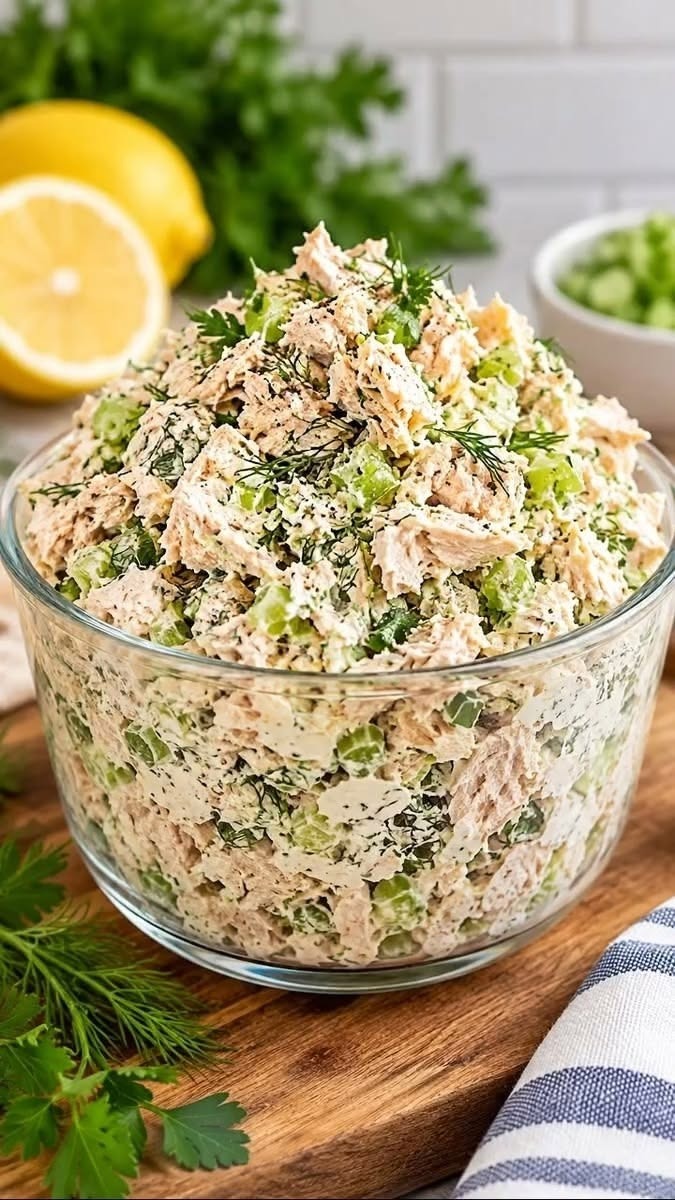
Creamy Dill Tuna Salad
Description
Creamy Dill Tuna Salad is a fresh, flavorful, and protein-rich meal made with tender tuna, crunchy celery, finely diced red onion, fresh dill, and a creamy lemon dressing. Dijon mustard adds a subtle tang, while lemon juice brightens the flavor and balances the richness of the mayonnaise.
This easy tuna salad comes together in just a few minutes and requires no cooking, making it perfect for busy weekdays, quick lunches, light dinners, or meal preparation. The fresh herbs and crisp vegetables give every bite a refreshing texture, while Greek yogurt can be added for extra creaminess and a slightly lighter dressing.
Serve this delicious tuna salad in sandwiches, wraps, lettuce cups, or over a bed of mixed greens. It is an excellent option when you want a simple, satisfying meal using everyday ingredients.
Recipe Information
-
Prep Time: 10 minutes
-
Chill Time: 15–30 minutes
-
Total Time: 25–40 minutes
-
Servings: 3–4
-
Course: Lunch or light dinner
-
Cuisine: American-inspired
-
Difficulty: Easy
-
Cooking Method: No-cook
Ingredients
-
2 cans (5 oz each) tuna in water, drained
-
⅓ cup mayonnaise
-
2 tablespoons plain Greek yogurt, optional
-
2 celery stalks, finely chopped
-
¼ cup red onion, finely diced
-
2 tablespoons fresh dill, chopped
-
1 tablespoon fresh lemon juice
-
1 teaspoon Dijon mustard
-
¼ teaspoon garlic powder
-
Salt, to taste
-
Black pepper, to taste
Optional Garnishes
-
Extra fresh dill
-
Lemon wedges
-
A pinch of paprika
-
Sliced cucumber
-
Freshly cracked black pepper
Instructions
Step 1: Drain and Prepare the Tuna
Open the tuna cans and drain away the liquid thoroughly. Transfer the tuna to a medium mixing bowl.
Use a fork to flake the tuna into small pieces. If you prefer a chunkier salad, leave some larger pieces intact. Removing excess liquid helps prevent the finished salad from becoming watery.
Step 2: Prepare the Creamy Dressing
In a separate small bowl, combine the mayonnaise, Greek yogurt, lemon juice, Dijon mustard, garlic powder, salt, and black pepper.
Whisk until the mixture is smooth and creamy. Taste the dressing and adjust the lemon juice, mustard, or seasoning according to your preference.
Step 3: Chop the Vegetables and Herbs
Finely chop the celery and red onion. Wash the fresh dill, pat it dry, and chop it into small pieces.
Add the celery, red onion, and fresh dill to the bowl containing the tuna. The celery provides a pleasant crunch, while the red onion and dill give the salad its distinctive savory flavor.
Step 4: Combine the Ingredients
Pour the prepared dressing over the tuna and vegetable mixture.
Using a spoon or spatula, gently fold everything together until the tuna is evenly coated. Avoid overmixing if you want to preserve some texture.
If the salad appears too dry, add a small amount of mayonnaise or Greek yogurt. If you prefer a brighter flavor, add a little extra lemon juice.
Step 5: Chill the Tuna Salad
Cover the bowl and refrigerate for 15–30 minutes. Chilling allows the lemon, dill, mustard, and other flavors to blend.
Although the salad can be served immediately, a short resting period generally improves its flavor.
Step 6: Garnish and Serve
Remove the tuna salad from the refrigerator and give it a gentle stir. Taste once more and adjust the seasoning if necessary.
Garnish with extra chopped dill, freshly cracked black pepper, or a squeeze of lemon juice.
Serve in a sandwich, wrap, lettuce cup, or over fresh greens for an easy and delicious meal.
Recipe Notes
-
Tuna selection: Tuna packed in water works well because it allows the creamy dressing and fresh herbs to stand out.
-
Mayonnaise: Use your preferred mayonnaise for the classic creamy texture.
-
Greek yogurt: This is optional and adds a slightly tangy flavor. Plain, unsweetened yogurt works best.
-
Fresh dill: Fresh dill gives the salad its characteristic flavor. Dried dill can be substituted in a smaller quantity.
-
Red onion: If the onion flavor is too strong, rinse the chopped onion under cold water and drain it before adding.
-
Lemon juice: Freshly squeezed lemon juice provides a bright, fresh taste.
-
Texture: Chop the celery and onion finely so they distribute evenly throughout the salad.
-
Seasoning: Taste before adding extra salt because canned tuna can already contain sodium.
Tips for the Best Creamy Dill Tuna Salad
-
Drain the tuna thoroughly to avoid watery dressing.
-
Use fresh dill for the most vibrant herbal flavor.
-
Chill the salad before serving for better flavor.
-
Add the dressing gradually if you prefer a firmer tuna mixture.
-
Finely chop the celery and onion for a balanced texture.
-
Use Greek yogurt to replace some of the mayonnaise if desired.
-
Add lemon juice a little at a time to avoid making the salad too tart.
-
Keep the salad refrigerated until you are ready to serve.
-
Assemble sandwiches just before eating to prevent soggy bread.
-
Garnish with fresh herbs for an attractive presentation.
Serving Suggestions
Creamy Dill Tuna Salad is versatile enough for several meals.
-
Classic sandwich: Serve between slices of whole-wheat, sourdough, or multigrain bread.
-
Lettuce wraps: Spoon the mixture into crisp lettuce leaves for a bread-free option.
-
Green salad: Serve over spinach, lettuce, cucumber, and tomatoes.
-
Tuna wrap: Roll it in a tortilla with shredded lettuce and sliced cucumber.
-
Crackers: Serve with whole-grain crackers for a simple snack.
-
Stuffed tomatoes: Fill hollowed tomatoes with the tuna mixture.
-
Avocado boats: Spoon the salad into halved avocados for a creamy combination.
-
Lunch bowl: Pair with fresh vegetables and whole-grain bread for a more complete meal.
Storage Instructions
Refrigeration: Store the tuna salad in an airtight container in the refrigerator at 40°F (4°C) or below. Consume within 3–4 days, provided it has been handled and refrigerated safely.
Food safety: Refrigerate the salad within two hours of preparation, or within one hour if the surrounding temperature exceeds 90°F (32°C).
Freezing: Freezing is not recommended because mayonnaise-based dressings can separate and the celery may lose its crisp texture.
Meal preparation: You can chop the vegetables and prepare the dressing separately in advance. Combine them with the tuna when ready, or prepare the complete salad and keep it chilled until serving.
Nutritional Information
Estimated nutrition per serving, assuming four servings and including mayonnaise and Greek yogurt:
-
Calories: 230–290
-
Protein: 20–25 g
-
Carbohydrates: 3–5 g
-
Fat: 14–20 g
-
Saturated Fat: 2–4 g
-
Fiber: 1–2 g
-
Sugar: 1–3 g
-
Sodium: 350–600 mg
These values are estimates and vary according to the tuna brand, mayonnaise, yogurt, and amount of salt used. Bread, crackers, wraps, and other accompaniments will increase the total nutritional values.
Benefits of Creamy Dill Tuna Salad
1. Provides protein: Tuna contains high-quality protein, which supports muscle maintenance and tissue repair.
2. Contains omega-3 fatty acids: Tuna provides varying amounts of omega-3 fats, depending on the species.
3. Includes fresh vegetables: Celery and red onion add crunch and contribute small amounts of vitamins, minerals, and fiber.
4. Offers a refreshing flavor: Dill, lemon, and Dijon mustard add flavor without requiring complicated ingredients.
5. Convenient and quick: This no-cook recipe is easy to prepare for lunch, dinner, or meal preparation.
6. Can be customized: You can adjust the mayonnaise, yogurt, vegetables, and seasonings to match your preferences.
A note about tuna: Tuna can contain mercury, and levels vary by species. Choose lower-mercury options and follow relevant dietary guidance, especially during pregnancy and for children.
Frequently Asked Questions
1. Can I make tuna salad without mayonnaise?
Yes. Replace the mayonnaise with plain Greek yogurt, mashed avocado, or a combination of yogurt and a small amount of olive oil. The flavor and texture will change slightly.
2. Can I use dried dill instead of fresh dill?
Yes. Start with approximately 2 teaspoons of dried dill in place of 2 tablespoons of fresh dill, then adjust to taste.
3. How do I keep tuna salad from becoming watery?
Drain the tuna thoroughly and remove excess moisture from the washed vegetables before chopping. Add the dressing gradually to control the consistency.
4. Can I make this recipe ahead of time?
Yes. Prepare it a few hours before serving and refrigerate it in an airtight container. Stir before serving.
5. Is Creamy Dill Tuna Salad suitable for a low-carb meal?
The tuna mixture itself is relatively low in carbohydrates. Serve it in lettuce cups or over leafy greens if you want to avoid the additional carbohydrates in bread or wraps.
6. Can I add pickles?
Absolutely. Finely chopped dill pickles or a small amount of pickle relish add extra tanginess and crunch. Drain excess liquid before adding.
7. Which tuna is best for this recipe?
Tuna packed in water is a convenient choice. Light tuna, including skipjack, is generally lower in mercury than albacore tuna.
8. How long does tuna salad last in the refrigerator?
When promptly refrigerated and handled safely, it generally lasts 3–4 days. Discard it if it has been left at room temperature too long or shows signs of spoilage.
9. Can I add hard-boiled eggs?
Yes. Chop one or two cooled hard-boiled eggs and fold them into the salad for additional protein and a richer texture.
10. What can I use instead of red onion?
Finely chopped green onions, chives, or a smaller amount of sweet onion are suitable alternatives.
Conclusion
Creamy Dill Tuna Salad is a quick, satisfying recipe that combines flaky tuna, crunchy vegetables, fresh dill, and a tangy lemon dressing. It requires minimal preparation and offers plenty of ways to customize the flavor and presentation. Enjoy it in sandwiches, lettuce wraps, or over fresh greens for a convenient homemade lunch that is creamy, refreshing, and full of flavor.