
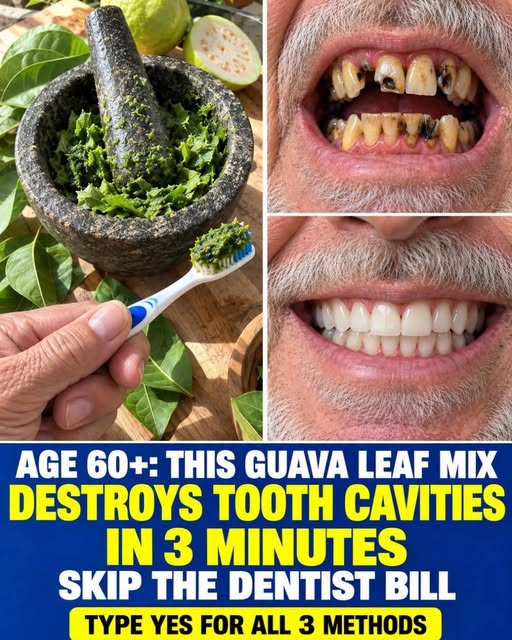
Fresh Guava Leaf Oral Rinse
Description
Guava leaves have been used in traditional home remedies for generations, particularly for oral hygiene and fresh breath. They contain natural plant compounds, including polyphenols and flavonoids, that have attracted scientific interest because of their potential antioxidant and antimicrobial properties.
A homemade guava leaf rinse is simple to prepare using fresh leaves and water. However, it is important to understand that guava leaves cannot cure cavities, rebuild lost enamel, or replace professional dental treatment. This recipe is intended as an optional addition to an oral-care routine, not a treatment for tooth decay.
Preparation Time
-
Preparation: 5 minutes
-
Cooking: 10 minutes
-
Cooling: 10–15 minutes
-
Total time: Approximately 25–30 minutes
-
Servings: 2 small rinses
-
Difficulty: Easy
Ingredients
-
5–7 fresh guava leaves
-
2 cups (480 ml) clean drinking water
-
1 small saucepan
-
1 fine strainer
-
1 clean glass or cup
Optional: Food-grade dried guava leaves can be used if fresh leaves are unavailable.
Instructions
Step 1: Wash the guava leaves. Rinse the leaves thoroughly under clean running water to remove dust, dirt, and other surface contaminants. Discard leaves that are moldy, damaged, or potentially exposed to harmful chemicals.
Step 2: Boil the water. Pour 2 cups of clean drinking water into a saucepan and bring it to a boil.
Step 3: Add the leaves. Add the washed guava leaves to the boiling water. Reduce the heat and allow the mixture to simmer gently for approximately 10 minutes.
Step 4: Strain the liquid. Remove the saucepan from the heat and strain the mixture to remove all leaves and plant particles.
Step 5: Allow it to cool. Let the infusion cool to room temperature before using it. Never rinse your mouth with hot liquid because it can burn the delicate tissues inside your mouth.
Step 6: Rinse and spit. If you choose to try the preparation, gently swish a small amount around your mouth and spit it out. Do not swallow it. Stop immediately if you experience irritation, burning, or an allergic reaction.
Nutritional Information
The following values are rough estimates per 240 ml of infusion, not laboratory-tested measurements.
-
Calories: 0–5 kcal
-
Protein: 0 g
-
Fat: 0 g
-
Carbohydrates: 0–1 g
-
Added sugar: 0 g
-
Fiber: 0 g
The actual nutritional content depends on the leaves and preparation method. Because the rinse is intended to be spat out, it should not be considered a source of nutrition.
Potential Benefits of Guava Leaves for Oral Health
1. May support gum hygiene
Some preliminary research on formulated guava leaf extract mouthwashes suggests potential benefits for plaque control and gum health when used alongside professional dental cleaning. However, more research is needed, and these findings do not establish that homemade guava leaf water provides the same benefits.
2. Contains natural plant compounds
Guava leaves contain polyphenols and flavonoids that have been studied for antioxidant and antimicrobial activity. Nevertheless, laboratory findings do not necessarily translate into effective treatment in the human mouth.
3. May complement an oral-care routine
For people who tolerate it, a homemade guava leaf rinse may be an optional traditional practice. It must not replace brushing with fluoride toothpaste, cleaning between teeth, or routine dental examinations.
4. Does not cure cavities
A cavity develops when acids produced by bacteria damage tooth enamel and the underlying tooth structure. Very early tooth decay may sometimes be reversed with appropriate fluoride-based care, but an established cavity generally requires professional assessment and may need a filling or other treatment.
Guava leaves have not been proven to repair a hole in a tooth or regenerate missing enamel.
Tips for Best Results and Safety
-
Use fresh, clean leaves from a source that is unlikely to be contaminated by pesticides or pollution.
-
Do not add sugar or honey to the rinse.
-
Always allow the infusion to cool before use.
-
Spit out the rinse instead of swallowing it.
-
Prepare small quantities and discard leftovers rather than storing them for extended periods.
-
Stop using the rinse if you experience discomfort or irritation.
-
Do not give homemade herbal rinses to young children who may accidentally swallow them.
-
Brush your teeth twice daily for two minutes with fluoride toothpaste.
-
Clean between your teeth daily using floss or another suitable interdental cleaner.
-
Limit frequent sugary snacks and drinks to help reduce the risk of tooth decay.
There is no scientifically established dose or schedule for using homemade guava leaf rinse to prevent or treat cavities.
Questions and Answers
1. Can guava leaves cure cavities naturally?
No. There is insufficient clinical evidence that guava leaves can cure cavities. An established cavity involves damage to the tooth structure and may require a filling or another dental procedure.
2. Can guava leaves remove tooth decay?
No. Rinsing with guava leaf water cannot remove decayed tooth material or fill a hole in a tooth. A dentist can assess the extent of damage and recommend appropriate treatment.
3. How often should I use guava leaf rinse?
There is no established evidence-based frequency for homemade guava leaf rinse. If you choose to use it, treat it as an optional traditional remedy rather than a substitute for proven oral-care practices.
4. Can guava leaves relieve a toothache?
Guava leaves have not been established as a reliable treatment for toothache. Even if discomfort temporarily improves, the underlying cause may remain. Persistent tooth pain should be evaluated by a dentist.
5. Can guava leaves replace fluoride toothpaste?
No. Fluoride toothpaste has strong evidence supporting its role in preventing tooth decay. Guava leaf infusion does not provide an equivalent, validated alternative.
6. Is guava leaf rinse safe for everyone?
Not necessarily. Homemade preparations are not standardized, and some people may experience irritation or allergic reactions. Avoid swallowing the rinse and consult a dental professional before using it for children or if you have existing oral health concerns.
7. When should I see a dentist?
Arrange a dental appointment if you notice a hole in a tooth, a dark spot, sensitivity, or persistent pain. Seek urgent dental care if you develop facial swelling, fever associated with dental pain, or signs of infection. Difficulty breathing or swallowing requires emergency medical attention.
Conclusion
Guava leaves are a traditional herbal ingredient with potentially interesting properties for oral hygiene. Preliminary research into guava leaf extracts suggests possible benefits for gum health, but there is not enough evidence to recommend homemade guava leaf rinse as a treatment for cavities.
The most effective way to protect your teeth is to maintain good oral hygiene, use fluoride toothpaste, limit frequent sugar exposure, and visit a dentist regularly.
Remember: Guava leaves may be an optional addition to your oral-care routine, but they cannot replace professional dental treatment. Never skip a dental appointment because a home remedy appears to help. Early treatment can prevent a small cavity from developing into a more serious dental problem.