
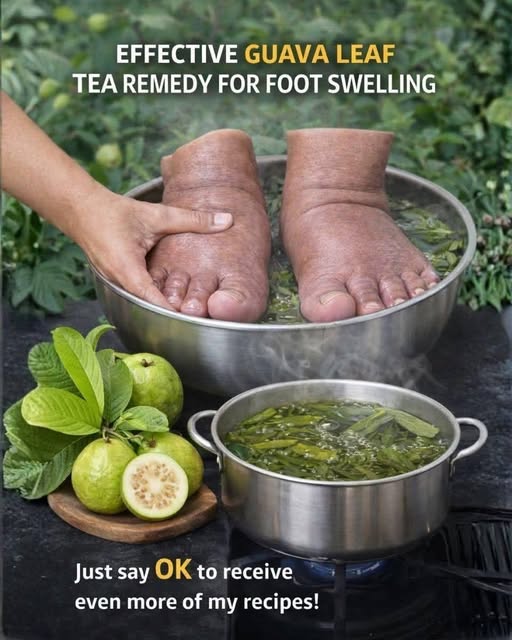
Guava Leaves for Water Retention and Swollen Feet: A Traditional Natural Remedy Worth Knowing
Guava leaves have been used in traditional home remedies for generations. These beautiful green leaves come from the guava tree (Psidium guajava), a tropical plant commonly found in Pakistan, India, Bangladesh and other warm regions.
Many people use guava leaves to prepare traditional herbal teas, washes and foot soaks. One popular household preparation is guava-leaf water, which is used as a warm foot soak for tired feet.
Foot swelling, however, can have several causes, including prolonged standing, poor circulation, certain medications and underlying health conditions. Although guava leaves contain natural plant compounds with antioxidant and anti-inflammatory activity in laboratory studies, there is currently insufficient clinical evidence that soaking feet in guava-leaf water reduces water retention or treats swelling.
This recipe offers a simple traditional foot-care experience that can be prepared at home.
Recipe Information
-
Recipe Name: Traditional Guava Leaf Foot Soak
-
Preparation Time: 5 minutes
-
Cooking Time: 10–15 minutes
-
Cooling Time: 15–20 minutes
-
Total Time: 30–40 minutes
-
Servings: 1–2 foot soaks
-
Recipe Category: Traditional Herbal Remedy
-
Difficulty: Easy
-
Main Ingredient: Fresh guava leaves
Ingredients
You only need two main ingredients to prepare this traditional herbal foot soak.
-
15–20 fresh guava leaves: Choose healthy, green leaves without spots, insects or visible damage.
-
2 litres of clean water: Use fresh drinking-quality water.
Optional equipment:
-
A medium-sized saucepan.
-
A clean strainer.
-
A large foot basin.
-
A soft, clean towel.
Instructions
Step 1: Select and Wash the Guava Leaves
Collect approximately 15–20 fresh guava leaves.
Choose leaves that look healthy and green. Wash them thoroughly under running water to remove dust, dirt and other impurities.
Avoid leaves collected from areas exposed to pesticides, pollution or roadside contaminants.
Step 2: Boil the Water
Pour approximately 2 litres of clean water into a medium-sized saucepan.
Place the saucepan over medium heat and bring the water to a boil.
Step 3: Add the Guava Leaves
Add the washed guava leaves to the boiling water.
Reduce the heat and allow the leaves to simmer gently for approximately 10–15 minutes.
The water may develop a light greenish or brownish colour as natural plant compounds are released.
Step 4: Allow the Mixture to Cool
Turn off the heat and allow the preparation to cool.
Strain the liquid to remove the leaves.
Transfer the infusion into a clean basin. Make sure the temperature is comfortably lukewarm before using it.
Never use boiling or excessively hot water on your feet.
Step 5: Prepare Your Foot Soak
Place the basin on a stable surface.
Carefully immerse your feet in the lukewarm guava-leaf water for approximately 5–10 minutes.
Sit comfortably and relax.
Avoid vigorous rubbing, scrubbing or massaging swollen areas.
Step 6: Dry Your Feet
Remove your feet from the basin.
Gently pat them dry with a clean towel, paying particular attention to the spaces between your toes.
If appropriate, rest with your legs comfortably elevated on a pillow.
Recipe Notes
-
Always use clean, fresh guava leaves.
-
Wash the leaves carefully before preparation.
-
Allow the liquid to cool before placing your feet inside.
-
Do not use the preparation on open wounds, ulcers or infected skin.
-
Avoid foot soaking if you have reduced sensation or circulation problems unless your healthcare professional approves it.
-
Discontinue use if itching, redness, burning or irritation develops.
-
Prepare a fresh batch whenever you want to use the foot soak.
-
This preparation is intended for external use only.
Tips for Best Results
1. Choose good-quality leaves
Healthy green leaves are preferable to damaged, yellow or diseased leaves.
2. Maintain a comfortable temperature
The water should feel comfortably lukewarm, never hot. This is particularly important for older adults and people with reduced foot sensation.
3. Keep the basin clean
Always wash the basin before and after use to maintain proper hygiene.
4. Avoid excessive soaking
A short foot soak is sufficient for relaxation. Prolonged soaking can dry the skin.
5. Dry your feet properly
Moisture trapped between the toes can contribute to skin problems, so dry these areas carefully.
Potential Benefits of Guava Leaves
Guava leaves contain several naturally occurring plant compounds, including flavonoids, tannins and phenolic compounds.
Researchers have investigated these substances for their antioxidant and anti-inflammatory properties.
However, most available evidence comes from laboratory research and animal studies. More human research is needed to establish whether guava-leaf preparations provide meaningful health benefits.
Here are some reasons people traditionally enjoy this preparation:
-
Relaxation: A comfortable warm foot soak can help people unwind after a tiring day.
-
Temporary comfort: Warm water may soothe tired feet after prolonged standing or walking.
-
Traditional herbal care: Guava leaves have a long history of traditional household use.
-
Simple preparation: The recipe requires inexpensive ingredients that are widely available.
-
Personal wellness routine: A gentle foot-care routine can encourage regular attention to foot hygiene.
Remember that these potential benefits do not establish that guava leaves remove excess body fluid or cure swollen feet.
Important Health Notes About Swollen Feet
Swollen feet and ankles are commonly associated with a condition called edema, which occurs when excess fluid accumulates in body tissues.
There are several possible reasons for swelling:
-
Standing or sitting for long periods.
-
Excessive salt consumption.
-
Varicose veins.
-
Certain prescription medications.
-
Pregnancy.
-
Kidney or liver problems.
-
Heart conditions.
-
Blood clots or infections.
Persistent swelling should not be ignored.
If one leg suddenly becomes swollen, especially when accompanied by pain, warmth or redness, seek urgent medical assessment. If swelling occurs with chest pain or difficulty breathing, seek emergency medical attention.
Helpful Lifestyle Tips
Alongside appropriate medical care, some simple habits may help manage mild swelling.
-
Elevate your legs: Rest with your feet raised on pillows when comfortable.
-
Move regularly: Gentle walking and ankle movements can support normal circulation.
-
Reduce excessive salt: Limit very salty processed foods.
-
Wear comfortable footwear: Avoid shoes that squeeze your feet or ankles.
-
Avoid prolonged sitting: Take regular movement breaks throughout the day.
-
Follow medical advice: If you have kidney or heart disease, discuss fluid management with your healthcare professional.
Do not stop prescribed medication or replace medical treatment with herbal remedies.
Nutritional Information
This preparation is a topical foot soak and is not intended for consumption.
|
Nutritional component |
Amount |
|---|---|
|
Calories |
Not applicable |
|
Protein |
Not applicable |
|
Carbohydrates |
Not applicable |
|
Fat |
Not applicable |
|
Sugar |
Not applicable |
|
Fibre |
Not applicable |
|
Sodium |
Not applicable |
Frequently Asked Questions
1. Can guava leaves reduce swollen feet?
There is currently insufficient clinical evidence that guava leaves reduce edema or remove excess fluid from swollen feet. A foot soak may be enjoyed for relaxation but should not be considered a treatment.
2. How many guava leaves should I use?
Approximately 15–20 fresh guava leaves for 2 litres of water is a convenient traditional preparation.
3. How long should I boil guava leaves?
Simmer the leaves gently for approximately 10–15 minutes.
4. How long should I soak my feet?
If foot soaking is safe for you, 5–10 minutes in comfortably lukewarm water is a reasonable short session.
5. Can I use dried guava leaves?
Yes. Clean, properly stored dried guava leaves can be used to prepare a traditional infusion, although there is no established therapeutic dosage.
6. Can I use this remedy every day?
There is no scientific evidence establishing that daily use improves foot swelling. Frequent soaking may cause skin dryness or irritation.
7. Can I drink guava-leaf water for water retention?
This recipe is intended for external use only. Guava-leaf tea has not been established as a treatment for edema. Consult your healthcare professional before using herbal preparations for medical purposes.
8. Is this recipe suitable for older adults?
Older adults should be cautious, particularly if they have diabetes, fragile skin, poor circulation or reduced sensation in their feet. Medical advice is recommended before soaking.
9. What should I do if my feet remain swollen?
Persistent or unexplained swelling requires medical assessment to identify the underlying cause. Treatment depends on the reason for the swelling.
10. Can pregnant women use guava-leaf foot soaks?
Pregnancy can cause swollen feet, but sudden or significant swelling requires medical attention. Pregnant women should discuss foot-soaking safety with their healthcare professional.
Final Thoughts
Guava leaves are a familiar ingredient in traditional herbal preparations and are appreciated for their naturally occurring plant compounds.
This simple two-ingredient foot soak is easy to prepare and can be enjoyed as an occasional relaxation ritual when foot soaking is safe for you.
However, it is important to remember that natural remedies are not automatically medically effective. Guava-leaf water has not been scientifically established as a treatment for water retention, swollen ankles or poor circulation.
If swelling happens frequently, becomes painful or continues without an obvious explanation, consult a healthcare professional rather than relying on home remedies.