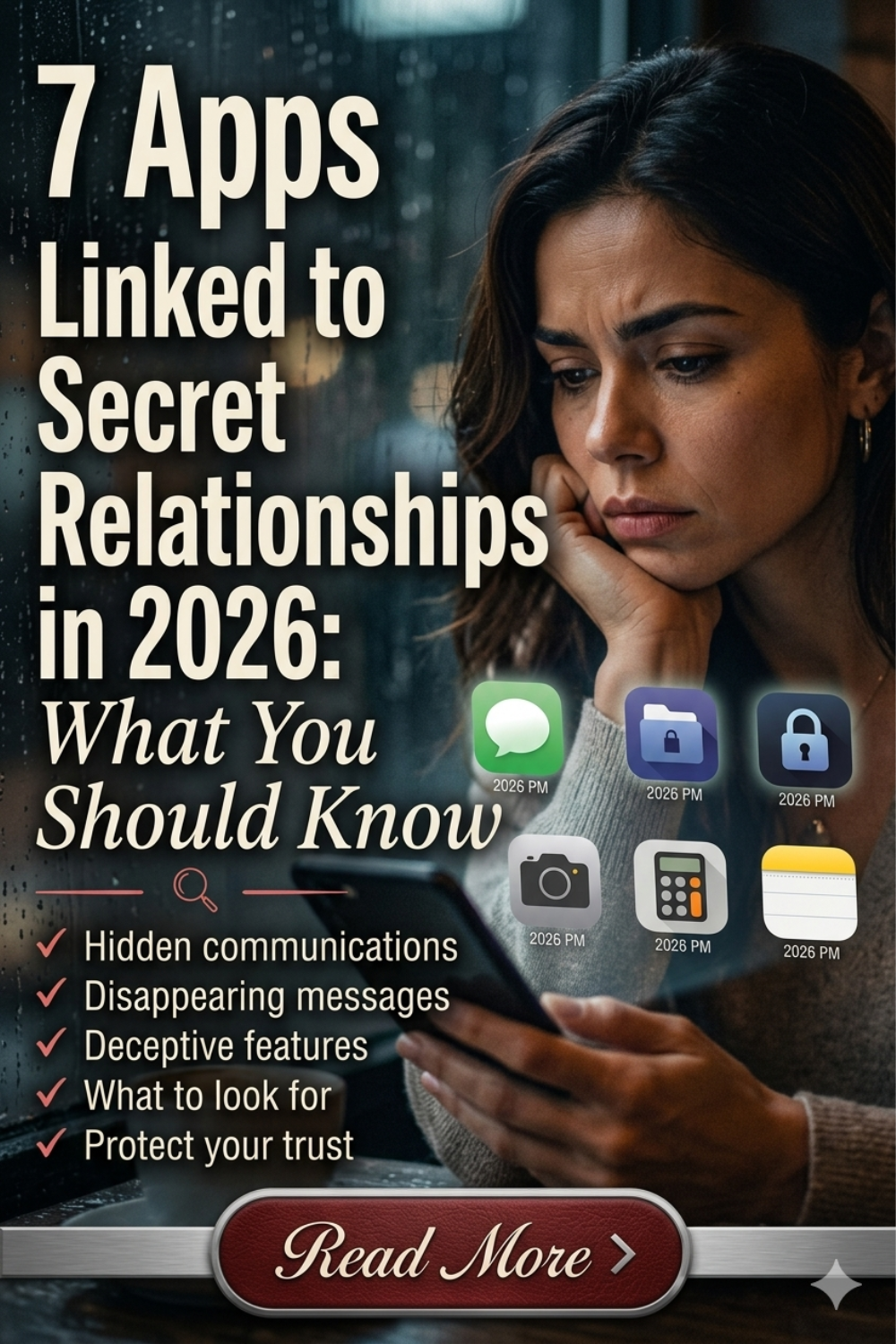
Technology has transformed modern relationships. While smartphones help couples stay connected, they also create opportunities for secrecy. A decade ago, hiding communication required burner phones or secret email accounts. Today, private conversations can disappear automatically, remain hidden behind passwords, or exist inside apps that appear completely innocent.
That doesn’t mean someone is cheating simply because they have a certain app installed. Popular messaging platforms such as WhatsApp, Telegram, and Snapchat are used by millions of people for work, family communication, and friendships. The real concern isn’t usually the app itself—it’s the behavior surrounding it.
Relationship experts consistently point out that secrecy often creates more problems than technology. If a partner suddenly becomes protective of their phone, changes passwords without explanation, deletes conversations regularly, or hides notifications, those behaviors may deserve attention. Technology can facilitate hidden communication, but trust issues usually begin with actions rather than software.
In 2026, several apps continue to attract attention because of their privacy-focused features. Some offer disappearing messages. Others allow hidden photo storage, anonymous profiles, or encrypted conversations. Understanding these tools can help people recognize digital red flags without jumping to conclusions.
Let’s examine the apps most commonly associated with secret communication and what their presence may actually mean.
1. WhatsApp
Among all messaging platforms, WhatsApp remains one of the most widely used communication apps in the world. Its popularity alone means that having WhatsApp is not suspicious. However, certain features can make private communication easier. The platform includes disappearing messages, archived chats, locked conversations, and end-to-end encryption. These privacy tools are designed to protect users but can also be used to hide conversations from partners.
What often raises concern isn’t WhatsApp itself but unusual behavior. Someone who suddenly turns off message previews, locks specific chats, or becomes extremely protective of the app may trigger questions. In healthy relationships, transparency usually matters more than app usage.
Many couples use WhatsApp daily for completely innocent reasons. That’s why it’s important to focus on patterns rather than assumptions. A hidden chat alone doesn’t prove infidelity, but secrecy combined with other warning signs can justify a conversation about trust and boundaries.
2. Snapchat
Snapchat was built around temporary communication. Photos, videos, and messages disappear after being viewed, making it one of the most frequently mentioned apps in discussions about secret relationships. The platform also includes features such as “My Eyes Only,” which allows users to store content behind an additional password.
The disappearing nature of Snapchat appeals to many users who value privacy. Young professionals, friends, and families often use it without any hidden motives. At the same time, the lack of a permanent conversation history can make it attractive for people who want communications to leave fewer traces.
A sudden obsession with maintaining Snapchat streaks, hiding notifications, or frequently using private folders may raise concerns. Still, no app should be treated as evidence of cheating. Open communication remains far more effective than detective work.
3. Telegram
Telegram continues to grow globally and reportedly reached around one billion monthly active users in 2026. One reason for its popularity is its strong focus on privacy. Telegram offers Secret Chats, self-destructing messages, hidden phone numbers, and app-lock features.
Privacy advocates love these features because they protect users from unwanted surveillance. However, the same tools can also be used to conceal conversations. Secret Chats, in particular, do not sync across devices and can automatically delete messages after a set period.
Many online discussions about relationship concerns mention Telegram because of these capabilities. Yet millions of legitimate users rely on it for business, news channels, and group communication. The lesson is simple: privacy tools are not proof of wrongdoing. Context always matters.
4. Signal
Signal is widely respected by cybersecurity experts and privacy professionals. Its encryption technology is often considered among the strongest available in consumer messaging applications. Features such as disappearing messages and limited metadata collection make it appealing to users who prioritize confidentiality.
Because Signal emphasizes privacy, some people assume it is used primarily for secret relationships. In reality, journalists, activists, business leaders, and ordinary users frequently choose Signal for perfectly legitimate reasons.
What matters is whether the app is part of a larger pattern of secrecy. Downloading Signal alone says very little. Refusing to discuss why it’s being used, constantly deleting conversations, or hiding notifications may tell a different story.
5. Dating Apps
Unlike messaging apps, dating apps can create more direct relationship concerns when someone is already committed. Platforms designed for meeting new romantic partners naturally raise questions if they appear unexpectedly on a partner’s phone.
Examples frequently mentioned include dating and matchmaking apps as well as platforms specifically marketed toward discreet affairs. Some services even offer hidden profiles, incognito modes, and anonymous browsing features.
Even here, context matters. A downloaded app does not necessarily mean active use. Some people install apps out of curiosity, forget they exist, or create profiles they never use. The real issue is whether there is ongoing engagement, deception, or dishonesty surrounding the activity.
Trust is built through honest conversations, not assumptions based solely on app icons.
6. Hidden Vault Apps
Perhaps the most controversial category involves vault applications. These apps are designed to hide photos, videos, documents, and sometimes messages behind passwords. Some even disguise themselves as calculator apps or other everyday utilities.
Many users install vault apps for entirely reasonable purposes. They may want extra security for financial records, personal documents, or private photos. However, hidden vaults naturally attract suspicion because they create areas of a device that remain inaccessible to others.
If someone becomes unusually defensive about a disguised app or refuses to explain its purpose, concerns may arise. Again, the issue isn’t necessarily the technology. The issue is whether secrecy is replacing openness in the relationship.
7. Shared Notes and Unexpected Apps
One of the more surprising trends reported in recent years involves people using ordinary apps in unexpected ways. Investigators have noted cases where shared note-taking tools were allegedly used as hidden messaging systems. Instead of texting each other, two people could communicate by editing the same note document.
This highlights an important reality about digital communication. Almost any app can become a communication tool if someone intends to use it that way. Looking for a single “cheating app” often misses the bigger picture.
Technology constantly evolves, and people adapt their behavior accordingly. Focusing exclusively on apps can lead to false accusations while overlooking the deeper issue: trust and honesty between partners.
Signs That Matter More Than Apps
The strongest indicators of relationship problems usually involve behavior rather than software.
Some examples include:
- Sudden password changes without explanation.
- Excessive phone secrecy.
- Deleted conversation histories.
- Hidden notifications.
- Unexplained absences online.
- Defensive reactions when simple questions are asked.
- Multiple social media accounts unknown to a partner.
Research and relationship experts repeatedly emphasize that behavioral changes tend to provide more meaningful clues than the mere presence of a particular application.
A person can cheat without using any of the apps listed above. Likewise, someone can have every one of these apps installed and remain completely faithful.
How to Handle Suspicions in a Healthy Way
Discovering a privacy-focused app on a partner’s phone can trigger anxiety. The temptation to investigate, monitor, or search for evidence is understandable. Yet relationship experts often warn that surveillance rarely fixes trust issues. In many cases, it simply creates new ones.
A healthier approach involves direct communication. Ask questions calmly. Explain your concerns without accusations. Listen carefully to the response. Trust is strengthened when partners feel safe discussing uncomfortable topics.
If concerns persist, couples counseling can provide a structured environment for addressing deeper issues. Professional guidance often uncovers communication gaps, unmet expectations, or trust challenges that technology merely exposes rather than causes.
The goal should not be catching someone. The goal should be understanding what is happening within the relationship.
Conclusion
Apps do not cheat—people do. In 2026, platforms like WhatsApp, Snapchat, Telegram, Signal, dating apps, and hidden vault applications continue to attract attention because of their privacy features. Yet the presence of these apps alone proves nothing.
The strongest relationship red flags usually involve secrecy, dishonesty, and behavioral changes rather than specific software. Focusing exclusively on apps can lead to misunderstandings, while open communication often reveals the truth more effectively.
Healthy relationships are built on trust, transparency, and mutual respect. Technology may change, but those fundamentals remain the same.