
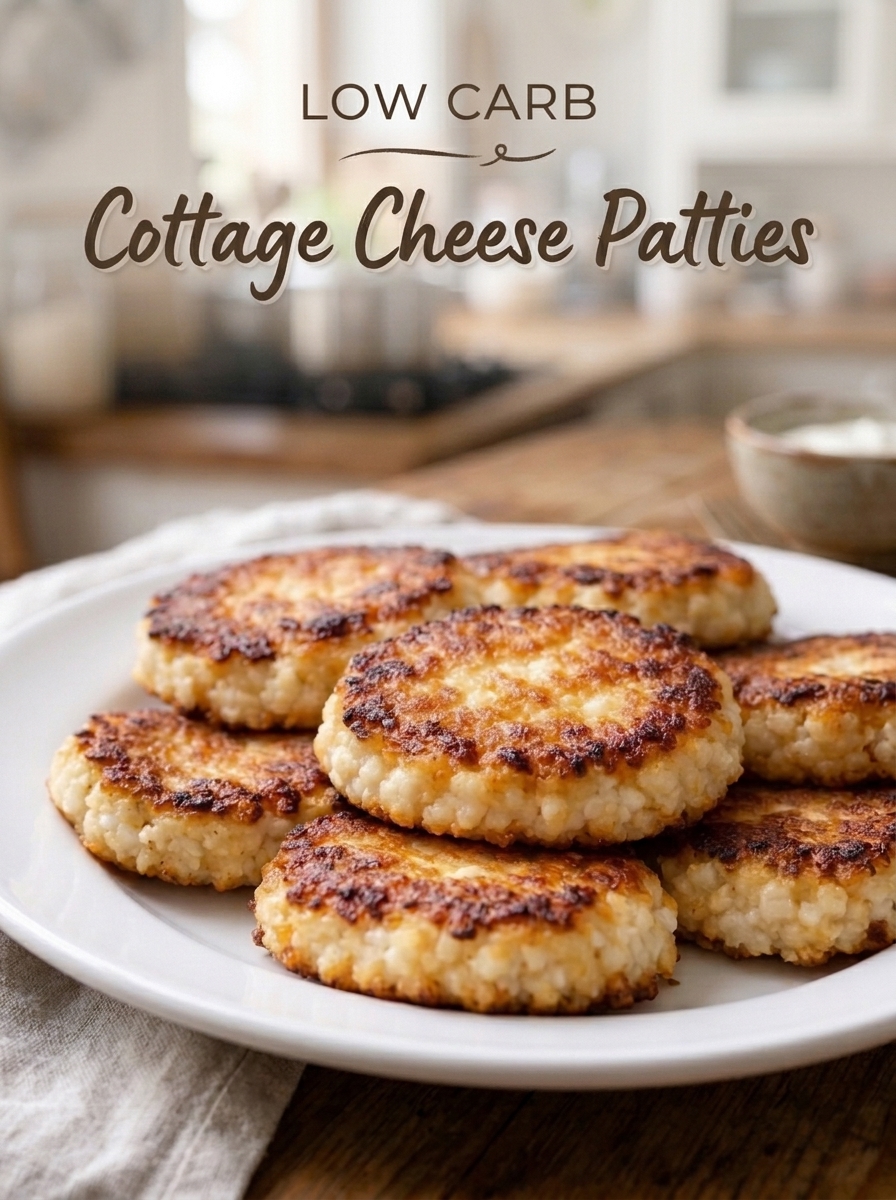
Low Carb Cottage Cheese Patties
High-Protein • Low-Carb • Easy Breakfast • Gluten-Free Without Flour
Description
These Low Carb Cottage Cheese Patties are crispy on the outside, tender on the inside, and packed with cheesy flavor. Made with cottage cheese, eggs, and finely grated hard cheese, they are a simple, satisfying option for breakfast, lunch, or a quick snack.
Unlike traditional patties that rely on breadcrumbs or flour, this recipe uses eggs and cheese to hold everything together. The result is a delicious, golden-brown patty with crisp edges and a soft, cheesy center.
They require just a few everyday ingredients, take little time to prepare, and pair beautifully with fresh vegetables, Greek yogurt dip, or a simple green salad. If you’re looking for a low-carb recipe that doesn’t sacrifice flavor, these cottage cheese patties are worth trying!
Recipe Details
-
Prep Time: 10 minutes
-
Cook Time: 20–25 minutes
-
Total Time: 30–35 minutes
-
Servings: 3–4
-
Course: Breakfast, lunch, or snack
-
Cuisine: Modern, low-carb
-
Cooking Method: Pan-frying
-
Dietary Style: Low-carb, gluten-free when all ingredients are certified gluten-free
Ingredients
-
2 cups full-fat cottage cheese
-
3 large eggs
-
1 cup finely grated hard cheese, such as Parmesan or dry-aged cheddar, lightly packed
-
Neutral oil or butter, as needed for frying
Optional seasonings:
-
¼ teaspoon black pepper
-
½ teaspoon garlic powder
-
1 tablespoon chopped fresh parsley or chives
-
A pinch of paprika
The additional seasonings are optional and are not required for the original recipe.
Instructions
Step 1: Mix the cottage cheese and eggs
Add the cottage cheese and eggs to a medium mixing bowl. Stir until the eggs are fully broken up and the mixture looks mostly uniform. Small cottage cheese curds are perfectly fine.
Step 2: Add the grated cheese
Add the finely grated Parmesan or aged cheddar. Mix thoroughly until the cheese is evenly distributed throughout the mixture.
The batter will be relatively loose but should hold together when scooped. If it appears very watery, allow it to rest for 5–10 minutes so the cheese can absorb some moisture.
Step 3: Heat the skillet
Place a large nonstick or well-seasoned skillet over medium heat. Add enough oil or butter to lightly coat the bottom.
Allow the skillet to heat for a few minutes. A small drop of batter should sizzle gently when it touches the pan.
Step 4: Shape the patties
Scoop approximately 2 tablespoons of the mixture into the hot skillet for each patty. Leave some space between the patties so they cook evenly.
Use the back of a spoon to gently flatten each portion into a small, round patty. Thinner patties generally develop crispier edges and are easier to flip.
Step 5: Cook the first side
Cook without moving the patties for approximately 3–4 minutes, or until the bottoms are deep golden brown and the edges look set.
Avoid turning them too early. They need time to develop a firm crust that helps them hold together.
Step 6: Flip and cook
Carefully slide a thin spatula underneath each patty and flip it. Cook the second side for another 3–4 minutes, until golden brown and cooked through.
Adjust the heat if necessary. If the patties brown too quickly, lower the temperature to medium-low so the centers have time to set.
Step 7: Drain and repeat
Transfer the cooked patties to a paper towel-lined plate. Continue cooking the remaining mixture in batches, adding a little more oil or butter as needed.
Step 8: Serve warm
Serve immediately while the edges are crisp and the centers are tender. Garnish with fresh parsley or chives if desired.
Notes
1. Cottage cheese moisture matters
Cottage cheese brands vary in consistency. If yours contains a lot of liquid, drain off the excess before mixing. Too much moisture can make the patties difficult to flip.
2. Choose finely grated cheese
Finely grated Parmesan or aged cheddar distributes evenly and helps create a golden crust. Coarsely grated cheese may produce a less uniform texture.
3. Keep the patties small
Small patties are easier to handle and cook more evenly than large ones. Two tablespoons per patty is a useful starting point.
4. Avoid overcrowding the pan
Cooking too many patties at once lowers the skillet temperature and can prevent proper browning. Work in batches for the best results.
5. Season to taste
Parmesan and cottage cheese can both contain considerable sodium, so taste the mixture before adding extra salt. Black pepper, garlic powder, and fresh herbs provide extra flavor without requiring much additional seasoning.
Tips for Perfect Cottage Cheese Patties
-
For crispier edges: Shape the patties fairly thin and allow the first side to brown before flipping.
-
For easier flipping: Use a thin, flexible spatula and turn the patties gently.
-
For extra flavor: Add chopped chives, parsley, or a little smoked paprika.
-
For a richer taste: Use aged cheddar or a combination of Parmesan and cheddar.
-
For less sticking: Use a good nonstick skillet and ensure the oil is hot before adding the batter.
-
For a softer center: Avoid pressing the patties too firmly while cooking.
-
For meal preparation: Cook the patties in advance and reheat them in a skillet or air fryer to restore some crispness.
Serving Suggestions
These patties are versatile enough for different meals throughout the day.
-
Breakfast: Serve with sliced tomatoes, cucumber, and scrambled eggs.
-
Light lunch: Pair with a fresh green salad and a lemony olive oil dressing.
-
High-protein snack: Enjoy with plain Greek yogurt or a garlic-yogurt dip.
-
Mediterranean-style plate: Add olives, cucumber, tomatoes, and fresh herbs.
-
Low-carb dinner: Serve alongside roasted broccoli, sautéed spinach, or zucchini.
-
Burger-style meal: Place a patty between lettuce leaves with tomato slices and a little yogurt sauce.
Nutritional Information
The following values are estimates for the recipe made with full-fat cottage cheese, three large eggs, Parmesan, and a modest amount of frying oil.
| Nutrient | Approx. per serving |
|---|---|
| Calories | 350–430 kcal |
| Protein | 27–33 g |
| Total carbohydrates | 6–10 g |
| Fat | 23–31 g |
| Fiber | 0–1 g |
| Sugar | 3–6 g |
Estimates assume the recipe makes 3 servings. Actual values depend on the cottage cheese brand, type of hard cheese, portion size, and amount of oil absorbed during cooking.
Important: These patties are naturally flour-free and generally low in carbohydrates, but the exact carbohydrate content depends on the dairy products used. They are not necessarily low in calories, as full-fat cheese and frying oil contribute fat and energy.
Benefits of Low Carb Cottage Cheese Patties
1. A good source of protein
Cottage cheese and eggs provide protein, which helps support muscle maintenance, tissue repair, and normal body functions. Protein also contributes to a satisfying meal.
2. Low in carbohydrates compared with traditional patties
Because this recipe doesn’t require breadcrumbs or flour, it can contain fewer carbohydrates than conventional breaded patties. This may make it suitable for people who choose a lower-carbohydrate eating pattern.
3. Contains calcium
Cottage cheese and hard cheese provide calcium, a mineral needed for healthy bones and teeth, muscle contraction, and nerve function. The amount varies by product.
4. Provides vitamin B12
Eggs and dairy products can contribute vitamin B12, which supports normal nerve function and red blood cell formation.
5. Easy to customize
You can add herbs, spices, or low-carbohydrate vegetables to change the flavor. Chopped spinach or finely diced bell pepper can be delicious additions, although extra vegetables may change the batter’s moisture.
6. Convenient for busy days
The ingredients are simple, and the patties can be prepared in advance. They work well for quick breakfasts, packed lunches, or snacks when you need something satisfying.
These are general nutritional benefits, not medical claims. The patties are one component of a balanced diet and are not a treatment for any health condition.
Frequently Asked Questions
Q1: Are cottage cheese patties low-carb?
Yes, they are generally low in carbohydrates because they use cottage cheese, eggs, and hard cheese instead of flour or breadcrumbs. Check the nutrition labels to calculate the exact carbohydrate content.
Q2: Are these patties high in protein?
Yes. Cottage cheese, eggs, and hard cheese all contribute protein. The estimated amount per serving is approximately 27–33 grams if the recipe is divided into three servings, depending on the ingredients.
Q3: Can I use low-fat cottage cheese?
Absolutely. Low-fat cottage cheese can work, but some brands contain more moisture. Drain excess liquid and allow the batter to rest before frying if necessary.
Q4: Can I make these patties without Parmesan?
Yes. Finely grated aged cheddar or another firm, flavorful cheese can be used. The taste and texture may change slightly.
Q5: Why are my patties falling apart?
Excess moisture, patties that are too large, or flipping too early are common reasons. Drain watery cottage cheese, make smaller patties, and let the first side develop a golden crust before turning.
Q6: Can I bake the patties instead of frying them?
Yes. Place small portions on a parchment-lined baking sheet and flatten them gently. Bake at 400°F (200°C) until golden and set, approximately 18–25 minutes, flipping carefully halfway through. Baking usually produces a different texture, often less crisp than pan-frying.
Q7: Can I cook them in an air fryer?
Yes. Arrange the patties in a lightly greased air-fryer basket, leaving space between them. Cook at approximately 375°F (190°C) for 10–15 minutes, turning carefully when sufficiently set. Cooking time varies by air fryer and patty thickness.
Q8: Can I make them ahead of time?
Yes. Cook the patties, let them cool, and store them in an airtight container in the refrigerator. Reheat in a skillet or air fryer for a crispier finish.
Q9: How long do leftovers last?
Refrigerate leftovers within two hours of cooking and consume within 3–4 days. Reheat thoroughly to 165°F (74°C). Discard them if they have been stored improperly or show signs of spoilage.
Q10: Can I freeze cottage cheese patties?
Yes. Allow them to cool completely, freeze them in a single layer, and then transfer them to a freezer-safe container. For best quality, use within about 2–3 months. Thaw in the refrigerator and reheat until hot throughout. Their texture may soften slightly after freezing.
Q11: Are these patties gluten-free?
The basic ingredients are naturally gluten-free, but check the labels on the cottage cheese, cheese, and any seasonings for possible gluten-containing additives or cross-contact.
Q12: Can I add vegetables?
Yes. Finely chopped spinach, herbs, or grated zucchini can add flavor. Squeeze excess water from vegetables such as zucchini before mixing, because too much moisture can prevent the patties from setting.
Final Thoughts
These Low Carb Cottage Cheese Patties are an easy way to turn a few simple ingredients into a golden, cheesy, protein-rich meal. With crisp edges, a tender center, and plenty of flavor, they are perfect for breakfast, lunch, or a quick snack.
Serve them hot with a refreshing yogurt dip or a fresh Mediterranean salad for a delicious meal that is simple to prepare and easy to customize.
Give these cheesy cottage cheese patties a try, and enjoy a delicious flour-free recipe that keeps things simple! 🧀🥚